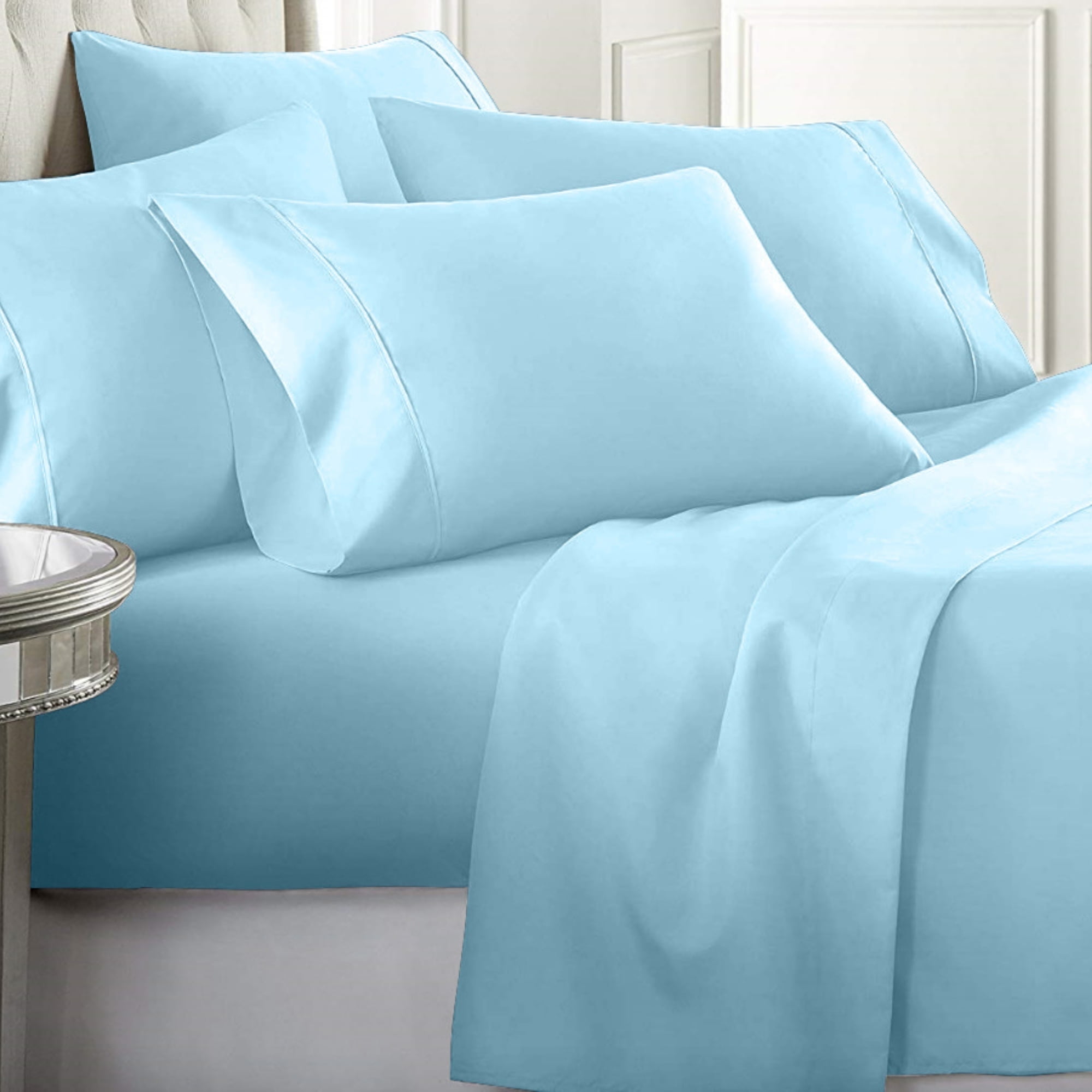
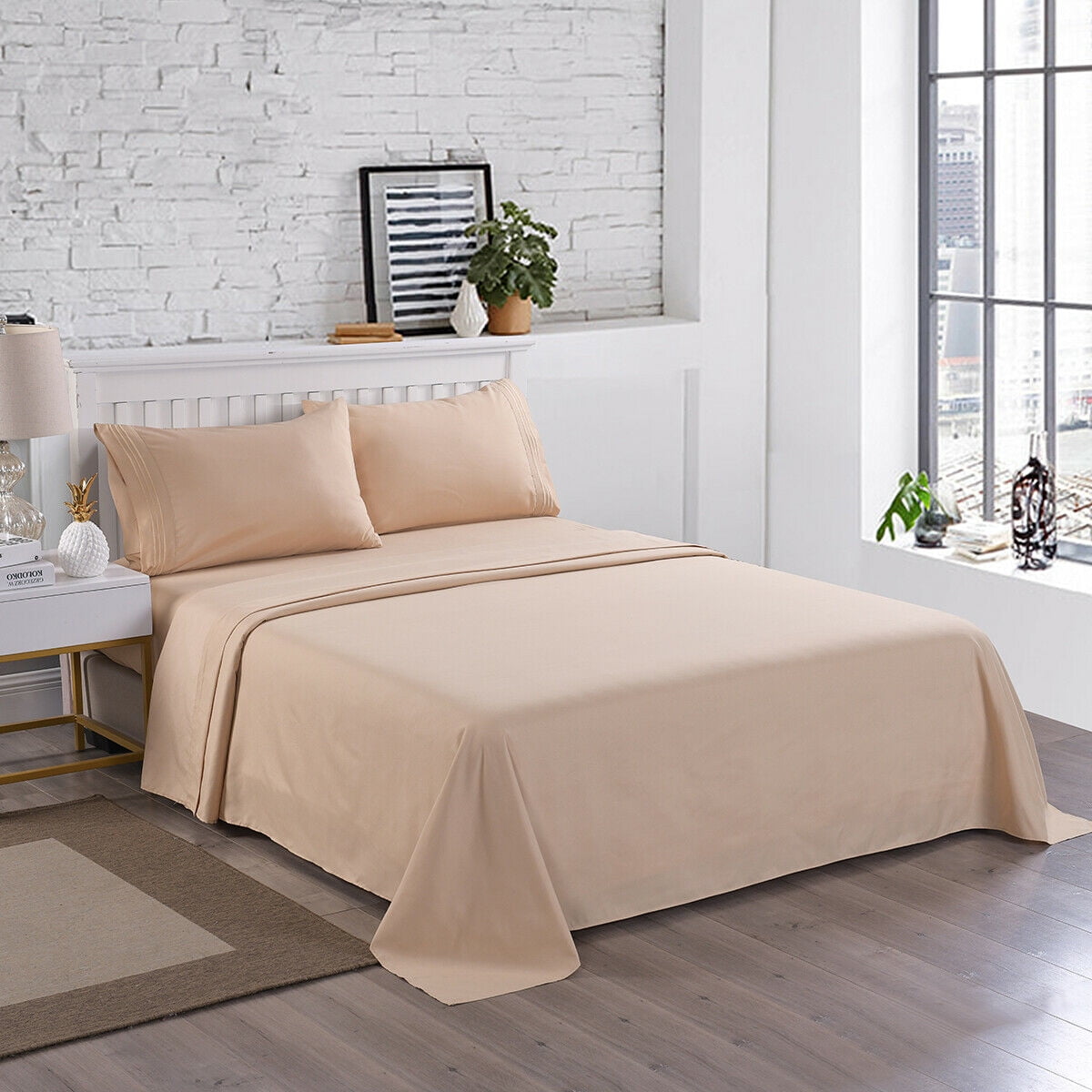
Deep pocket bed sheets are fitted sheets made with extra-deep corners to cover thicker mattresses, mattress toppers, and padded protectors without slipping off.
Shopping for bed sheets in the United States can be confusing when a mattress looks like a standard queen or king but sits much higher than an older bed. Modern memory foam, hybrid, pillow-top, and thick innerspring mattresses can have very different heights. A regular fitted sheet may cover the top but fail to reach far enough underneath to hold its corners in place.
Deep pocket bed sheets solve this problem with larger fabric pockets and elastic edges that wrap around the sides and bottom of a thicker mattress. The term describes the fitted sheet’s dimensions, not a special fabric, thread count, or level of softness. Before buying a set, measure the complete mattress setup and compare that number with the manufacturer’s stated pocket-depth range. This simple check can prevent loose corners, stretched seams, and unnecessary returns.
Deep pocket bed sheets are fitted sheets designed to cover mattresses that are thicker than those suited to many standard fitted sheets. They have deeper corner sections and longer side panels. These extra sections allow the sheet to pass over the mattress edges and reach underneath, where the elastic helps keep it in place.
A fitted sheet has a top panel and four shaped corners. Each corner forms a pocket that covers the mattress corner. The side fabric connects these pockets and wraps around the mattress. When the pocket is too shallow, the elastic may sit too close to the lower edge or remain on the side instead of gripping underneath.
Deep pocket designs provide more fabric for this wrap. They can help beds with thick foam layers, tall pillow-top mattresses, and added mattress pads look neat and stay covered during normal sleep. The exact fit still depends on the sheet’s dimensions and the shape of the mattress.
Source: miracleproductscanada.com
Deeper corner pockets
The fitted corners have more depth so they can cover taller mattress edges.
Longer side panels
Additional fabric extends down the mattress sides and helps the sheet reach beneath the bed.
Elastic support
Elastic around the edge or at the corners helps the sheet grip the mattress.
Flexible fabric choices
Deep pocket sheets come in many materials, colors, weaves, and finishes.
What Does Pocket Depth Mean?
Pocket depth describes the depth of the fitted section of a sheet. It tells you how much fabric is available to cover the mattress sides and turn underneath. It is different from the mattress width and length, which determine whether the sheet matches a Twin, Full, Queen, King, or another bed size.
Manufacturers do not always describe pocket depth in the same way. Some list the finished pocket measurement, while others state the maximum mattress thickness their sheet can fit. These numbers are not always interchangeable. Read the product description carefully and check whether the stated depth refers to the sheet itself or the mattress it can accommodate.
Mattress depth
The vertical height of the mattress or complete padded stack that the fitted sheet must cover.
Pocket depth
The depth of the fitted sheet’s corner and side construction.
Maximum mattress depth
The greatest mattress thickness the manufacturer says the sheet can accommodate.
Are Deep Pocket Sheets the Same as Deep Fitted Sheets?
Yes. Deep pocket sheets and deep fitted sheets generally describe the same type of bedding. Both terms refer to fitted sheets with more depth than standard versions. Retailers may use either phrase in product titles and descriptions.
However, the words alone do not tell you the exact measurement. One brand’s deep pocket sheet may fit a different mattress height from another brand’s version. Compare the listed inches and fit range rather than relying on the product name.
Why Do Some Mattresses Need Deep Pocket Sheets?
Some mattresses are too tall for standard fitted sheets. A sheet may match the bed’s width and length but still fail because its corners cannot reach around the full mattress height. This is why mattress depth matters just as much as the familiar bed-size label.
Many American homes have mattresses with several layers. A memory foam mattress may sit beneath a plush topper and a quilted protector. Each layer adds height, so the fitted sheet must cover the combined stack if all those layers stay beneath it.
A shallow sheet can pull tight across the top. Its corners may pop off when someone gets into bed, changes sleeping position, or adjusts the bedding. A correctly sized deep pocket sheet gives the fabric enough reach to wrap around the mattress and hold its position.
Source: i5.walmartimages.com
Pillow-top mattresses
These mattresses have a padded upper layer that can add noticeable height and bulk.
Memory foam mattresses
Some foam models have thick comfort layers and taller profiles.
Hybrid mattresses
Foam, coils, and extra comfort layers can create a deeper mattress.
Mattress toppers
Foam, latex, wool, or fiber toppers add height when the fitted sheet covers them.
Quilted mattress pads
A padded mattress pad can increase the total depth even when the mattress itself is not especially tall.
What Happens When a Fitted Sheet Is Too Small?
A fitted sheet that is too shallow may stretch tightly over the top but fail to reach far enough underneath. This creates constant tension at the corners. The elastic can pull away from the mattress edge, and the sheet may come loose during the night.
Repeatedly forcing a small sheet over a thick mattress can also put extra strain on its seams and elastic. The fabric may feel tight, wrinkle across the surface, or pull the corners upward. Buying a deeper sheet that matches the actual mattress measurements is usually a better fix than stretching the existing one.
Loose corners
The sheet repeatedly comes off one or more mattress corners.
Excessive tension
The fitted fabric looks stretched or pulls hard against the mattress edges.
Uneven coverage
The sheet covers the top but leaves parts of the lower mattress sides exposed.
Standard vs. Deep Pocket vs. Extra Deep Pocket Sheets
The main difference between standard, deep pocket, and extra deep pocket sheets is how much mattress height they can accommodate. Standard sheets suit many lower-profile mattresses. Deep pocket sheets offer more room, while extra deep designs target especially tall mattresses or beds with thick added layers.
There is no single measurement system that every bedding brand follows for these labels. Sleep Foundation describes regular sheets as commonly fitting mattresses around 7 to 14 inches thick, deep pocket sheets as often fitting mattresses up to about 15 inches, and extra deep pocket sheets as generally covering mattresses around 16 to 24 inches. Individual product specifications can differ, so use these figures as broad guidance rather than fixed industry rules.
A product that says deep pocket may not fit every mattress described as deep. The listed maximum mattress height and the amount of fabric available for tuck-under are more useful than the category name alone.
Source: nestl.com
Standard pocket
Designed for many lower-profile mattresses. Check the stated maximum mattress thickness because standard pocket ranges differ by brand.
Deep pocket
Offers extra corner and side depth for taller mattresses and some mattress-and-pad combinations.
Extra deep pocket
Provides more coverage for very thick mattresses, pillow-top designs, and beds with substantial added layers.
Oversized or custom depth
May be needed when a mattress and topper combination exceeds the limits of common fitted sheet designs.
How Many Inches Is a Deep Pocket Bed Sheet?
Deep pocket sheets are often marketed for mattresses around 15 inches thick, but some brands offer deeper designs. Extra deep options may cover mattresses from about 16 inches to 24 inches, depending on the manufacturer. These ranges describe common market categories, not a universal standard.
For example, a fitted sheet labeled for mattresses up to 15 inches may work well on a 13-inch mattress with a suitable amount of tuck-under fabric. Another product with a nominal 15-inch pocket may use a different measurement method. Always check the manufacturer’s fit statement before ordering.
Do not assume one fixed size
The words standard, deep, and extra deep can mean different dimensions across brands.
Check the actual fit range
Look for a clear statement such as fits mattresses up to a specified number of inches.
Allow for the complete bed setup
Include every padded layer that the fitted sheet must cover.
How to Measure Your Mattress for Deep Pocket Sheets
Measure the mattress with every layer that will remain underneath the fitted sheet. This is the most reliable way to choose the right pocket depth. A mattress size label alone cannot tell you whether the corners will fit.
You will need a tape measure and a clear view of one side of the bed. Keep the mattress in its normal position and avoid pressing down on soft foam or padding. Compression can make the measurement smaller than the actual height the sheet must cover.
Measure the width, length, and total depth. The width and length help confirm the bed size, while the depth helps determine the fitted pocket. If the mattress has a pillow top or uneven edges, check more than one point and use the largest relevant measurement.
Source: ak1.ostkcdn.com
Step 1: Prepare the bed
Remove the old fitted sheet. Leave the topper, mattress pad, or protector in place if the new sheet will cover those layers.
Step 2: Measure the depth
Measure vertically from the highest part of the sleeping surface to the bottom edge of the mattress.
Step 3: Measure the width and length
Record the mattress dimensions so you can match the correct Twin, Full, Queen, King, or other size.
Step 4: Check the full stack
Include the height of any topper, quilted pad, or padded protector that will sit inside the fitted sheet.
Step 5: Compare product specifications
Choose a sheet whose stated fit range covers the measured setup and leaves enough fabric to tuck underneath.
Should You Include a Mattress Topper?
Yes. Include a mattress topper whenever the fitted sheet will cover both the topper and the mattress. The topper becomes part of the total height that the sheet must wrap around.
For example, imagine a 12-inch mattress with a 3-inch foam topper and a half-inch quilted protector. The total covered height is 15.5 inches. A sheet rated only for mattresses up to 14 inches would be a poor match, even though the mattress by itself is just 12 inches tall.
If you remove the topper during part of the year, you may find that a very deep sheet has more excess fabric than you need. Consider how you use the bed throughout the year before choosing a pocket range.
How Much Extra Pocket Depth Should You Allow?
The fitted sheet needs enough fabric to cover the side and reach underneath the mattress. Therefore, the maximum mattress depth listed by the manufacturer is more useful than a pocket measurement that does not explain its fit limit.
There is no universal extra-inch allowance that works for every fitted sheet. Seam placement, elastic construction, fabric stretch, corner shape, and the manufacturer’s measurement method all affect the fit. If your measured bed height is close to the stated maximum, look for a larger fit range or ask the seller for clarification.
Best approach
Choose a documented mattress fit range that includes your full measured setup with enough tuck-under coverage.
When measurements are unclear
Ask whether the listed number means finished pocket depth or maximum mattress thickness.
A Simple Mattress Depth Calculation
When you know the thickness of each layer, add them to estimate the total height. Use the same unit for every measurement.
Hypothetical example: mattress thickness of 13 inches, topper thickness of 2 inches, and padded protector thickness of 0.5 inch. The total depth is 13 + 2 + 0.5 = 15.5 inches. You should look for a fitted sheet whose manufacturer confirms that it can cover a mattress setup of at least 15.5 inches and still reach underneath securely.
Mattress
13 inches.
Topper
2 inches.
Padded protector
0.5 inch.
Total covered depth
15.5 inches.
What Mattress Sizes Are Available in Deep Pocket Sheets?
Deep pocket sheets are available for many common U.S. mattress sizes. The fitted sheet must match both the mattress size and its depth. Choosing a deep pocket Queen sheet will not make it fit a King mattress, because extra pocket depth does not add the width or length needed for a larger bed.
Common U.S. mattress dimensions provide a useful starting point. Actual measurements can vary slightly by manufacturer, and specialty mattresses may need their own fitted sheets. Measure your mattress rather than relying only on its name when the fit is close.
Source: m.media-amazon.com
Twin
Commonly about 38 by 75 inches. Often used in children’s rooms, guest rooms, and single beds.
Twin XL
Commonly about 38 by 80 inches. Often found in college dorm rooms and adjustable bed setups.
Full
Commonly about 54 by 75 inches. Also called Double.
Queen
Commonly about 60 by 80 inches. A popular size for couples and guest bedrooms.
King
Commonly about 76 by 80 inches. Wider than a Queen mattress.
California King
Commonly about 72 by 84 inches. Longer and narrower than a standard King.
What About Split King and Adjustable Beds?
A Split King usually has two separate Twin XL mattresses placed side by side. Each mattress needs its own fitted sheet, so check the depth of both sides. If the two mattresses have different heights or toppers, measure each one separately.
Adjustable beds also need careful sizing. A fitted sheet must match the mattress dimensions and have enough depth to stay in place as the bed moves. Deep pockets can help with a thick mattress, but the sheet should also be compatible with the bed’s movement and any adjustable-bed accessories.
Measure each mattress separately
Do not assume two sides of a split bed have identical thickness.
Check adjustable-bed compatibility
Look for fitted sheets designed to stay secure during normal bed movement.
Avoid excessive fabric
A pocket that is much deeper than needed may bunch or loosen under some mattress designs.
What Materials Are Used to Make Deep Pocket Bed Sheets?
Deep pocket bed sheets are not made from one special material. The term describes their dimensions, so manufacturers can make them from cotton, polyester microfiber, linen, bamboo-derived rayon, and blended fabrics. The material affects how the sheet feels, breathes, drapes, and handles regular washing.
Choosing a fabric is a separate decision from choosing pocket depth. A sheet can have a deep pocket and still feel crisp, smooth, silky, or warm depending on its fiber and weave. Start with the fit requirement, then choose a material that suits your comfort needs and care routine.
Source: i5.walmartimages.com
Cotton
A widely used bedding fiber. Percale cotton often feels crisp, while sateen cotton usually feels smoother and has a more lustrous surface.
Polyester microfiber
A synthetic fabric often sold as a soft, lightweight, easy-care option. Its feel and airflow depend on the construction.
Bamboo-derived rayon
A regenerated cellulose fabric made from bamboo pulp. It is often marketed for its smooth feel, but the actual properties depend on processing and construction.
Linen
Made from flax fibers. It often has a textured feel and can soften with use and washing.
Blended fabrics
Combine fibers to change feel, cost, wrinkle behavior, or care needs.
Does a Deep Pocket Sheet Feel Different From a Regular Sheet?
Not necessarily. If two fitted sheets use the same fabric and weave, their surface feel may be very similar even if one has a deeper pocket. The main difference is the amount of fabric used in the fitted section.
A deep pocket sheet may feel looser around a shorter mattress if the pocket is much deeper than needed. That does not mean the fabric is less soft or lower quality. It simply means the dimensions may not match the bed.
Does Thread Count Affect Pocket Depth?
No. Thread count measures the number of threads woven into a square inch of fabric under the manufacturer’s counting method. Pocket depth measures the fitted sheet’s dimensions. A higher thread count does not make a sheet deeper or guarantee a better fit.
When comparing sheets, treat thread count, fabric type, weave, pocket depth, and maximum mattress height as separate specifications. This makes it easier to avoid paying more for a feature that does not solve your fitting problem.
Benefits and Limitations of Deep Pocket Bed Sheets
Deep pocket sheets are useful when a standard fitted sheet cannot cover the full mattress height. Their main benefit is better coverage and a more secure fit on a taller bed. They are not automatically more comfortable or more durable than standard sheets.
The right pocket size can reduce corner slippage and the need to remake the bed each morning. It can also help protect the mattress and keep the bedding surface neat. However, a pocket that is too deep may leave excess fabric underneath or make the fitted sheet harder to position.
Source: miracleproductscanada.com
Better coverage
Extra fabric can cover thick mattress edges and added padded layers.
More secure fit
A suitable pocket depth allows the elastic to reach underneath the mattress.
Useful for layered beds
Deep pockets can cover a mattress together with a topper, pad, or protector.
More sizing choices
Many bedding ranges offer several pocket depths for the same mattress size.
Possible Drawbacks
Deep pocket sheets may cost more than similar standard-pocket versions, although price depends on the brand, fabric, and construction. Their extra fabric can also make them bulkier to fold and store.
A pocket that is far deeper than the mattress may not sit smoothly. Extra material can gather beneath the mattress, and the elastic may not grip where the sheet is designed to hold. The goal is not to buy the deepest sheet available. It is to buy the correct depth for the bed.
Possible bunching
Excess fabric can gather under a mattress that is much shorter than the sheet’s intended fit range.
Higher cost in some ranges
Some brands charge more for extra-deep construction, but this is not a universal rule.
More complicated sizing
The words deep and extra deep do not replace exact measurements.
How to Choose the Right Deep Pocket Bed Sheets
Choose deep pocket bed sheets by matching the fitted sheet to your mattress size, total height, and preferred fabric. A product title alone is not enough. Read the detailed specifications and look for a clear mattress fit range.
The best starting point is your tape-measure result. Once you know the total depth, compare it with the manufacturer’s maximum supported mattress thickness. Then confirm that the sheet has enough material to reach underneath and that its width and length match your mattress.
Source: supercomfortliving.com
Confirm the bed size
Match Twin, Twin XL, Full, Queen, King, or California King dimensions.
Check maximum mattress thickness
Choose a stated fit range that covers your mattress and all layers beneath the fitted sheet.
Review the elastic design
An all-around elastic edge or well-made elastic corners can help hold the sheet in place.
Select the right fabric
Consider cotton, microfiber, linen, rayon, or a blend based on feel and care needs.
Read the care label
Check washing and drying instructions before buying, especially if the fabric needs special care.
Review return terms
A clear return policy can help if the listed dimensions do not match the actual fit.
What Is the Best Pocket Depth for a 12-Inch Mattress?
A 12-inch mattress does not always need the same fitted sheet. If you use it without a topper or thick pad, a sheet with a confirmed 12-inch mattress fit may work. A little extra room for tuck-under can improve the fit, depending on the design.
If you add a 2-inch topper and a padded protector, the total covered depth becomes greater than 12 inches. In that case, choose a sheet rated for the complete setup rather than the mattress alone.
Should You Choose All-Around Elastic?
All-around elastic runs around the fitted sheet’s lower edge. It can help the fabric hold evenly around the mattress. Some designs use elastic only at the corners, so compare the construction if the sheet has a history of slipping.
Elastic alone cannot correct a pocket that is too shallow or a sheet that is the wrong width. Correct dimensions remain the first requirement.
Common Deep Pocket Sheet Problems and How to Fix Them
If a deep pocket sheet still slips, check the measurements before blaming the fabric. The problem may be an incorrect bed size, a mattress topper that was not included in the original measurement, or a sheet whose advertised pocket depth does not match its actual fit range.
Start with the simplest checks. Confirm that each corner is fitted correctly, make sure the sheet is centered, and compare the full mattress setup with the manufacturer’s specifications. If the dimensions match but the sheet continues to loosen, inspect the elastic and seams for wear or damage.
Source: m.media-amazon.com
Problem: Corners keep popping off
Possible causes include insufficient pocket depth, incorrect sheet dimensions, or worn elastic. Recheck the full mattress height and the product’s stated fit limit.
Problem: Fabric bunches underneath
The pocket may be too deep for the mattress, or the sheet may not be centered. Adjust the corners and check whether a shallower pocket would fit better.
Problem: The sheet pulls tightly across the top
The sheet may be too short, too narrow, or too shallow. Check all three dimensions rather than focusing only on pocket depth.
Problem: The sheet loosens after washing
Check the care label and drying method. High heat or unsuitable washing conditions may affect some fabrics and elastic components.
Problem: One corner fits but another does not
The mattress may have uneven padding, a topper may have shifted, or the sheet may be positioned off-center. Measure the thickest areas and adjust the setup.
Can Sheet Straps Fix a Poor Fit?
Sheet straps or suspenders can help hold some fitted sheets in place. They attach beneath the mattress and add tension to the fabric. They may be useful when the sheet is slightly loose or its elastic has weakened.
However, straps do not turn a shallow fitted sheet into a properly sized deep pocket sheet. If the fabric cannot cover the mattress sides, straps may pull too hard on the corners. Replace a badly mismatched sheet instead of relying on extra tension.
Care and Maintenance for Deep Pocket Bed Sheets
Deep pocket sheets need the same basic care as other fitted sheets made from the same fabric. Follow the care label because cotton, microfiber, linen, and rayon fabrics can have different washing and drying needs. Correct care helps protect the fabric, seams, and elastic.
Wash sheets at the temperature listed by the manufacturer. Avoid overloading the washer because bulky bedding needs room to move. Use a suitable detergent and avoid excessive heat when drying unless the care instructions allow it.
When folding a deep pocket fitted sheet, place your hands inside two corners, bring the corners together, and tuck the remaining corners into them. Smooth the fabric and fold it into a compact shape. Keeping the set together makes it easier to find the matching pillowcases and flat sheet.
Source: i5.walmartimages.com
Follow the fabric label
Use the recommended water temperature, detergent, and drying method.
Protect the elastic
Avoid unnecessary high heat and harsh treatment that may weaken elastic over time.
Store sheets fully dry
Make sure bedding is dry before storage to reduce the risk of musty odors and moisture problems.
Check seams regularly
Look for loose stitching, torn corners, and worn elastic when changing the bedding.
Do Deep Pocket Sheets Shrink?
Some deep pocket sheets can shrink during washing or drying, depending on the fiber, fabric construction, finishing, and care conditions. Cotton sheets may change dimensions, while synthetic fabrics can respond differently to heat and washing.
Shrinkage can affect pocket fit, especially when the sheet was already close to the mattress manufacturer’s maximum depth. Follow the care label and check whether the seller provides after-wash dimensions or shrinkage information. Do not assume every cotton or microfiber sheet will shrink by the same amount.
Common Mistakes to Avoid When Buying Deep Pocket Sheets
The most common mistake is buying sheets based only on the word deep. The label does not guarantee that the sheet will fit every thick mattress. A little measuring before shopping is more useful than guessing from a product photo or a general product title.
Another mistake is measuring the mattress without its topper or padded protector. If the fitted sheet must cover those layers, leaving them out of the measurement can lead to a sheet that is too shallow. The opposite mistake is buying an extra-deep pocket without checking whether it will sit properly on the bed.
Source: miracleproductscanada.com
Ignoring the maximum fit range
Always check the mattress thickness the manufacturer says the fitted sheet can accommodate.
Forgetting added layers
Include toppers, pads, and protectors that remain under the fitted sheet.
Confusing bed size with pocket depth
Queen and King describe mattress dimensions, while deep pocket describes the fitted sheet’s depth.
Assuming higher thread count means better fit
Thread count and pocket depth measure different things.
Choosing the deepest option by default
Excess fabric can bunch underneath a mattress that does not need an extra-deep pocket.
Ignoring care instructions
Incorrect washing and drying can affect fabric dimensions and elastic performance.
What the Reviewed Guides Cover and What Buyers Still Need to Check
The reviewed bedding guidance from Sleep Foundation, IKEA, and several mattress-measurement guides covers the basic meaning of deep pocket sheets, common depth categories, and the need to measure a mattress. These sources also make clear that the words deep and extra deep do not describe a fabric or a comfort rating.
A useful point that deserves extra attention is the difference between a sheet’s finished pocket depth and the maximum mattress thickness it can fit. These figures can describe different things. A buyer should also include a topper and padded protector in the measurement whenever the fitted sheet will cover them.
This article’s practical contribution is a measurement-first approach that combines bed size, total covered height, and the manufacturer’s fit range. It also explains why a deeper pocket is not always better and why a sheet can still slip when its width, length, elastic, or corner design is unsuitable.
Source: m.media-amazon.com
Observed question: What depth do deep pocket sheets fit?
Reader stage: shopping. The reviewed Sleep Foundation guide provides broad categories, but buyers still need to check the exact product fit range. Answer: compare the manufacturer’s stated mattress limit with the measured bed.
Inferred next need: Should I measure my topper too?
Reader stage: before buying. This follows from the fact that the sheet covers the full padded stack. Answer: yes, include every layer that remains under the fitted sheet.
Inferred next need: What if a deep pocket sheet is still loose?
Reader stage: after purchase. A depth label alone does not confirm the width, length, elastic, or corner fit. Answer: check all dimensions and inspect the elastic before replacing the sheet.
Inferred next need: Does deeper mean better quality?
Reader stage: product comparison. Pocket depth is a size feature, not a quality score. Answer: choose the correct depth, then compare material, construction, and care needs.
Frequently Asked Questions
Q
Are deep pocket bed sheets better than regular sheets?
Deep pocket sheets are better for mattresses that are too thick for standard fitted sheets. They provide more fabric around the corners and sides, which can help the sheet stay in place. For a low-profile mattress, a regular fitted sheet may fit more neatly. The best option depends on the mattress measurements, not the product label.
Q
Will deep pocket sheets fit a regular mattress?
They may fit, but the result depends on how deep the pockets are and how thick the mattress is. A sheet with much more depth than needed can leave extra fabric underneath or bunch around the corners. Check the manufacturer’s minimum and maximum mattress fit range before buying.
Q
Do deep pocket sheets fit a 14-inch mattress?
Many deep pocket sheets are designed for mattresses around this height, but not every product will fit. Check whether the manufacturer lists 14 inches as an acceptable mattress thickness. If you also use a topper or padded protector, include those layers before choosing the sheet.
Q
What is the difference between deep pocket and extra deep pocket sheets?
Extra deep pocket sheets generally have more fitted depth than standard deep pocket sheets. They are designed for especially tall mattresses or beds with thick toppers and pads. The exact difference varies by manufacturer, so compare the listed mattress fit limits instead of relying on the category name.
Q
Can I use deep pocket sheets without a mattress topper?
Yes. You can use deep pocket sheets without a topper if their dimensions suit the mattress. However, a very deep pocket may leave excess material beneath the bed or cause the corners to fit loosely. Choose a depth that matches the mattress rather than buying the largest available size.
Q
Do deep pocket sheets work with memory foam mattresses?
Yes. Deep pocket sheets can work with memory foam mattresses when the bed’s width, length, and total depth match the sheet specifications. Some memory foam mattresses are relatively tall, while others are not. Measure the mattress and any topper or protector before choosing a fitted sheet.
Q
Are deep pocket sheets available for Queen and King beds?
Yes. Many bedding brands sell deep pocket fitted sheets in Queen, King, California King, and other common sizes. Confirm both the mattress size and the pocket depth. A Queen deep pocket sheet will not fit a King mattress simply because it has deeper corners.
✦ Wrapping Up
Conclusion
Deep pocket bed sheets are fitted sheets with extra-deep corners and side panels. They are made to cover taller mattresses and layered beds that may be too thick for standard fitted sheets. Their main purpose is to provide enough fabric to wrap around the mattress and hold underneath with the help of elastic.
The most reliable way to choose the right set is to measure the mattress, include any topper or padded protector, and compare the total depth with the manufacturer’s stated fit range. Also confirm the mattress width and length. These checks matter more than the words deep pocket printed on the package.
Remember that pocket depth does not determine fabric quality, softness, breathability, or thread count. Once you find a suitable fit, choose the material and care instructions that match your sleeping preferences. A well-fitted sheet should cover the bed without excessive tension, loose corners, or large folds underneath.
💡 Key Takeaway
Before buying deep pocket bed sheets, measure your mattress with all permanent layers in place, record its width, length, and total depth, and select a fitted sheet whose manufacturer confirms that it fits those measurements.