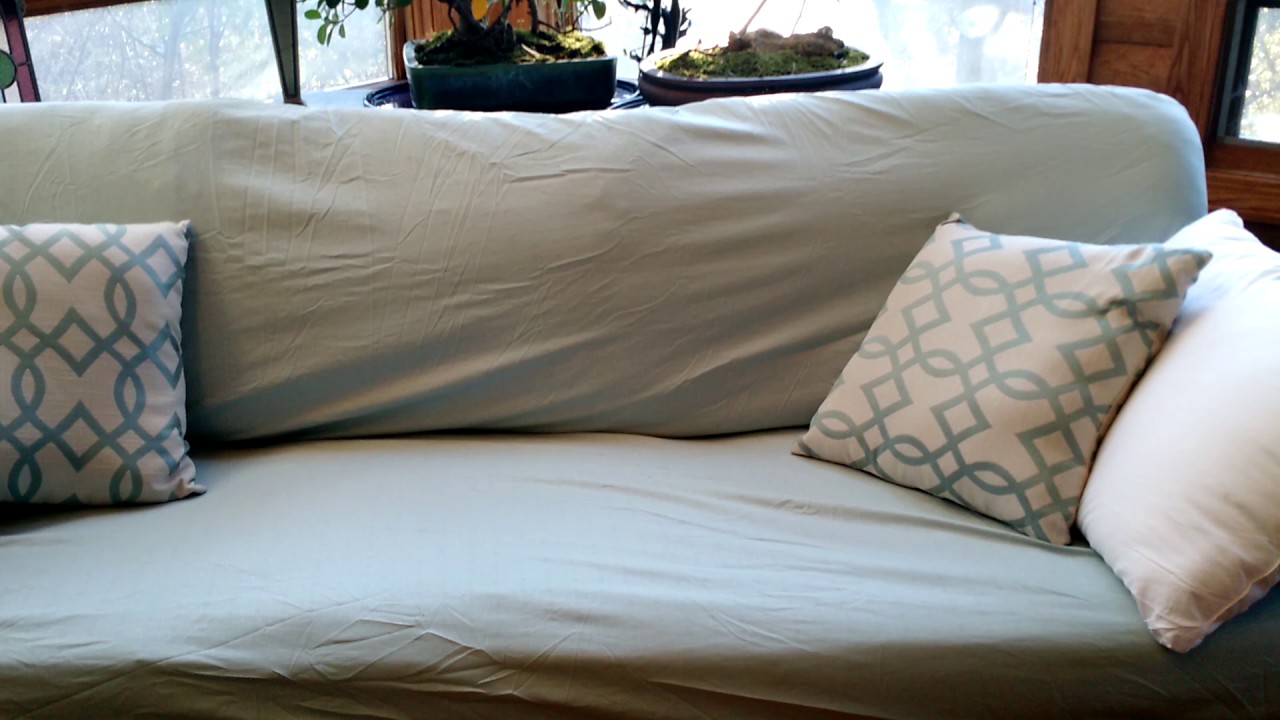
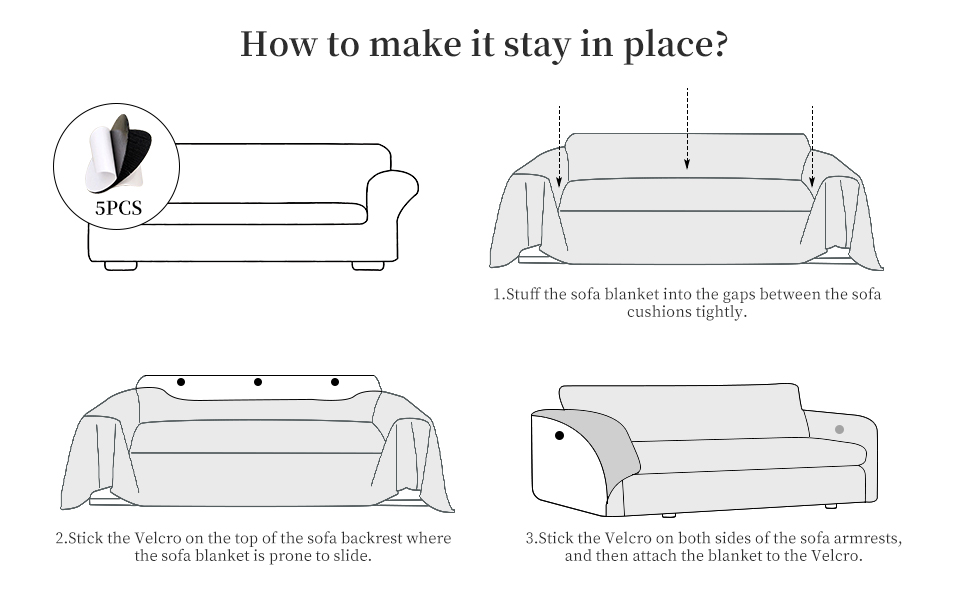
To cover a couch with a bed sheet, drape a large flat sheet over the sofa, center it, tuck the extra fabric into the seat gaps, and fold the corners neatly around the arms. Cover removable cushions separately for a cleaner, more secure finish.
In American homes, a couch often gets more daily use than almost any other piece of living room furniture. Family movie nights, pets, children, snacks, and everyday wear can leave upholstery looking tired. A simple bed sheet can give an old sofa a fresh appearance without the cost of buying a new slipcover.
The easiest method uses one or two large flat sheets, depending on the couch size. You do not need a sewing machine for a basic cover. With careful folding, tucking, and a few safe ways to hold the fabric in place, you can create a neat cover in less than an hour in many cases.
The secret is to treat the sheet like fabric for a loose slipcover rather than simply throwing it over the furniture. You need enough material to cover the back, seat, arms, and front. You also need to leave enough slack for the fabric to stay in place when someone sits down.
This guide explains how to choose a sheet, measure your couch, cover its main frame, wrap removable cushions, and fix common problems. It also explains when a flat sheet works better than a fitted sheet and how to keep the cover from slipping during normal use.
The first step is choosing a sheet that is large enough to cover the entire couch. A flat sheet is generally the best starting point because it has straight edges and no elastic corners. You can move it in different directions and fold the extra fabric around the arms and seat.
For many standard three-seat sofas, a king-size flat sheet is a useful starting option. A queen-size sheet may work for a smaller loveseat, while a large sectional may need two or more sheets. These are starting points, not guaranteed fits. Couch shapes and sheet dimensions vary.
Check the actual measurements printed on the sheet package. Two sheets with the same bed-size label may have different dimensions. The fabric also needs to cover the sofa’s curves, not just its flat top surface.
Fabric thickness matters too. A thin sheet can look attractive, but it may show the original upholstery color underneath. It can also wrinkle and slide more easily. A medium-weight cotton sheet or cotton blend often provides a more practical balance between softness and coverage.
Source: storage.googleapis.com
Flat bed sheet
Best for a basic no-sew couch cover. Its rectangular shape makes it easier to position, fold, and tuck around the sofa.
Fitted bed sheet
Can work for some small sofas or individual cushions, but its elastic corners may not match the shape of the couch. Avoid stretching it beyond its natural fit.
Cotton sheet
A comfortable option for everyday indoor use. Medium-weight cotton is often easier to arrange than very thin fabric.
Cotton blend sheet
May resist wrinkles better than some pure cotton sheets. Check the fabric feel and make sure it does not become slippery against the upholstery.
Patterned sheet
Can add color and hide small marks. Small patterns are often easier to arrange visually than large prints that may look uneven around folded corners.
What Size Bed Sheet Do You Need?
The right sheet size depends on the sofa’s height, depth, arm shape, and overall length. A large sofa with wide arms needs more fabric than a narrow sofa with low arms. A sectional may require separate pieces for its different sections.
As a rough starting point, consider a full or queen flat sheet for a small loveseat and a king flat sheet for a standard sofa. For a large sectional, measure first and consider using multiple sheets that match in color and texture.
Do not assume that a king sheet will cover every three-seat couch. A deep sofa or one with large rolled arms may need extra fabric. The best choice is the sheet that covers the measured fabric path with enough extra material for tucking.
Loveseat
A full or queen flat sheet may be enough, depending on the depth and arm shape.
Standard three-seat sofa
Start by checking a king-size flat sheet and compare its dimensions with your measurements.
Large sectional
Use multiple sheets if one piece cannot cover the full surface without leaving gaps.
Deep sofa
Look for extra fabric depth so the sheet can reach from the back to the front without pulling tight.
Choose a Color That Matches Your Room
Color can make a homemade cover look more intentional. White, beige, gray, and cream work well in many living rooms because they pair with a wide range of furniture and wall colors.
If your couch has a dark color, a very thin white sheet may allow the original upholstery to show through. A thicker sheet or a color closer to the sofa can give more even coverage.
You can also use a patterned sheet to create a casual look. Try to match the sheet with nearby curtains, rugs, or throw pillows without making every item in the room look identical.
Neutral colors
Create a calm appearance and are easy to coordinate with existing living room decor.
Dark colors
Can help disguise small marks, although dust and light-colored pet hair may be easier to see.
Light colors
Can make a room feel brighter but may need more frequent washing.
2. Gather the Supplies and Prepare the Couch
Before covering the sofa, collect the materials you need and prepare the furniture. Working with everything nearby makes the process easier and reduces the chance of pulling the sheet out of place while searching for supplies.
You do not need expensive tools for a simple couch cover. A clean sheet, measuring tape, and a few basic household items are enough for a loose cover. Optional upholstery fasteners can help if the sheet needs extra support.
Remove decorative pillows, blankets, and other loose items from the couch. Take off removable seat and back cushions if your design allows it. This gives you better access to the frame and makes it easier to arrange the fabric evenly.
Clean the sofa according to its upholstery care instructions before covering it. Remove loose dirt, crumbs, and pet hair with a suitable cleaning method. Allow the upholstery to dry fully before placing a fresh sheet over it.
Source: Tip Junkie
Large flat bed sheet
Choose a clean sheet with enough fabric to cover the couch’s back, seat, arms, and front.
Measuring tape
Use a flexible measuring tape to check the fabric path across the couch and from back to front.
Fabric clips or suitable upholstery fasteners
Optional tools that can help secure folds. Check that the fastener is suitable for the furniture and cannot damage visible upholstery.
Clean towels
Useful for wiping away dust or drying a surface before the sheet is placed.
Scissors
Only needed if you plan to trim fabric for a more permanent project. Do not cut the sheet during the first fitting.
Optional cushion covers
Extra pillowcases or sheet sections can help cover removable cushions separately.
Measure the Couch Before Covering It
Measure the sofa in two directions. First, check the distance from one side to the other by following the surface over the arm, down to the seat, across the sitting area, and over the opposite arm. This gives you a better idea of how much fabric is needed across the couch.
Next, measure from the back of the sofa to the front edge. Follow the fabric path over the backrest, down into the seat, and over the front. Include enough extra length for the fabric to hang neatly or tuck underneath.
Write down both measurements. Compare them with the actual sheet dimensions and decide which direction gives you the best coverage. Remember that the remaining fabric must also allow for folds and tucks.
Measure the width
Follow the complete path across both arms and the seat.
Measure the depth
Follow the surface from the back edge to the front edge.
Allow extra fabric
Leave enough material for folding, tucking, and a neat lower edge.
Prepare Removable Cushions
Remove the cushions and set them on a clean surface. Check whether their covers are removable and washable. If they are, follow the manufacturer’s care instructions rather than assuming that the sheet-covering process replaces proper cleaning.
Look for stains, loose seams, or damp areas before covering the cushions. A sheet should not trap moisture or conceal a problem that needs attention. Make sure each cushion is completely dry before wrapping it.
Keep the cushions in their original positions or mark their arrangement if they have different shapes. This makes it easier to put them back after the frame is covered.
Remove loose cushions
Set them aside so the sofa frame is easy to reach.
Check their condition
Look for moisture, stains, and damaged seams.
Keep cushions organized
Remember which cushion belongs in each position.
3. How to Cover a Couch With a Bed Sheet Step by Step
Once the couch is ready, start with the largest flat sheet. The goal is to create even coverage without stretching the material too tightly. A little extra fabric is useful because it gives you room to shape the sheet around the arms and seat.
For a simple temporary cover, you can leave the sheet loose and rely on deep tucks. For a more finished appearance, carefully fold the fabric at the corners and use suitable fasteners only where they can be attached safely.
Work from the center toward the edges. This helps prevent one side from becoming too short while the other side has too much fabric. Take your time with the corners because they have the greatest effect on how neat the finished cover looks.
Source: storage.googleapis.com
Step 1: Position the sheet
Find the center of the flat sheet and place it near the center of the couch back. Make sure enough fabric hangs over both sides.
Step 2: Cover the back
Pull the sheet over the top of the backrest and smooth it down. Leave enough fabric to reach the desired lower edge.
Step 3: Cover the seat
Bring the front portion across the sitting area. Allow enough slack for the sheet to follow the seat instead of stretching tightly over the gaps.
Step 4: Shape the arms
Guide the fabric over each armrest. Smooth it from the inner side, across the top, and down the outer side.
Step 5: Tuck the extra fabric
Push loose material into suitable visible gaps between removable cushions and the sofa frame. Use your hands and avoid sharp tools.
Step 6: Fold the corners
Create neat folds around the front arms. Arrange the extra fabric so it does not form large bunches or pull the opposite side out of position.
Step 7: Adjust the lower edges
Make sure the fabric hangs evenly around the front and sides. Keep the hem above the floor if it would otherwise create a tripping hazard.
Step 8: Replace the cushions
Once the main frame is covered, place the cushions back in their correct positions and adjust the fabric around them.
How to Cover the Couch Arms Neatly
The arms are often the hardest part of a couch to cover because they have curved edges and different shapes. Pulling the sheet tightly around them can cause the center section to shift or expose part of the sofa.
Instead, work on one arm at a time. Smooth the sheet from the seat toward the inside of the arm, then guide it over the top and down the outside. Keep the fabric flat as you move around the curve.
If there is extra material at the front, fold it inward like the corner of a wrapped package. Keep the fold on the less visible side whenever possible. Repeat the process on the other arm and compare both sides.
Avoid pulling too tightly
A tight arm fold can pull fabric away from the opposite side of the couch.
Keep both arms even
Similar folds on both sides create a balanced appearance.
Hide excess fabric
Fold extra material inward instead of leaving it hanging loosely.
How to Tuck the Sheet Between the Cushions
A deep tuck can help hold a loose sheet in place. Find the visible gap between the seat cushions and the backrest, then gently push a small section of fabric into that space. Smooth the material across the seat before tucking the next section.
Do not force fabric deep into an enclosed sofa frame. Some couches contain springs, moving parts, or sharp edges beneath the cushions. If the gap is too narrow or the fabric keeps coming out, use a loose drape or a suitable external fastening method instead.
After tucking, press lightly on each cushion and check whether the fabric stays in place. The sheet should not make the cushions feel uneven or interfere with their normal movement.
Use small folds
Small, even tucks are less likely to create bulky ridges.
Keep the seat smooth
Remove large wrinkles before pushing fabric into the gaps.
Check the cushion fit
Make sure the cushions still sit flat and do not become difficult to remove.
4. How to Cover Couch Cushions With a Bed Sheet
Covering the cushions separately can make a homemade couch cover look much neater. It also helps reduce movement because each cushion has its own fabric covering instead of relying on one loose sheet across the entire sofa.
Use an additional flat sheet or suitable pillowcases for this part. The amount of fabric depends on the cushion size and shape. A twin-size flat sheet can provide useful material for individual cushions, but measure before cutting anything.
The easiest method is similar to wrapping a gift. Place the cushion in the center of the fabric, fold the material over the sides, and bring the remaining edges together underneath. The top surface should remain smooth while the folds stay on the bottom.
If you want a temporary cover, you can use suitable heavy-duty fabric fasteners on the underside. For a more durable result, sew the fabric into individual cushion covers with properly finished seams and an appropriate closure.
Source: storage.googleapis.com
Step 1: Measure each cushion
Check its length, width, and thickness. Measure unusual or curved cushions separately.
Step 2: Place the fabric flat
Spread the sheet on a clean surface with the side you want to show facing downward.
Step 3: Center the cushion
Place the cushion in the middle and make sure there is enough fabric on every side.
Step 4: Fold the long sides
Bring the fabric over the cushion and smooth it across the top and sides.
Step 5: Fold the short ends
Create neat triangular folds at the corners, similar to wrapping a present.
Step 6: Secure underneath
Use suitable fabric fasteners or sew the edges together. Keep sharp fasteners away from the seating surface.
Step 7: Repeat for each cushion
Cover the remaining cushions and check that their fabric looks consistent.
Can You Use Pillowcases for Couch Cushions?
Yes, pillowcases can work for small, removable sofa cushions if their dimensions are suitable. They are especially useful for simple rectangular cushions because the fabric can slide over the cushion without much cutting.
Choose a pillowcase that fits without stretching its seams. If it is too large, the extra fabric may bunch up. If it is too small, it may pull against the corners or fail to cover the entire cushion.
For large seat cushions, a flat sheet section is usually more flexible. You can fold it around the cushion and adjust the amount of fabric on the underside.
Small decorative cushions
Standard pillowcases may fit some small rectangular cushions.
Large seat cushions
Use a larger sheet section if a pillowcase does not provide enough coverage.
Odd-shaped cushions
Measure carefully and consider making a custom cover rather than forcing a standard pillowcase.
How to Make Cushion Covers Look Smooth
A smooth cushion cover starts with the correct amount of fabric. Too little material makes the corners difficult to wrap, while too much creates bulky folds underneath. Adjust the fabric before securing the final edge.
Keep the cushion’s top surface flat as you wrap it. Pull gently from the sides and move the wrinkles toward the underside. Do not pull so hard that the cushion becomes compressed or the sheet seams become strained.
Once finished, place the cushion on the sofa and check its shape from several angles. If the fabric looks uneven, remove the fasteners and fold it again.
Smooth before securing
Remove wrinkles while the fabric is still easy to adjust.
Keep folds underneath
This creates a cleaner appearance on the sitting surface.
Avoid excess bulk
Trim fabric only after confirming the final fit and allowing enough material for a secure finish.
5. How to Keep a Bed Sheet From Slipping Off a Couch
A loose sheet can move when people sit down, stand up, or shift their weight. This is one of the most common problems with a homemade couch cover. The solution is to improve the fit and use safe ways to hold the fabric in place.
Start by checking the size and orientation of the sheet. If the fabric barely reaches the edges, it may not have enough material for deep tucks. A larger sheet can often solve the problem more effectively than adding more fasteners.
Next, check the seat gaps and arm folds. Uneven tucks can allow the fabric to slide toward one side. Remove the sheet, reposition it, and create balanced folds before trying another fastening method.
You can also consider purpose-made sheet or upholstery fasteners if they are suitable for your sofa. Always check the furniture material and the fastener instructions before use. Avoid ordinary sharp pins in places where someone may touch or sit.
Source: storage.googleapis.com
Use deeper tucks
Push suitable loose fabric into accessible cushion gaps to help hold the sheet in place.
Choose a larger sheet
Extra fabric provides more material for shaping and tucking.
Use suitable upholstery fasteners
Choose fasteners designed for the furniture and place them where they cannot contact people or damage visible surfaces.
Try a sheet holder
Some adjustable fabric or upholstery straps may help control movement when their attachment points are compatible with the couch.
Cover cushions individually
Separate cushion covers can reduce movement across the seating area.
Use Rolled Fabric or Suitable Tuck Supports
A small, firm fabric roll can sometimes help keep a loose cover inside a suitable cushion gap. The idea is to create gentle pressure that holds the tucked fabric in place. Any support must fit without damaging the upholstery or making the seat uncomfortable.
Some DIY guides suggest using cardboard tubes or rolled materials as tuck supports. However, these methods are not suitable for every sofa. Avoid rigid objects that could break, create sharp edges, or interfere with a reclining or moving mechanism.
If a simple fabric tuck does not work, a properly designed upholstery grip or fitted cover may be a better option. Do not force objects into narrow openings just to keep the sheet in place.
Check the gap
Use only a visible, accessible space that can safely hold a small amount of fabric.
Avoid hard or sharp objects
Do not use supports that could damage upholstery or create an uncomfortable seating surface.
Test before normal use
Check that the cover stays in place and the seat remains comfortable.
Should You Use Safety Pins or Upholstery Pins?
Fasteners can help secure a more fitted homemade cover, but they need careful placement. A sharp pin can damage upholstery, scratch a wooden frame, or become exposed when someone sits down. For this reason, a simple tucked cover is usually the safer starting point.
If you decide to use upholstery fasteners, follow the product instructions and check the sofa’s construction. Do not place them through delicate fabric, leather, visible upholstery, electrical components, or moving parts unless the manufacturer specifically permits that use.
Ordinary safety pins are not a substitute for upholstery fasteners. They may open, bend, or become exposed under pressure. Keep any temporary fasteners fully enclosed and away from children and pets.
Prefer non-damaging methods
Try tucking and correctly fitting the sheet before adding hardware.
A cover that looks neat on an empty couch may move as soon as someone sits down. Test it by sitting on each cushion, leaning against the backrest, and standing up again. Check the arms and front edge after every movement.
If the fabric moves, find the area where it begins to pull. You may need to add slack, reposition the sheet, or change the direction of a fold. Avoid simply pulling every edge tighter because that can make the problem worse.
Repeat the test until the sheet stays reasonably stable during normal use. If it continues to slide, use a more suitable cover instead of relying on constant adjustments.
Check the seat
Look for wrinkles and exposed upholstery after sitting down.
Check the arms
Make sure the fabric has not pulled away from either armrest.
Check the floor edge
Remove any excess fabric that trails into a walking path.
6. Different Ways to Cover a Couch With Bed Sheets
There is more than one way to use a bed sheet as a couch cover. The best method depends on whether you want a quick protective layer, a decorative change, or a closer-fitting cover that stays in place during everyday use.
A loose drape is the fastest option. A tucked cover looks more organized, while individually wrapped cushions can give the sofa a more complete makeover. You can also combine these methods by covering the main frame with one sheet and the cushions with separate fabric pieces.
Before choosing a method, think about how often the couch is used. A sheet placed over a rarely used guest-room sofa may need less adjustment than one covering a busy family couch. The more people use the sofa, the more important fit and secure construction become.
Source: storage.googleapis.com
Loose draped cover
Place one large sheet over the couch and adjust the hanging edges. This is best for quick changes and temporary protection.
Tucked cover
Push extra fabric into suitable cushion gaps and shape the arms. This creates a more organized appearance without sewing.
Separate cushion covers
Wrap each removable cushion individually for a more finished look.
Two-sheet cover
Use one sheet for the sofa frame and another for the back or cushions when a single sheet is too small.
Sewn sheet slipcover
Turn suitable bed-sheet fabric into a closer-fitting cover by measuring, cutting, and sewing the pieces together.
How to Cover a Couch With Two Bed Sheets
Two sheets are useful when one cannot cover the couch from side to side or back to front. Choose sheets with matching colors or patterns so the finished cover looks coordinated.
Use the first sheet to cover the main seating area and the front of the couch. Center it carefully and tuck the extra material around the seat and arms. Use the second sheet to cover the exposed back or any section that remains uncovered.
Where the two sheets meet, arrange their edges along a less visible seam or behind a cushion. Avoid placing a bulky overlap directly where someone sits. If necessary, use a suitable fabric connection or sew the pieces together for a more stable result.
Check the full couch from the front, sides, and back. Make sure the second sheet does not leave an obvious gap or hang loosely over the floor.
Match the fabric
Use sheets with similar colors, textures, and thicknesses.
Plan the overlap
Keep the joining area away from the main sitting surface when possible.
Check all sides
Make sure the back and arms are covered as well as the front.
How to Make a More Fitted Couch Cover Without Sewing
A closer fit is possible without sewing if you have enough fabric and removable cushions. Start by covering the main frame, then shape the fabric around each arm and the lower edge. Use the natural gaps in the sofa to hold the folds.
For the cushions, wrap each piece separately and secure the underside with suitable fabric fasteners. This approach takes more time than a loose drape but can make the sofa look more like it has a purpose-made slipcover.
A no-sew cover will still need adjustment from time to time. Bed sheets are not cut to match the exact shape of most sofas, so some wrinkles and movement may remain.
Measure carefully
A closer fit starts with enough fabric for the complete cushion and frame dimensions.
Use separate sections
Covering the frame and cushions separately makes shaping easier.
Keep fasteners underneath
Avoid exposed hardware on surfaces where people sit or lean.
7. Common Mistakes to Avoid When Covering a Couch
A bed-sheet couch cover is simple, but a few mistakes can make it look untidy or cause it to move during use. Most problems come from choosing a sheet that is too small, skipping measurements, or pulling the fabric too tightly.
One common mistake is using the sheet size as the only guide. A king-size sheet may still be too narrow for a couch with wide arms. Always compare the actual fabric dimensions with the path the sheet must cover.
Another mistake is ignoring the cushions. If the sheet covers only the frame, the original cushion fabric may remain visible. This can make the sofa look unfinished, especially when the old upholstery has a different color.
Avoid using strong adhesives, staples, or unsuitable sharp fasteners to force a sheet into place. These methods may damage the furniture or create a hazard. A loose cover should remain easy to remove and adjust.
Source: storage.googleapis.com
Choosing a sheet that is too small
A short sheet cannot cover the arms, seat, and back properly. Measure the full fabric path before choosing one.
Skipping the cleaning step
Dust and moisture can remain trapped beneath the sheet. Clean and dry the sofa according to its care instructions.
Pulling the fabric too tightly
Excess tension can cause the cover to shift and expose parts of the upholstery.
Leaving loose corners
Untidy folds can make the cover look messy and may catch on clothing or feet.
Ignoring the back of the couch
A cover that works only when the sofa is against a wall may leave the rear exposed in an open room.
Using unsafe fasteners
Exposed pins, staples, and unsuitable adhesives can damage furniture or injure someone.
Expecting a sheet to be waterproof
Ordinary bed sheets absorb moisture and do not provide reliable protection against spills.
What If the Bed Sheet Is Too Short?
If the sheet does not reach the front or sides, first check whether rotating it will improve the fit. A rectangular sheet may provide more coverage when its longer edge runs across the couch instead of from back to front.
If changing the direction does not help, use a second matching sheet to cover the exposed area. You can also use separate pieces for the arms, cushions, and back instead of trying to cover everything with one piece.
Do not stretch the sheet until it becomes tight. This can make the fabric move even more when someone sits down. A correctly sized second piece is often a better solution.
Rotate the sheet
Check whether the longer side provides better coverage in the other direction.
Add another sheet
Use a matching piece to cover the missing section.
Cover sections separately
Use different pieces for the arms, seat, and back when necessary.
What If the Sheet Looks Wrinkled?
Wrinkles often appear when the sheet has too much extra fabric or is not centered properly. Remove the sheet and spread it out again if the folds are uneven. Smooth the material from the center toward the edges before tucking it into place.
If the fabric is naturally wrinkled, follow its care label and iron or steam it only if the material allows. Make sure the sheet is fully dry and cool before placing it on the couch.
Large folds around the arms are harder to hide than small natural wrinkles. Use neat inward folds and keep the excess fabric away from the main seating surface.
Recenter the sheet
Make sure both sides have enough material.
Smooth the center first
Work outward to avoid moving wrinkles from one area to another.
Fold extra fabric
Keep bulky material under or behind the less visible parts of the couch.
8. How to Maintain and Clean a Bed Sheet Couch Cover
A bed sheet makes a practical removable layer because you can take it off and wash it separately. This can be useful in homes where people eat on the couch, pets rest on the cushions, or children use the living room every day.
Check the sheet’s care label before washing. Follow the instructions for water temperature, detergent, drying, and ironing. Avoid harsh cleaning products unless the fabric manufacturer confirms that they are suitable.
Remove the sheet regularly to check the original upholstery. Dust, crumbs, and pet hair can collect underneath, especially around cushion gaps. Cleaning both the sheet and the couch helps prevent dirt from building up.
If the sheet gets wet from a spill, remove it and deal with the spill according to the sofa manufacturer’s care instructions. Do not simply place another dry sheet over damp upholstery. Moisture trapped beneath a cover can cause unpleasant odors and may damage some materials.
Source: www.pinterest.com
Wash when needed
Follow the sheet care label and wash it when it becomes dirty or develops odors.
Check the couch underneath
Remove the cover periodically and look for dust, moisture, or trapped debris.
Dry completely
Make sure both the sheet and the upholstery are dry before covering the couch again.
Inspect the fabric
Look for tears, loose seams, and worn corners that could cause the sheet to shift.
Rearrange the folds
Restore the original tucks and check the lower edges after washing.
Can a Bed Sheet Protect a Couch From Pets?
A bed sheet can catch some loose pet hair and light everyday dirt before they reach the original upholstery. It is also easy to remove and wash when your dog or cat uses the couch as a resting place.
However, an ordinary sheet is not a reliable barrier against claws, chewing, accidents, or heavy spills. Thin fabric may tear or shift when a pet jumps onto the couch. A fitted, durable furniture cover may be more suitable for homes with active pets.
If you use a sheet, check it often for loose threads and holes. Keep it arranged so that it does not hang in a way that encourages chewing or creates a snagging hazard.
For pet hair
A washable sheet can make routine hair removal easier.
For muddy paws
A removable sheet can catch some dirt, but remove and clean it promptly.
For scratching
A regular sheet may not withstand repeated claw contact.
Can a Bed Sheet Protect Against Spills?
A regular cotton or cotton-blend sheet absorbs liquid rather than blocking it. A small spill may be caught temporarily, but liquid can pass through the fabric and reach the sofa underneath.
For better spill protection, consider a cover designed with a waterproof or water-resistant layer. Check its care instructions and make sure the material is suitable for the sofa’s upholstery.
If a spill occurs, remove the sheet quickly and clean the affected area according to the furniture manufacturer’s guidance. Never assume the sheet has prevented all moisture from reaching the couch.
Small dry messes
A sheet can help collect crumbs, loose dirt, and some surface debris.
Liquid spills
Ordinary sheets are absorbent and do not offer dependable waterproof protection.
Frequent spills
Consider a purpose-made protective cover with suitable liquid resistance.
9. When Should You Choose a Proper Couch Slipcover Instead?
A bed sheet is a useful low-cost option, but it does not work for every couch or every household. If you want a cover that stays in place during heavy daily use, a purpose-made slipcover may be a better choice.
A fitted couch slipcover is designed to follow the shape of the sofa. Many styles include elastic edges, separate cushion sections, or other features that help reduce movement. The correct fit still depends on the sofa’s measurements and design.
A bed sheet may be enough if you want a temporary color change, a light layer against dust, or a simple way to cover worn upholstery. A more specialized cover makes sense if the couch has unusual dimensions, frequent spills, or regular pet activity.
You can also make a more permanent cover from bed-sheet fabric. This requires accurate measurements, cutting, and sewing. Add suitable seam allowances and closures so that the cover can be removed for cleaning.
Choose a bed sheet when
You need an inexpensive temporary cover, want to reuse fabric you already own, or prefer a loose decorative drape.
Choose a fitted slipcover when
You want a closer fit and less frequent adjustment during normal use.
Choose a protective cover when
You need more specific protection from pet hair, liquid spills, or heavy everyday use.
Choose a sewn cover when
You want to customize the shape and use bed-sheet fabric for a more permanent result.
Can You Make a Permanent Couch Cover From Bed Sheets?
Yes. Bed-sheet fabric can be used to make a more fitted couch cover if it is strong enough for the job. You will need to measure the sofa, make separate fabric sections, and join them with suitable seams.
Start with the main sofa frame. Measure the back, seat, arms, and lower edges, then create a paper or fabric layout. Make separate patterns for removable cushions so each piece can fit properly.
Allow extra fabric for seam allowances and hems. If you want removable cushion covers, consider adding suitable closures such as zippers. Test the fabric on the sofa before cutting all the pieces because a mistake can leave you without enough material.
This method takes more time than a loose cover, but it can provide a neater appearance. The final durability depends on the fabric weight, seam quality, and amount of everyday use.
Measure each section
Record the dimensions of the frame, arms, back, seat, and cushions.
Plan the fabric layout
Arrange the pieces so the available sheet material is used efficiently.
Allow seam space
Leave extra fabric for joining the sections and finishing the edges.
Make removable sections
Use suitable openings or closures for cushions that need regular cleaning.
Frequently Asked Questions
Q
Can I cover a couch with a regular bed sheet?
Yes. A regular bed sheet can cover most stationary couches if it is large enough. A flat sheet is usually easier to arrange because it has straight edges and no elastic corners.
Measure the couch before choosing the sheet. Make sure the fabric can cover the arms, seat, and back while leaving enough extra material for tucking.
Q
What size bed sheet is best for a three-seat couch?
A king-size flat sheet is a useful starting point for many standard three-seat couches. However, the right size depends on the sofa’s total dimensions, arm shape, and seat depth.
Measure the full fabric path across the couch and from back to front. Compare those measurements with the sheet’s actual dimensions instead of relying only on its bed-size label.
Q
How do I cover a couch with a fitted sheet?
You can use a fitted sheet if its dimensions and elastic corners work with the couch’s shape. Try placing the elastic corners around suitable parts of the sofa without stretching them too far.
If the corners do not fit, do not force the sheet. A flat sheet usually offers more flexibility for covering wide arms, deep seats, and large backrests.
Q
How can I keep a bed sheet on my couch without pins?
Use deep tucks between removable cushions, create neat folds around the arms, and choose a sheet with enough extra fabric. Separate cushion covers can also reduce movement.
Test the arrangement by sitting down and standing up. If the sheet continues to slide, consider a suitable non-damaging upholstery grip or a properly fitted sofa cover.
Q
Can I use two bed sheets to cover a large sectional?
Yes. Two or more sheets can cover a sectional when one sheet is not wide or long enough. Use matching colors and similar fabric weights to create a coordinated appearance.
Cover each section separately when possible. Arrange the joining edges along less visible areas and check that the fabric does not bunch up where people sit.
Q
Is a bed sheet couch cover washable?
Most ordinary bed sheets can be washed according to their fabric care labels. Remove the sheet from the couch and wash it using the recommended temperature and drying method.
Make sure the sheet is completely dry before putting it back. Also check the original couch upholstery for moisture, dirt, and trapped debris.
Q
Will a bed sheet protect my couch from dog hair?
A bed sheet can catch some loose dog hair and make routine cleaning easier. You can remove the sheet and wash it instead of cleaning the entire sofa each time.
However, it will not prevent all hair from reaching the upholstery. A sheet can also move when a dog jumps or turns around, so check and adjust it regularly.
Q
Can a bed sheet make an old couch look new?
A clean, well-arranged sheet can give an old couch a fresher appearance by hiding faded colors and some visible wear. A coordinated sheet can also help the sofa match a new living room color scheme.
It will not repair broken springs, damaged cushions, torn frames, or other structural problems. Treat it as a decorative cover rather than a furniture repair.
Q
Can I cover a leather couch with a bed sheet?
You can place a clean sheet over some leather couches as a temporary decorative layer, but check the furniture manufacturer’s care instructions first. The sheet should not have rough attachments or dyes that could transfer to the leather.
Keep the cover loose enough to avoid pulling against the leather surface. Remove it regularly to check for moisture, color transfer, or changes to the finish.
Q
How long does it take to cover a couch with a bed sheet?
A simple loose cover may take only a few minutes. A more carefully tucked cover with separately wrapped cushions can take around 30 to 60 minutes, depending on the couch shape and the amount of fabric involved.
Allow extra time for measuring, adjusting the arm folds, and testing the cover. A careful first setup can reduce the need for frequent adjustments later.
✦ Wrapping Up
Conclusion
Learning how to cover a couch with a bed sheet is a simple way to refresh your living room without buying an expensive slipcover. A large flat sheet, a little measuring, and careful folding can turn ordinary bedding into a useful temporary sofa cover.
Start by choosing a sheet that is large enough for the couch. Clean and dry the furniture, remove the loose cushions, and position the fabric from the center outward. Shape the sheet around the arms, tuck the extra material into suitable gaps, and cover the cushions separately for a more finished look.
Remember that the best result comes from a good fit rather than tight pulling. Test the cover while sitting and standing, check that the lower edges do not create a tripping hazard, and avoid fasteners that could damage the furniture or injure someone.
A bed sheet is a practical choice for a quick makeover, light everyday coverage, or a temporary change in style. If you need a closer fit or stronger protection from pets and spills, consider a purpose-made couch cover instead.
💡 Key Takeaway
Choose a clean king-size flat sheet as a starting point, measure your couch, and cover the frame before wrapping the cushions. Smooth the fabric, tuck the extra material, and test the finished cover by sitting down and standing up. Adjust any loose areas before using the couch normally.