The purpose of a bed frame is to support your mattress, keep it stable, raise it off the floor, and create a sturdy, comfortable sleeping space.
In American homes, a bed is more than a place to sleep. It is part of a bedroom setup that must work with the mattress, flooring, storage needs, and daily routine. A bed frame helps bring these parts together by giving the mattress a stable place to rest. It also makes getting into and out of bed easier by raising the sleeping surface to a useful height.
A bed frame may look like a simple piece of furniture, but it has several practical jobs. It can spread the weight of a mattress and sleepers across a strong support structure, keep the mattress in place, and leave space underneath for cleaning or storage. Some frames also include a headboard, footboard, drawers, or adjustable features.
Not every mattress needs the same kind of support. Some work with a slatted platform, while others need a firm foundation or a compatible adjustable base. The right setup depends on the mattress design, the frame‘s weight capacity, the support spacing, and the manufacturer’s instructions.
Understanding the purpose of a bed frame can help you avoid poor support, unnecessary furniture costs, and problems with mattress fit. It also makes it easier to decide whether you need a simple metal frame, a wooden platform, a storage bed, or another design.
The main purpose of a bed frame is to hold and support a mattress at a stable height above the floor. It creates a base for the sleeping surface and helps distribute weight across the bed’s support points. Without a suitable structure, a mattress may shift, bend, or rest on an uneven surface.
Think of a bed frame as the foundation of a small structure. The mattress is the surface you use, while the frame provides the support underneath it. Both parts must work together to create a stable sleeping area.
A bed frame can also improve the layout of a bedroom. It gives the bed a clear shape, helps define the sleeping area, and may provide useful space for other items. However, its main job remains mattress support, not decoration.
Source: cdn.sanity.io
Mattress Support
The frame holds the mattress and provides an even support surface. Its rails, slats, platform, or foundation help carry the load.
Stability
A properly assembled frame helps prevent the mattress from sliding and reduces unwanted movement during normal use.
Raised Sleeping Height
The frame lifts the mattress above the floor, making it easier for many people to get into bed and stand up.
Bedroom Organization
A frame gives the bed a defined place in the room and may provide extra space for storage or other furniture.
Does a Bed Frame Actually Support Your Weight?
Yes. A bed frame is designed to carry the combined load of the mattress, sleepers, and any other weight allowed by its manufacturer. The frame transfers this load through its support rails, center beam, legs, and contact points with the floor.
This is why a frame must be strong enough for the size of the mattress and the people using it. A frame that bends, shifts, or has weak joints may become unstable even when the mattress itself is in good condition.
Weight Distribution
The frame spreads weight across its structure instead of leaving the mattress to rest on a few unsupported areas.
Center Support
Many queen, king, and California king frames need a center beam and extra legs to prevent the middle from sagging.
Why Does a Mattress Need a Stable Base?
A mattress is built to work with a particular type of support. If the base has large gaps, weak sections, or an uneven surface, the mattress may flex in places where it should remain supported. This can affect comfort and may damage some mattress materials over time.
A stable base also helps keep the mattress level. It cannot repair a worn mattress or guarantee better sleep, but it can prevent problems caused by poor support.
Seven Important Benefits of Using a Bed Frame
A bed frame offers several practical benefits beyond holding a mattress. The exact benefits depend on its design, height, materials, and features. A simple frame may focus on support, while a more complex model may also provide storage and adjustable positioning.
Source: woodshopdiaries.com
1. Provides Proper Mattress Support
A suitable frame supports the mattress across the areas required by its manufacturer. This can help reduce unsupported sections, uneven pressure, and premature wear caused by an unsuitable base.
2. Keeps the Mattress in Place
Side rails, raised edges, and a properly sized platform help prevent the mattress from moving around. This is especially useful for people who move frequently while sleeping.
3. Raises the Bed Above the Floor
A raised bed creates a more accessible sleeping height. It may also make the bedroom feel more organized and leave room for cleaning or storage.
4. Makes Bedroom Cleaning Easier
An open space beneath the frame allows access for a vacuum, mop, or cleaning tool. The amount of access depends on the frame’s height and design.
5. Adds Storage Space
Some frames include drawers, shelves, or enough clearance for storage containers. This can help organize blankets, seasonal clothing, and other household items.
6. Improves Bedroom Appearance
A frame gives the bed a finished look. Wood, metal, upholstered, and other designs can help match the bed to the room’s furniture and overall style.
7. Protects the Mattress From Direct Floor Contact
A raised frame reduces direct contact between the mattress and floor. This can make it easier to keep the sleeping area clean, although it does not make the mattress waterproof or eliminate moisture problems.
Can a Bed Frame Help Keep a Mattress Clean?
Yes, raising the mattress can help reduce direct contact with floor dust, dirt, and small debris. It also makes it easier to clean underneath the bed when the frame has enough clearance.
However, a frame does not protect the mattress from spills, sweat, allergens, or insects. Regular cleaning, a suitable mattress protector, and good bedroom care are still useful.
Less Direct Floor Contact
The mattress sits above the floor instead of resting directly on it.
Easier Floor Access
An open frame allows you to reach areas that may be difficult to clean around a mattress placed on the floor.
How Does a Bed Frame Support a Mattress?
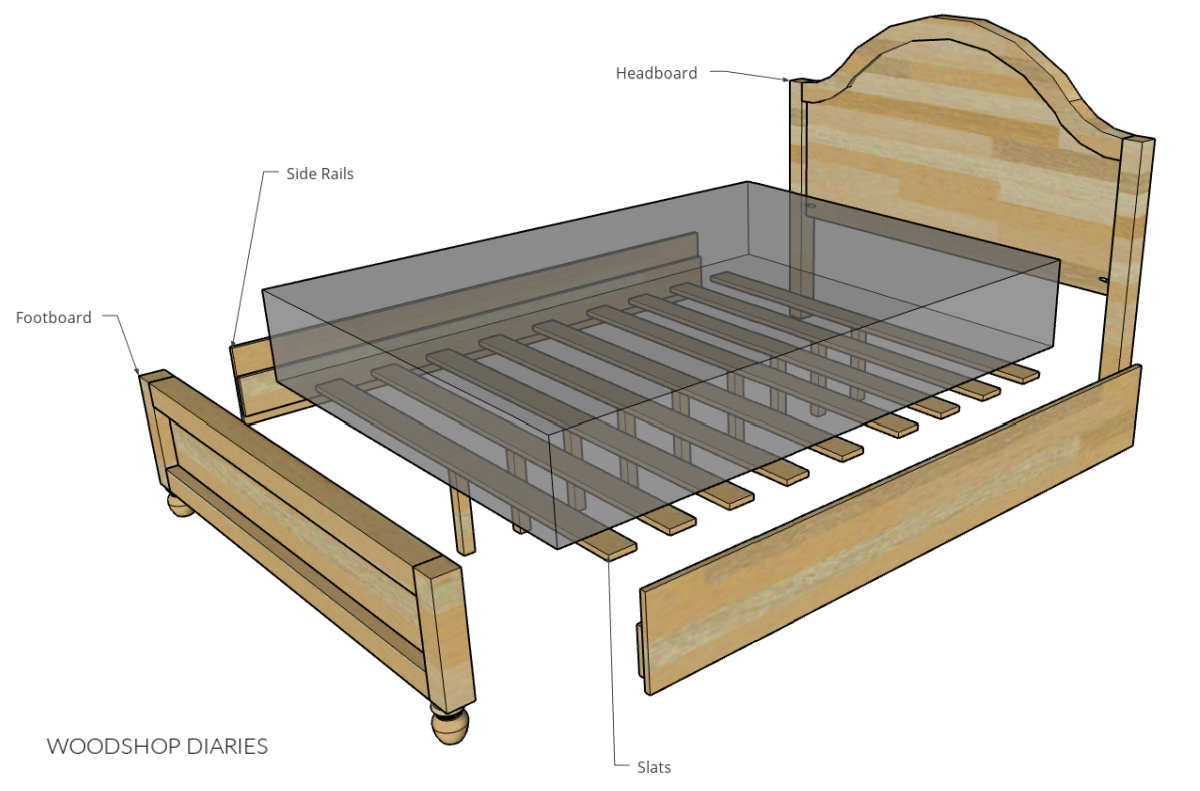
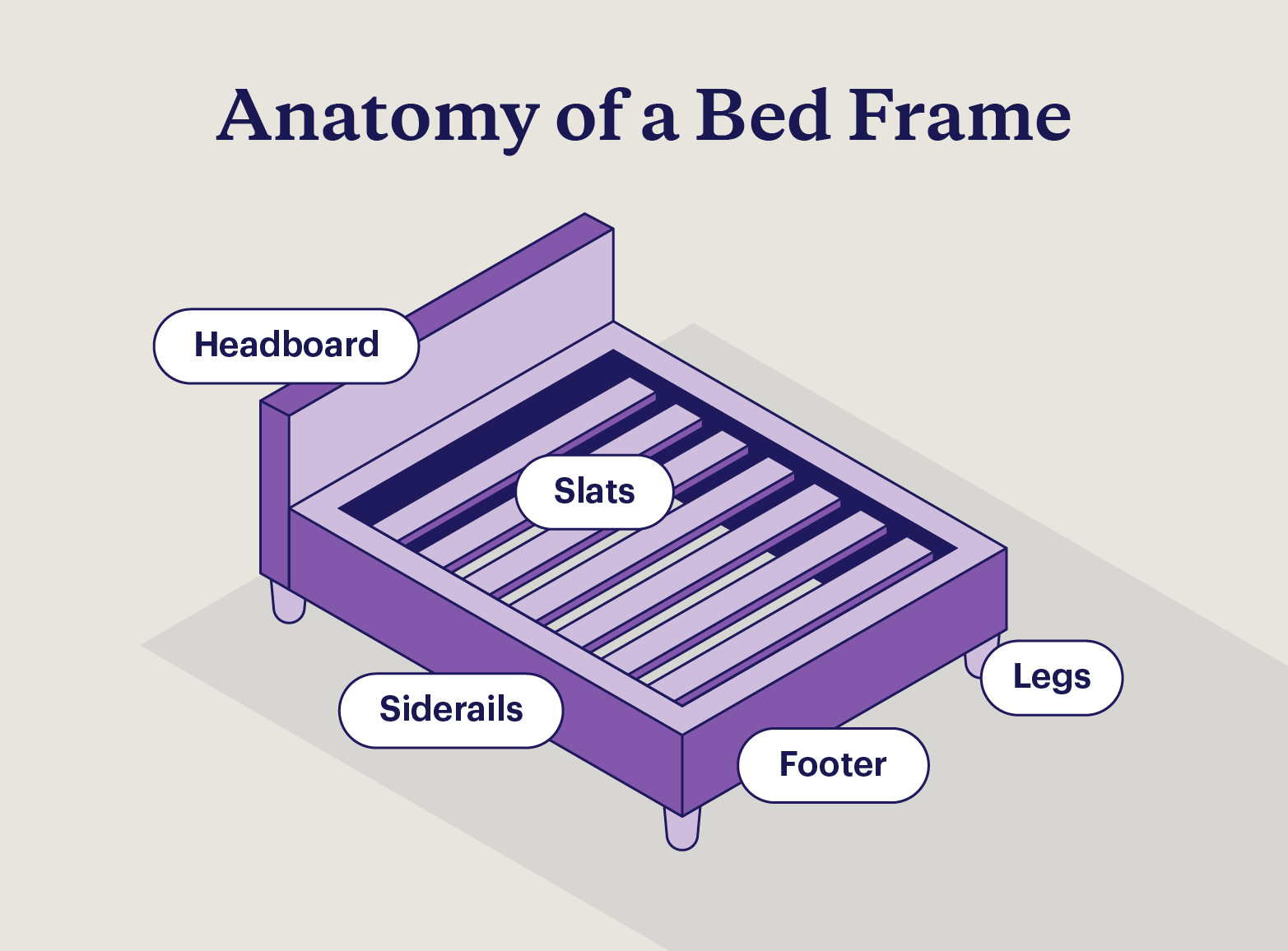
A bed frame supports a mattress through a system of rails, slats, beams, legs, or a solid platform. These parts work together to carry weight and keep the mattress in a level position. The exact support system depends on the frame type.
For example, a traditional metal frame may use side rails and a center support system. A wooden platform bed may use a series of horizontal slats. A solid platform bed uses a broad, firm surface designed to support the mattress.
The important point is that the support must match the mattress. Foam, latex, hybrid, and innerspring mattresses may have different base requirements. A frame that works with one mattress is not automatically suitable for another.
Source: homeprofy.com
Side Rails
These long structural pieces run along the sides of the bed and help form the outer support structure.
Cross Slats
These horizontal pieces run across the width of the bed. They support the mattress at regular intervals when the design permits slatted support.
Center Beam
A center beam provides extra support through the middle of larger bed frames.
Support Legs
Legs transfer weight from the frame to the floor. Larger frames may need additional center legs.
Headboard and Footboard
These parts may add structure, appearance, and a defined edge to the bed. Their exact structural role depends on the design.
Why Is Slat Spacing Important?
Slat spacing refers to the distance between neighboring support slats. If the gaps are too wide for a particular mattress, some areas may not receive enough support. This can allow the mattress to flex between the slats.
There is no single spacing rule that applies to every mattress. For example, Brooklyn Bedding lists a maximum five-inch gap for its specified platform support, while Simmons gives a different requirement for certain platform setups. Tempur-Pedic also provides its own guidance for slat width and spacing.
These differences show why it is better to follow the instructions for your exact mattress instead of relying on a general internet rule. A frame’s advertised compatibility does not replace the mattress manufacturer’s support requirements.
Measure the Gaps
Measure the open distance between slats rather than guessing from the total number of slats.
Check Slat Width
Some mattress makers specify both the width of each slat and the maximum gap between them.
Look for Center Support
Check whether your mattress size requires a center rail and extra legs touching the floor.
Does Every Bed Frame Need a Box Spring?
No. Many modern platform beds are designed to support a mattress directly. They use a suitable slatted base or solid platform, so an additional box spring may not be necessary.
Traditional metal frames often need a separate foundation or box spring because the frame alone does not provide a full mattress support surface. Some adjustable bases also replace the need for a separate box spring.
Before adding a box spring, check the mattress and frame instructions. Adding an unnecessary foundation can raise the bed too high or create a setup that does not match the mattress manufacturer’s requirements.
Platform Bed
Often supports a mattress directly when its platform or slats meet the required specifications.
Traditional Metal Frame
May need a compatible foundation or box spring to provide full support.
Adjustable Base
Can provide both mattress support and movable sleeping positions when designed for the mattress.
What Are the Different Types of Bed Frames?
Bed frames come in several designs, and each serves a slightly different purpose. Some focus on basic mattress support, while others offer storage, extra height, or more control over sleeping positions.
The best type depends on your mattress, room size, preferred height, cleaning habits, and available budget. A large decorative frame may look attractive, but it is not automatically better than a simple frame with strong, compatible support.
Source: purple.com
Platform Bed Frame
A platform bed frame has a built-in support surface for the mattress. It may use wooden slats, metal slats, or a solid platform. Many designs do not require a separate box spring.
Platform beds are useful for people who want a simple setup with fewer parts. However, you must check the slat spacing, center support, and mattress compatibility before use.
Main Purpose
Provides direct mattress support through an integrated base.
Best Feature
Can reduce the need for an additional foundation when the platform meets the mattress requirements.
Traditional Metal Bed Frame
A traditional metal bed frame usually has a simple structure made from steel or another metal. Many models have side rails, cross supports, and legs. Some require a separate box spring or foundation.
This type can be useful when you want a straightforward support structure without a large decorative footprint. Make sure the frame includes enough support for the mattress size.
Main Purpose
Holds a mattress foundation or compatible support system above the floor.
Best Feature
A simple design that can work well in guest rooms and basic bedroom setups.
Wooden Bed Frame
A wooden bed frame uses wood for its main structure. It may include a headboard, footboard, side rails, and wooden support slats. The design can range from simple and modern to traditional and decorative.
Wooden frames are available in different materials and construction styles. Their strength depends on the wood, joints, hardware, dimensions, and overall design rather than appearance alone.
Main Purpose
Supports the mattress while giving the bedroom a defined furniture style.
Best Feature
Offers a wide range of designs, finishes, and construction options.
Storage Bed Frame
A storage bed frame combines mattress support with built-in storage. Some models have drawers along the sides, while others use a lift-up platform to reveal space underneath the mattress.
This design can help people who live in apartments or smaller homes where closet space is limited. However, storage frames may be heavier and harder to move than open designs.
Main Purpose
Provides a sleeping surface while creating extra room for household items.
Best Feature
Makes better use of bedroom space without adding a separate storage cabinet.
Adjustable Bed Frame
An adjustable bed base allows the user to raise or lower certain sections of the sleeping surface. Depending on the model, the head section, foot section, or both may move.
This type is useful for people who prefer different sleeping or resting positions. It must be compatible with the mattress, since not every mattress is designed to bend repeatedly.
Main Purpose
Changes the position of the mattress for sleeping, reading, or resting.
Best Feature
Provides position adjustments without requiring a separate reclining chair.
Upholstered Bed Frame
An upholstered bed frame has fabric or another soft covering over parts of its structure. It often includes a padded headboard and may use a wooden or metal support system underneath.
Its main appeal is comfort when sitting against the headboard and a softer visual style. The fabric may need regular care to control dust and stains.
Main Purpose
Combines mattress support with a padded and finished furniture design.
Best Feature
Provides a softer headboard surface for reading or relaxing in bed.
Bunk Bed Frame
A bunk bed frame places one sleeping area above another. It is often used in children’s bedrooms, shared rooms, dorm-style spaces, and some vacation homes.
Bunk beds require special attention to guardrails, mattress size, mattress thickness, ladder attachment, and assembly. In the United States, bunk beds are covered by federal safety requirements administered by the Consumer Product Safety Commission.
Main Purpose
Creates two sleeping spaces within the floor area normally used by one bed.
Best Feature
Makes efficient use of limited bedroom space.
Important Safety Point
Use the correct mattress size and thickness, install required guardrails, and follow the manufacturer’s age and assembly instructions.
What Is the Difference Between a Bed Frame, Foundation, and Box Spring?
A bed frame, mattress foundation, and box spring are related parts of a bed, but they are not the same thing. Understanding their roles helps you avoid buying parts that you do not need or combining pieces that do not work together.
The bed frame is the outer support structure. A foundation is a base that provides a firm surface for the mattress. A traditional box spring is a type of foundation that uses an internal spring system, although many products sold as box springs today use a rigid design instead.
Some modern beds combine these functions. For example, a platform bed has its own mattress support, while a basic metal frame may need a separate foundation.
Source: storables.com
Bed Frame
Provides the structure, height, and support points for the mattress or foundation.
Mattress Foundation
Creates a supportive base for the mattress. It may sit on a separate bed frame.
Box Spring
A traditional type of mattress foundation that may use springs or a rigid internal structure.
Platform Bed
A bed frame with a built-in support surface that may allow direct mattress placement.
Adjustable Base
A powered or manual support base that changes the position of the mattress.
Can You Put a Mattress Directly on a Bed Frame?
Yes, if the frame is designed to support a mattress directly. A platform frame with properly spaced slats or a suitable solid platform may provide all the support required.
A basic metal frame with only side rails and a center beam may not support the full mattress surface. In that case, a compatible foundation or additional support system may be necessary.
Check the mattress instructions before placing it directly on any frame. The manufacturer’s requirements should guide your decision, especially if you want to maintain warranty coverage.
Direct Placement Is Suitable
When the frame provides the required surface, spacing, strength, and center support.
Additional Support Is Needed
When the frame has open sections or lacks the support required by the mattress.
Can You Use a Bed Without a Bed Frame?
Yes, a mattress can sometimes be placed directly on the floor, but this is not suitable for every mattress or home. The floor provides a firm surface, yet it may reduce airflow underneath the mattress and make cleaning more difficult.
Moisture can collect between a mattress and a floor, especially in humid rooms or homes with limited air circulation. Some manufacturers also restrict floor placement in their warranty terms.
If you prefer a low sleeping setup, consider a low-profile platform designed for your mattress. It can provide a lower height while keeping the mattress off the floor.
Floor Placement
May work only when the mattress manufacturer permits it and the floor remains clean and dry.
Low-Profile Frame
Offers a low sleeping height with a designed support structure underneath.
How to Choose a Bed Frame for Your Mattress
Choose a bed frame based on mattress compatibility, size, weight capacity, construction, and room needs. Appearance matters, but a good-looking frame is not useful if it cannot provide the support your mattress requires.
Start with the mattress manufacturer’s instructions. Then compare the frame’s measurements and support design with those requirements. This simple process can help you avoid common problems such as poor fit, excessive movement, and inadequate center support.
Source: cdn.sanity.io
1. Match the Frame to Your Mattress Size
The frame must match the mattress dimensions. A frame that is too small may compress or overhang the mattress, while an oversized frame may allow unwanted movement.
Common U.S. mattress sizes include Twin, Twin XL, Full, Queen, King, and California King. These sizes are not interchangeable, so check the actual frame and mattress measurements before ordering.
Twin
A common option for children, single sleepers, and smaller bedrooms.
Full
Offers more width than a Twin and is often used in guest rooms or smaller adult bedrooms.
Queen
A popular option for couples and people who want more sleeping space.
King
Provides a wide sleeping surface and usually needs a frame with suitable center support.
California King
Offers extra length compared with a standard King and requires a matching frame.
2. Check the Weight Capacity
A bed frame must support the combined weight of the mattress and sleepers. Some manufacturers list a maximum load for the complete frame, while others provide separate limits or conditions.
Do not assume that a frame can support more weight simply because it is made from metal or solid wood. Check the manufacturer’s stated capacity and whether it includes the mattress weight.
Total Load
Consider the mattress, all sleepers, and any other load the manufacturer allows.
Leg Strength
Check that the legs and center supports are designed for the stated capacity.
3. Consider the Frame Material
Bed frames commonly use metal, solid wood, engineered wood, or a combination of materials. Each option has different maintenance and construction needs.
Metal frames often have a simple structure and can be easy to assemble. Wood frames offer many styles, while upholstered designs add padded surfaces. The quality of the joints, fasteners, and support system matters more than the material name alone.
Metal
Often used for simple frames with rails, cross supports, and adjustable sizing.
Solid Wood
Used for sturdy furniture designs with visible grain and different finish options.
Engineered Wood
Used in many affordable and storage-focused designs. Construction quality and load limits are important.
Upholstered Construction
Combines a structural frame with fabric or another covering, often around a padded headboard.
4. Think About Bed Height
The right bed height depends on personal comfort, mattress thickness, and room layout. A low bed may suit a minimalist bedroom, while a higher bed may provide easier access for some adults.
Remember that the mattress adds height to the frame. A tall mattress on a tall frame may make the sleeping surface difficult to reach.
Low Profile
Creates a lower sleeping surface and a simple bedroom appearance.
Standard Height
Offers a middle ground between floor clearance and easy access.
High Profile
Provides more space underneath and may make getting in and out easier for some users.
5. Decide Whether You Need Storage
A storage bed can be useful if you have limited closet or cabinet space. Drawers may hold sheets, blankets, clothing, and other items that you do not need every day.
However, drawers need enough room to open. Measure the distance between the bed and nearby furniture before choosing this design. Lift-up storage beds also need enough space and safe access to operate their lifting mechanism.
Open Under-Bed Space
Works with storage containers and makes floor cleaning easier.
Drawer Storage
Keeps items organized and accessible without adding a separate dresser.
Lift-Up Storage
Uses the space beneath the mattress and may provide a larger storage area.
6. Check Assembly and Maintenance Needs
A bed frame should be assembled according to its instructions. Incorrect assembly, missing bolts, and loose joints can cause movement, noise, and structural problems.
Before buying, check whether the frame needs special tools, wall clearance, or regular maintenance. If the frame has moving parts, inspect those parts according to the manufacturer’s guidance.
Assembly Instructions
Make sure all parts, fasteners, and instructions are available.
Replacement Parts
Check whether the manufacturer offers compatible replacement slats, legs, or hardware.
Routine Checks
Inspect joints and fasteners periodically, especially if the bed starts making new noises.
Common Bed Frame Problems and How to Avoid Them
Many bed frame problems come from poor assembly, unsuitable support, loose hardware, or a mismatch between the frame and mattress. Some problems are easy to fix, while others indicate that a frame needs repair or replacement.
Pay attention to changes in movement, noise, and mattress position. A bed should feel stable during normal use, and its support parts should remain securely connected.
Source: woodshopdiaries.com
Why Does My Bed Frame Squeak?
A squeaking bed frame often has loose joints, rubbing metal parts, worn hardware, or contact between the frame and floor. The noise may become more noticeable when someone changes position.
Check the assembly points and tighten hardware according to the manufacturer’s instructions. Inspect the slats, legs, and center beam for damage. Do not simply tighten a damaged or stripped connection harder, because this can make the problem worse.
Loose Fasteners
Check bolts and screws at the rails, legs, and joints.
Rubbing Parts
Look for metal or wood sections that move against each other.
Uneven Flooring
Check whether all legs make stable contact with the floor.
Why Does My Mattress Slide on the Bed Frame?
A mattress may slide if the frame is too large, the support surface is smooth, or the frame lacks retaining edges. Movement can also happen when the mattress and frame are not designed to work together.
First, check the measurements and make sure the mattress is centered. If the frame permits it, use a compatible non-slip mattress grip or retaining feature. Avoid adding objects that could damage the mattress or create an unstable support surface.
Check Mattress Fit
Make sure the mattress dimensions match the frame.
Inspect the Support Surface
Check for a smooth or uneven surface that may allow movement.
Use Compatible Retainers
Follow the frame manufacturer’s advice for stopping mattress movement.
Why Does the Middle of My Bed Sag?
A sagging center may indicate a weak center beam, missing support legs, broken slats, or a damaged mattress. The frame and mattress should be checked separately to find the cause.
Remove the mattress if it is safe to do so and inspect the support system. Look for bent rails, cracked slats, loose joints, and legs that no longer touch the floor. Replace damaged parts with compatible components rather than using makeshift supports.
Missing Center Legs
Some larger frames require center legs to carry the load.
Broken Slats
A damaged slat can leave part of the mattress without proper support.
Mattress Wear
If the frame is level and sound, the mattress itself may be worn.
Can a Bed Frame Damage a Mattress?
Yes. A frame can contribute to mattress damage when it has sharp edges, broken slats, wide support gaps, an uneven platform, or an unsuitable structure. Repeated movement against exposed hardware can also damage mattress fabric.
Inspect the support surface before placing a new mattress on the frame. Make sure the frame meets the mattress maker’s requirements and has no broken or protruding parts.
Use Proper Support
Follow the required base type and spacing for your mattress.
Remove Sharp Contact Points
Repair or replace damaged parts that could cut or rub against the mattress.
Avoid Improvised Repairs
Use approved replacement components instead of loose boards or unstable objects.
Does a Bed Frame Improve Sleep Quality?
A bed frame can support a comfortable sleeping setup, but it does not directly guarantee better sleep. Its main contribution is providing a stable and suitable surface for the mattress. A frame that matches the mattress can help prevent discomfort caused by uneven or inadequate support.
Sleep comfort depends on several factors, including mattress condition, firmness, pillow support, room temperature, noise, and personal preferences. A new frame cannot correct every sleep problem.
For example, a person using a mattress with damaged support layers may still feel uncomfortable after buying an expensive frame. On the other hand, replacing a broken or poorly designed frame may solve a problem caused by the support system rather than the mattress.
Source: purple.com
Does Bed Height Affect Comfort?
Bed height can affect how easily you get into bed and stand up. A sleeping surface that is too low may be difficult for some people to use, while an excessively high bed may require extra effort to climb into.
A practical way to assess height is to sit on the edge of the mattress. Many people prefer a position where their feet can rest comfortably on the floor, although the ideal height varies with body size, mobility, and personal preference.
Remember to measure the total height of the frame and mattress together. The frame’s advertised height alone does not tell you how high the finished bed will be.
Easy Access
Choose a combined bed height that allows comfortable sitting and standing.
Mobility Needs
Consider accessibility needs when choosing a low or high frame.
Mattress Thickness
Include mattress height when measuring the finished sleeping surface.
Does a Bed Frame Help With Airflow?
Some raised and open bed frames allow air to move around the underside of a mattress. This can be helpful in keeping the area accessible and may reduce the conditions that allow moisture to remain trapped underneath.
However, airflow depends on the mattress, frame design, room conditions, and humidity. A solid platform does not offer the same open space as a slatted frame, and some mattresses require a specific solid support surface.
Do not choose a slatted frame simply because you assume it always provides better ventilation. Mattress compatibility and proper support must come first.
Bed Frame Safety and Maintenance Tips
A bed frame should remain stable, properly assembled, and free from damaged support parts. Regular checks can help identify problems before they lead to a mattress falling, a joint failing, or someone getting hurt.
The amount of maintenance depends on the frame. Metal models may need occasional fastener checks, while wooden models may need inspection for loose joints, cracks, or damaged slats. Adjustable frames also have moving parts that require care based on the owner’s manual.
Source: homeprofy.com
Follow Assembly Instructions
Use the supplied hardware and follow the correct assembly order. Do not leave out bolts or support parts.
Check the Legs
Make sure all required legs sit firmly on the floor and are not bent or damaged.
Inspect the Slats
Look for cracks, movement, and missing support pieces.
Avoid Overloading
Keep the combined load within the manufacturer’s stated weight capacity.
Keep the Area Clear
Avoid storing objects where they can interfere with frame movement, ventilation, or access.
Are Bed Frames Safe for Children?
Standard low bed frames and bunk beds have different safety concerns. A regular frame should be stable, correctly sized, and free from sharp edges or loose parts. Children’s beds should also be suitable for the child’s age and physical abilities.
Bunk beds need extra care because falls and entrapment can cause serious injuries. The U.S. Consumer Product Safety Commission sets federal requirements for bunk beds, including guardrail and opening requirements. Its guidance states that upper bunk guardrails must extend at least five inches above the mattress surface.
Follow the manufacturer’s age guidance, mattress thickness limits, and assembly instructions. Never assume that placing a bunk bed against a wall makes an unsafe gap harmless.
Secure Guardrails
Install all required guardrails and check that they are firmly attached.
Correct Mattress Fit
Use the mattress size and maximum thickness listed by the bunk bed manufacturer.
Safe Access
Make sure the ladder is secure and designed for the specific bed.
Regular Inspection
Check fasteners, joints, rails, and support parts for damage or movement.
When Should You Replace a Bed Frame?
Replace a bed frame when its main support structure is cracked, badly bent, unstable, or no longer capable of carrying the required load. A frame with damaged joints or missing structural parts should not remain in normal use until it is properly repaired.
Minor problems, such as a loose bolt or a replaceable slat, may be repairable when the manufacturer provides compatible parts. However, a broken center beam or damaged load-bearing connection may require professional assessment or complete replacement.
If a frame repeatedly becomes unstable after correct assembly, stop using it and contact the manufacturer. Do not rely on improvised repairs for structural parts.
Visible Cracks
Cracks in important wooden supports can reduce structural strength.
Bent Metal
Bent rails or legs may no longer carry weight as intended.
Repeated Instability
A frame that repeatedly shifts or loosens may have damaged joints or unsuitable construction.
Missing Structural Parts
Do not use a frame with missing center supports, legs, or required fasteners.
What Happens If You Do Not Use a Bed Frame?
You can use some mattresses without a traditional bed frame, but the alternative support surface must meet the mattress manufacturer’s requirements. A mattress may rest on an approved platform, foundation, adjustable base, or another suitable structure.
Placing a mattress directly on the floor is a different arrangement. It may provide a firm surface, but it can make cleaning harder and allow moisture to collect underneath. Some mattress warranties also restrict or exclude this type of use.
A mattress placed on an unsuitable frame or surface may develop support problems. It may also move more easily, sit unevenly, or experience extra wear. These problems are not guaranteed, but they are reasons to check the support requirements before removing the frame.
Source: storables.com
Possible Cleaning Problems
A mattress on the floor leaves little or no space underneath for regular cleaning.
Possible Moisture Problems
Limited airflow under the mattress can allow moisture to remain trapped in humid conditions.
Reduced Accessibility
A floor-level mattress may be harder for some people to enter and leave.
Warranty Restrictions
Some manufacturers require a specific support type and may exclude damage caused by an unsuitable base.
Is a Bed Frame Necessary for Every Mattress?
No. A traditional bed frame is not necessary for every mattress if another approved support system is available. A suitable platform, foundation, or adjustable base may provide the required support.
The important requirement is not the furniture label but the quality and compatibility of the support surface. Always check whether the mattress needs a solid base, slats, a specific foundation, or another approved setup.
Traditional Frame
Useful when paired with the foundation required by the mattress.
Platform Support
Can replace a separate foundation when it meets the mattress requirements.
Adjustable Support
Can replace a traditional frame and foundation when the mattress is compatible.
Research Notes and Important Questions Not Always Covered
A review of mattress support guidance from Brooklyn Bedding, Simmons, Sealy, and Tempur-Pedic, along with U.S. Consumer Product Safety Commission bunk bed guidance, highlights an important point: a bed frame must do more than hold the mattress by its outer edges. Its support design must match the mattress and the expected load.
The reviewed manufacturer guidance also shows that support rules vary. For example, published slat spacing requirements differ between brands and mattress types. This makes a universal spacing recommendation unreliable.
A useful improvement over a basic bed frame overview is to connect the frame’s purpose with the decisions a reader must make before and after purchase. The following gap map separates practical next questions from assumptions about search demand.
Source: purple.com
Question: Can I Use My Existing Frame With a New Mattress?
Reader stage: Before purchase. Basis: Inferred next need from mattress compatibility requirements. Coverage in reviewed manufacturer guidance: Answered, but exact requirements vary by model. Reader benefit: Helps prevent an unsuitable purchase. Evidence: The mattress warranty and support specifications. Priority: High. Placement: Mattress support and buying sections.
Question: How Far Apart Should Bed Slats Be?
Reader stage: During setup. Basis: Inferred next need from manufacturer support rules. Coverage: Answered with different brand-specific limits. Reader benefit: Helps prevent unsupported mattress areas. Evidence: Exact mattress instructions. Priority: High. Placement: Mattress support section.
Question: Does a Queen or King Frame Need Center Legs?
Reader stage: Before purchase and assembly. Basis: Inferred next need from larger frame support requirements. Coverage: Addressed in some manufacturer warranty documents. Reader benefit: Helps identify missing support parts. Evidence: Frame capacity and mattress support instructions. Priority: High. Placement: Frame support and buying sections.
Question: Can I Put a Mattress on the Floor?
Reader stage: After purchase. Basis: Inferred next need from alternative support choices. Coverage: Addressed in selected mattress guidance, with brand-specific limits. Reader benefit: Helps readers understand moisture and warranty concerns. Evidence: Mattress care and warranty documents. Priority: Medium. Placement: No-frame section.
Question: What Makes a Bunk Bed Different From a Regular Bed Frame?
Reader stage: Before purchase. Basis: Inferred next need from the special design and safety requirements of raised beds. Coverage: Answered by CPSC guidance. Reader benefit: Helps families recognize guardrail, mattress-fit, and entrapment risks. Evidence: Federal bunk bed requirements. Priority: High when relevant. Placement: Bed frame types and safety sections.
Frequently Asked Questions
Q
What Is the Main Purpose of a Bed Frame?
The main purpose of a bed frame is to support a mattress and keep it stable above the floor. It distributes weight through its rails, slats, beams, and legs. It can also make cleaning easier, improve mattress positioning, and provide extra storage.
Q
Can You Sleep Without a Bed Frame?
Yes, you can sleep without a traditional bed frame if your mattress has another suitable support surface. However, placing a mattress directly on the floor may create cleaning and moisture concerns. Check the mattress manufacturer’s instructions before choosing this setup.
Q
Does a Bed Frame Make a Mattress Last Longer?
A suitable bed frame can help protect a mattress from damage caused by poor support. It provides a stable surface and helps prevent unsupported sections from flexing. However, it cannot stop normal mattress wear or guarantee a specific lifespan.
Q
Do All Bed Frames Need a Box Spring?
No. Many platform bed frames have built-in slats or a solid platform that supports the mattress directly. Traditional metal frames may need a separate foundation. Always check the support requirements for your specific mattress.
Q
Does a Bed Frame Need Center Support?
Some larger bed frames need a center support beam and extra legs to carry weight through the middle. This is common for certain queen, king, and California king designs. The exact requirements depend on the frame and mattress manufacturer.
Q
Is a Platform Bed Better Than a Traditional Bed Frame?
Neither option is automatically better for everyone. A platform bed may offer direct mattress support without a separate box spring, while a traditional frame may need an additional foundation. Choose the design that matches your mattress, room, and support needs.
Q
Can a Bed Frame Stop a Mattress From Sagging?
A suitable frame can help prevent sagging caused by inadequate support. However, it cannot repair a mattress that already has worn or damaged internal materials. Inspect both the mattress and the frame when you notice a dip.
Q
How High Should a Bed Frame Be?
There is no single ideal height for every person. The right height depends on the mattress thickness, body size, mobility, and personal comfort. Measure the complete bed and consider whether you can sit on the edge with your feet resting comfortably on the floor.
Q
Can a Bed Frame Improve Airflow Under a Mattress?
An open or slatted bed frame can allow air to move around the underside of a mattress. This may help reduce trapped moisture in some bedroom conditions. However, the mattress manufacturer’s support requirements must take priority over airflow preferences.
Q
How Often Should You Check a Bed Frame?
Inspect the frame periodically and whenever you notice new squeaking, movement, or uneven support. Check the fasteners, legs, rails, slats, and center beam. Follow the manufacturer’s maintenance instructions and replace damaged structural parts before using the bed again.
✦ Wrapping Up
Conclusion
The purpose of a bed frame is to provide a stable and supportive structure for your mattress. It helps distribute weight, keeps the mattress in place, and raises the sleeping surface above the floor. Depending on the design, it can also provide storage, improve bedroom organization, and make cleaning easier.
A good bed frame is not simply the most expensive or attractive option. It is the one that fits your mattress, supports the expected weight, and works with your room and daily needs. Slat spacing, center support, construction quality, and proper assembly are all important factors.
You do not always need a separate box spring or a traditional frame. A suitable platform or adjustable base may provide the support your mattress requires. The key is to follow the instructions for the exact mattress and frame rather than relying on general assumptions.
Before buying a new bed frame, measure your mattress, check its support requirements, and compare the frame’s dimensions and weight capacity. A little preparation can help you create a more stable, practical, and comfortable bedroom.
💡 Key Takeaway
Before choosing a bed frame, check three things: mattress compatibility, weight capacity, and support spacing. Then choose a frame that provides the height, storage, and design features you actually need.