A platform bed frame is a bed base with built-in support that holds a mattress directly, usually without needing a box spring.
In American homes, a platform bed frame offers a simple way to set up a comfortable bedroom without buying a separate box spring. Instead of using a basic metal frame to hold a mattress foundation, this design has its own support system. The mattress rests directly on a set of wooden or metal slats, a solid panel, or another firm surface.
You can find platform beds in apartments, family homes, guest rooms, and master bedrooms across the United States. They come in wood, metal, and upholstered styles. Some have built-in drawers, while others have a simple, low design that saves visual space.
The main benefit is simple: the frame does the work of supporting the mattress. However, not every platform bed works with every mattress. Slat spacing, center support, airflow, frame strength, and mattress warranty rules all matter. Understanding these details can help you choose a bed that fits your room and supports your mattress well.
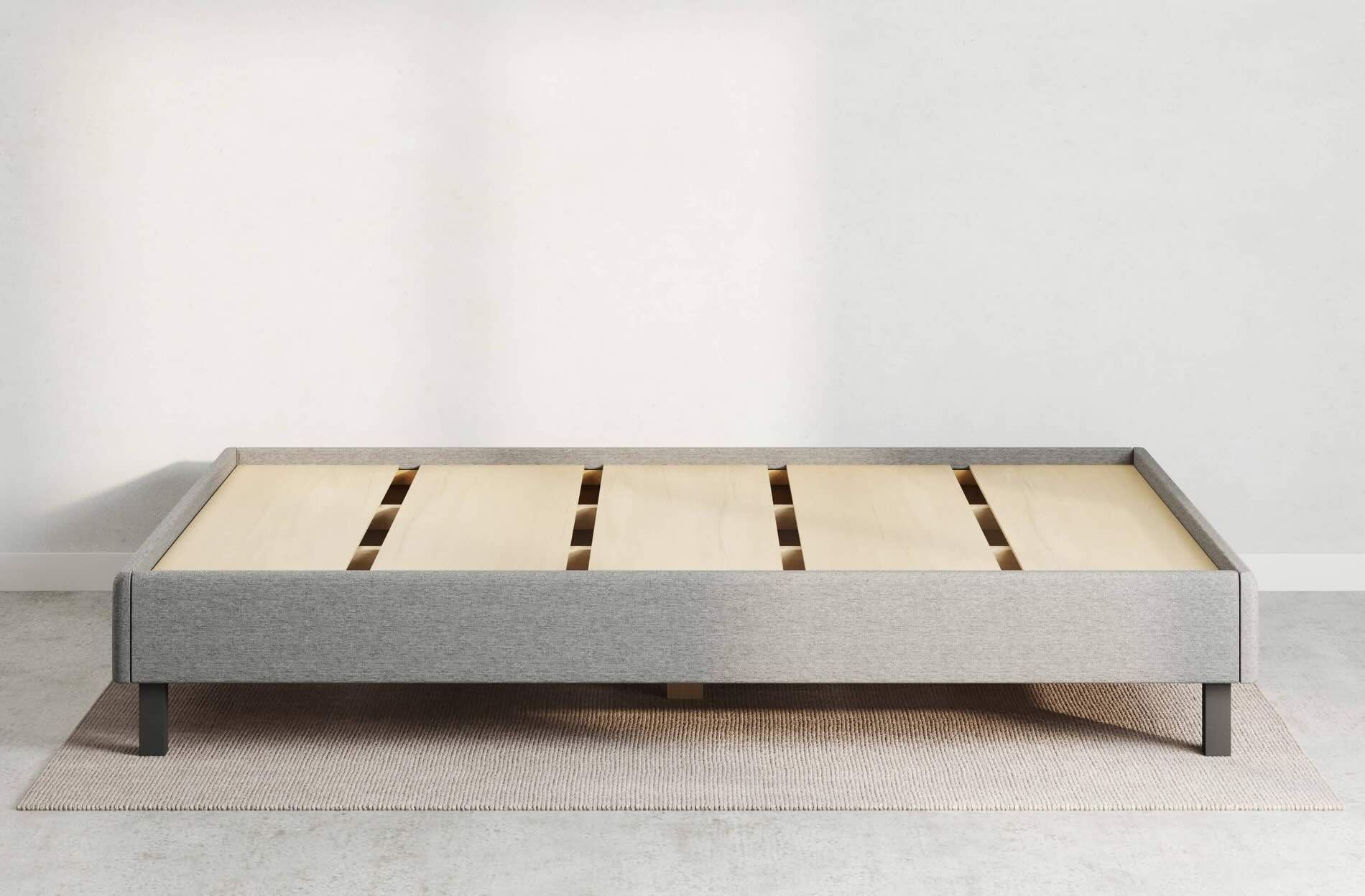
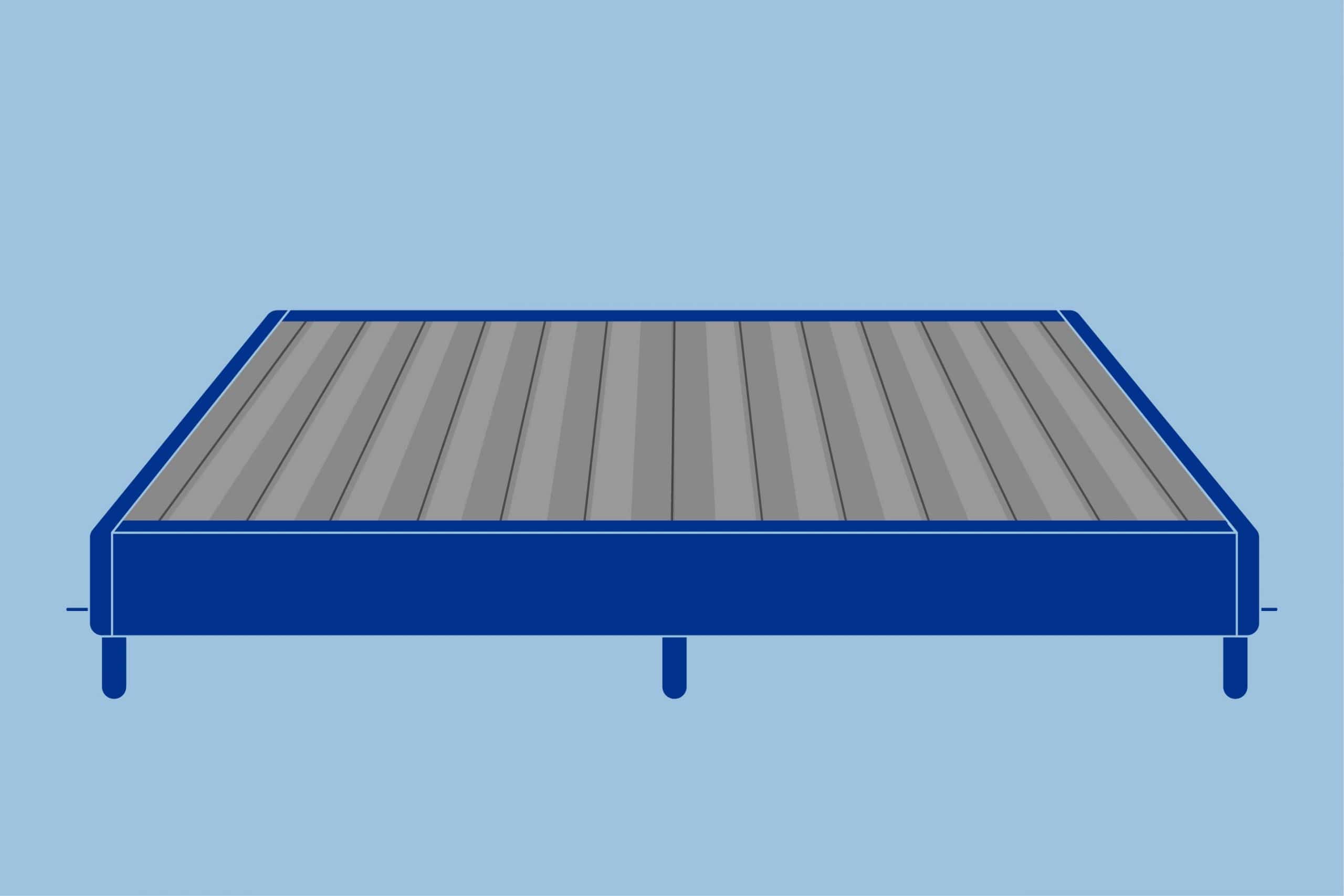
A platform bed frame is a bed structure with a built-in base that supports a mattress without requiring a separate box spring. The base is usually made of closely spaced slats or a solid panel. It may also use a metal grid or another firm support system.
The platform acts as both the bed frame and the mattress support. This makes it different from a traditional bed frame that only holds a separate foundation. The mattress sits directly on the platform, which creates a simple and stable sleeping setup.
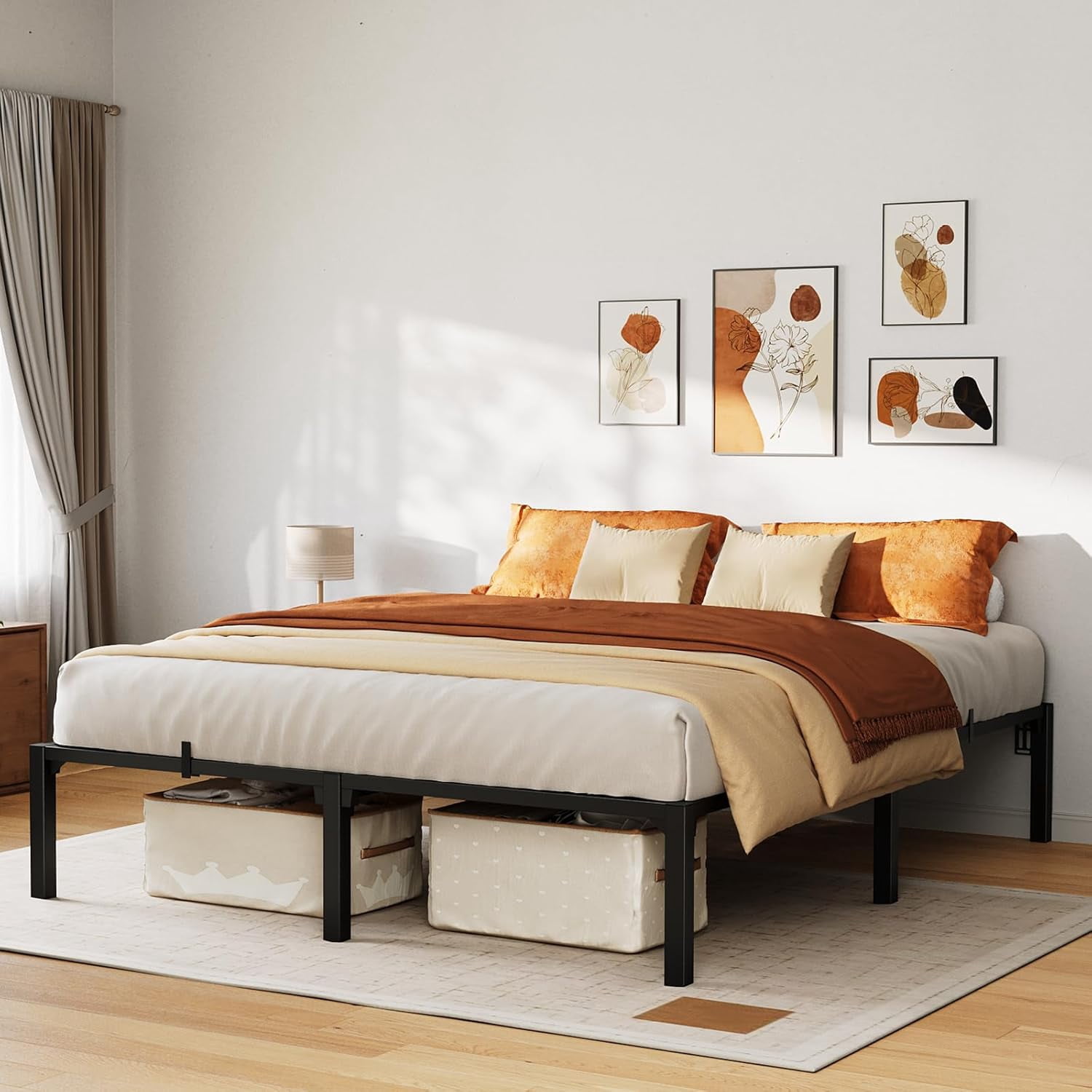
Most platform beds include side rails, a headboard, legs, and a support deck. Some have a footboard, storage drawers, or a padded outer frame. Their height and design can vary widely, so the word platform does not always mean a bed that sits close to the floor.
Think of the platform as a sturdy shelf for your mattress. It spreads the mattress and sleeper’s weight across the frame rather than relying on a separate box spring.
Source: storables.com
Built-in support
The frame includes a surface that holds the mattress directly.
No required box spring
A separate box spring is usually unnecessary when the platform meets the mattress maker’s support rules.
Different designs
The base may use wood slats, metal slats, a grid, or a solid support panel.
Flexible appearance
Platform beds can look modern, rustic, traditional, minimalist, or upholstered.
How Does a Platform Bed Frame Work?
A platform bed works by transferring the weight of the mattress and sleeper through its support deck into the side rails, center beams, legs, and floor. Each part has a job. The deck supports the mattress, the frame keeps the deck in place, and the legs carry the load.
On a slatted model, several horizontal supports spread across the width of the bed. The mattress rests on top of these supports. A solid-panel model uses a continuous surface instead.
A well-built platform should stay firm and level under normal use. The center beam and support legs are especially important on larger beds because they help prevent the middle of the frame from bending.
Mattress contact
The mattress rests directly on the built-in deck.
Weight distribution
The support deck spreads the load across the frame.
Floor support
The legs and rails transfer the load safely to the floor when the frame is properly assembled.
What Makes a Bed Frame a Platform Bed?
The defining feature is the built-in mattress support. A decorative frame with only side rails and a headboard is not automatically a platform bed. If it needs a separate foundation to support the mattress, it serves a different purpose.
A platform bed can have a headboard, footboard, drawers, or decorative trim. These features do not determine whether it is a platform bed. The built-in support surface does.
Essential feature
A load-bearing base designed to support the mattress.
Optional features
Headboards, footboards, drawers, upholstery, and decorative legs.
What Are the Main Types of Platform Bed Frames?
Platform bed frames come in several designs. Their support system, material, height, and storage features affect how they look and work. The best type depends on your mattress, room size, budget, and daily needs.
Some designs focus on a clean appearance. Others provide extra storage or a softer surface around the mattress. Before choosing one, look beyond the outer finish and check how the mattress is supported.
Source: i5.walmartimages.com
Wooden platform beds
These use wood or engineered wood for the frame and support deck. They can suit traditional, rustic, Scandinavian, and modern bedrooms.
Metal platform beds
These often use steel rails, crossbars, and metal slats. They can be practical for simple bedrooms and are often easy to clean.
Upholstered platform beds
These have fabric or leather-like material over padded sections. They often include a padded headboard for sitting up in bed.
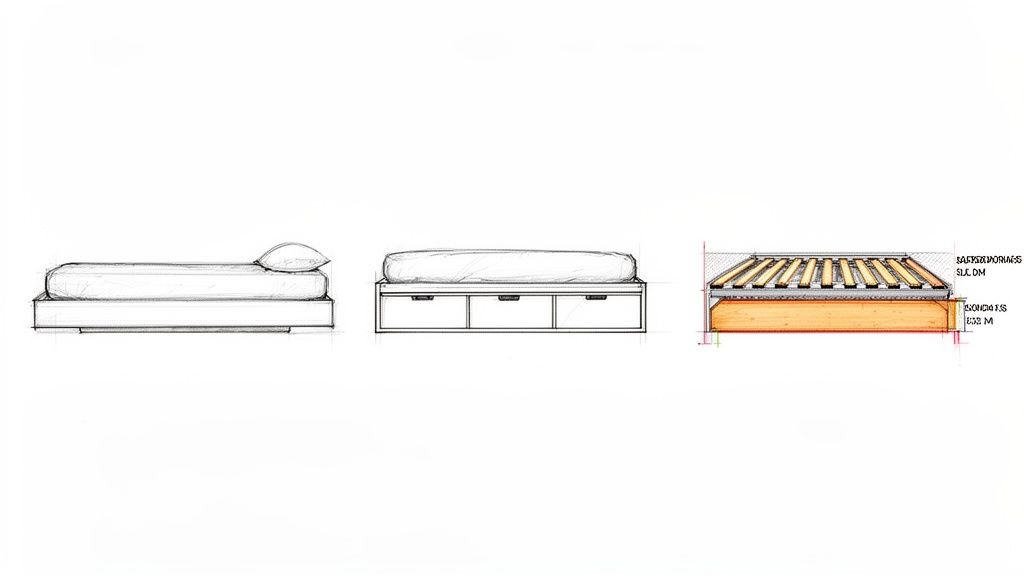
Storage platform beds
These include drawers or other built-in storage areas beneath the mattress.
Low-profile platform beds
These place the mattress closer to the floor and create a compact visual look.
Floating platform beds
These use recessed or hidden legs to create the appearance that the bed is suspended above the floor.
Wooden Platform Bed Frames
Wooden platform beds are popular because they can blend with many bedroom styles. Common materials include solid wood, plywood, and engineered wood products. Some models use a wood frame with separate slats, while others have a solid deck.
Solid wood can be repaired or refinished in some cases. Engineered wood may cost less and provide a consistent finish, but its strength depends on the material grade, thickness, joints, and construction.
Check the slats, center beam, and fasteners before buying. A thick-looking wooden frame is not necessarily strong if its support parts are poorly made.
Main benefit
A warm appearance and a wide range of natural finishes.
Main limitation
Some models can be heavy, and low-quality joints may loosen over time.
Metal Platform Bed Frames
Metal platform beds often use steel or other metal components to create a rigid support structure. Their simple construction can make them useful in guest rooms, rental homes, and smaller bedrooms.
Many models have a slatted or grid-style base. This can allow air to move under the mattress, although the amount of airflow depends on the spacing and design.
Pay attention to the center legs, crossbars, welds, and connecting hardware. A lightweight frame may be easy to move, but it still needs enough support for the mattress and sleepers.
Main benefit
A practical structure that can be easy to assemble and maintain.
Main limitation
Loose joints or metal parts that rub together may cause noise.
Upholstered Platform Bed Frames
An upholstered platform bed has fabric-covered or padded sections around its frame. Common coverings include polyester blends, linen-like fabrics, velvet, and synthetic leather.
Many upholstered designs include a padded headboard. This can make reading or watching television in bed more comfortable. However, fabric can collect dust and may need regular vacuuming or spot cleaning.
Check the cleaning instructions before buying. Some fabrics need special care, and spills may leave marks if they are not cleaned correctly.
Main benefit
A softer appearance and a comfortable surface to lean against.
Main limitation
Fabric needs more care than many bare wood or metal surfaces.
Storage and Floating Platform Beds
Storage platform beds add drawers, compartments, or lift-up storage beneath the mattress. They can help reduce clutter in apartments and bedrooms with limited closet space. Drawer clearance and room layout matter because the drawers need enough space to open.
Floating platform beds use a recessed support base or hidden legs. The structure still rests on the floor, but the legs are less visible. This creates a floating appearance without suspending the mattress in the air.
Storage design
Useful when you need extra space for bedding, clothing, or other household items.
Floating design
Useful when you prefer a clean look with less visible frame hardware.
Does a Platform Bed Frame Need a Box Spring?
No, a properly designed platform bed frame usually does not need a box spring. Its built-in support surface replaces the separate foundation used with many traditional bed frames.
A box spring or foundation is a separate base that sits between the mattress and the bed frame. Older box springs often used internal coils, while many modern foundations use a rigid structure. Both can raise the mattress and provide support when paired with a suitable frame.
Adding a box spring to a platform bed is usually unnecessary. It can also make the bed much taller than intended. More importantly, the extra layer must be compatible with the mattress and the platform design.
Some mattress makers allow or recommend a particular foundation. Others require a flat surface or specific slat spacing. Follow the instructions for your exact mattress rather than assuming that every platform bed is suitable.
Source: m.media-amazon.com
Platform bed alone
Usually provides the mattress support needed for a complete setup.
Platform bed with a box spring
May be possible in certain setups, but can add unnecessary height and change mattress support.
Platform bed with a bunkie board
May help create a more even surface when the existing slats do not meet the mattress maker’s requirements.
What Is the Difference Between a Box Spring and a Platform Bed?
A box spring is a separate mattress support unit. A platform bed is a complete bed frame with its own built-in mattress support. Although both can support a mattress, they are not the same type of product.
A box spring usually needs a separate bed frame to hold it off the floor. A platform bed combines the frame and support surface into one structure. This can reduce the number of parts needed to set up a bed.
Box spring
A separate foundation that adds support and often raises the mattress.
Platform bed
A bed frame with its own support deck, designed for direct mattress placement.
What Types of Mattresses Work With a Platform Bed?
Many mattress types can work on a platform bed, including memory foam, latex, hybrid, and innerspring models. The key condition is that the platform must meet the mattress maker’s support requirements.
A mattress needs an even and stable base. If its support deck has gaps that are too wide, parts of the mattress may sink between the slats. This can affect comfort and may contribute to damage over time.
Do not assume that every mattress has the same requirements. Some makers specify a maximum gap between slats, a minimum slat width, or a solid foundation. These details can vary by mattress model and warranty.
Source: decorguider.com
Memory foam
Often works well on a firm platform with closely spaced slats or a suitable solid deck.
Latex
Needs firm, even support. Check the maker’s rules for slat spacing and airflow.
Hybrid
Can work on a suitable platform, provided the base supports the mattress evenly.
Innerspring
May work on a platform, but the mattress instructions determine whether a particular support system is acceptable.
Can You Put a Memory Foam Mattress on a Platform Bed?
Yes. A memory foam mattress can usually sit on a platform bed when the base is firm, level, and properly spaced. This setup is common because memory foam mattresses generally need consistent support across their lower surface.
Check the maximum slat gap in the mattress manual. A gap of 3 inches is a common requirement for some foam mattress systems, but it is not a universal rule. Some brands allow wider gaps, while others require closer support or a solid foundation.
A platform with a solid, non-breathable deck may also affect moisture control. If you live in a humid area or have limited bedroom airflow, consider a platform with suitable ventilation and follow the mattress care instructions.
Check the slats
Measure the open spaces between them instead of judging by appearance.
Check the surface
Make sure the deck is flat and does not have sharp edges or raised parts.
Check ventilation
Look for a support design that allows suitable airflow under the mattress.
Can You Use a Hybrid or Innerspring Mattress?
A hybrid mattress can often work on a platform bed because its foam and coil layers rest on the platform’s support surface. The frame must still meet the mattress maker’s rules for spacing and structural support.
Some traditional innerspring mattresses were designed for use with a box spring or a particular foundation. Other models can rest directly on a rigid platform. Check the product manual before removing the original foundation from your setup.
Hybrid mattress
Check the support requirements for both the foam layers and coil system.
Innerspring mattress
Confirm that direct platform support is permitted by the mattress maker.
How to Choose the Right Platform Bed Frame
Choose a platform bed by checking mattress support, frame size, weight capacity, height, materials, and room layout. Appearance matters, but the support system should come first.
Start with your current mattress or the mattress you plan to buy. Read its support instructions and note the required base type, slat spacing, and any center-support rules. Then compare those details with the platform bed specifications.
Next, measure your bedroom and check the full outside dimensions of the frame. A queen mattress may have standard dimensions, but the bed frame can be wider or longer because of its headboard and side rails.
Source: i5.walmartimages.com
Mattress compatibility
Confirm that the platform is approved for your mattress type and model.
Frame strength
Check the stated weight limit and the construction of the center support.
Correct size
Match the frame to the mattress and allow enough walking space around it.
Comfortable height
Consider the combined height of the platform and mattress.
Room function
Decide whether you need drawers, a headboard, or space beneath the bed.
Check the Slat Spacing and Support System
Slat spacing is one of the most important details when choosing a slatted platform bed. The gap between supports must be small enough to prevent the mattress from sinking into the openings.
Some mattress makers set a maximum gap of 3 inches. Others permit wider spacing under specific conditions. For example, Tempur-Pedic guidance for certain slatted platforms gives a general rule of slats at least 3 inches wide and no more than 4 inches apart, provided the bed is structurally sound.
These examples show why there is no single spacing rule for every mattress. Use the exact requirements supplied by the mattress maker. If the frame does not meet them, choose another base or ask the maker whether an approved support board is suitable.
Measure each gap
Measure the open space between adjacent slats, not the width of the slat itself.
Check slat condition
Look for cracks, loose fittings, bending, and uneven surfaces.
Inspect center support
Check that the center beam and legs reach the floor and remain secure.
Choose the Correct Bed Size
The platform frame should match the mattress size. Common US mattress sizes include twin, twin XL, full, queen, king, and California king. A frame that is too small may not hold the mattress properly, while an oversized frame can allow it to shift.
Measure the room before ordering. Include space for bedside tables, doors, drawers, closets, and walking paths. Also check the frame’s outside dimensions because decorative rails and headboards can add several inches.
Twin
A common choice for children’s rooms, single sleepers, and compact guest rooms.
Twin XL
Offers extra length and is common in college dorm rooms and taller single-sleeper setups.
Full
Provides more width than a twin and can suit a single adult or a smaller guest room.
Queen
A common choice for couples and primary bedrooms.
King
Provides extra width for couples who want more personal sleeping space.
California king
Offers more length and less width than a standard king.
Consider Bed Height and Weight Capacity
The total sleeping height depends on the platform height and mattress thickness. A low platform with a thick mattress may create a comfortable height, while a thin mattress on the same frame may sit too close to the floor.
For a simple estimate, add the platform height to the mattress thickness. For example, a platform that is 12 inches high with a 10-inch mattress creates a sleeping surface about 22 inches above the floor. This is a hypothetical calculation; the actual height may vary slightly with mattress compression.
Also check the frame’s stated weight capacity. Find out whether the limit includes the mattress, sleepers, and stored items. Manufacturers may define capacity in different ways, so read the product details rather than comparing numbers without their conditions.
Low profile
Can create a clean look but may be harder to get into or out of.
Higher platform
Can make sitting down and standing up easier for some people.
Weight limit
Must account for the load the manufacturer says the frame can safely carry.
Inspect Materials and Assembly Details
A platform bed should have strong joints, stable legs, and a support deck that stays level. Check whether the frame uses solid wood, engineered wood, steel, or a combination of materials.
Read the assembly instructions before buying if possible. Look for details about the number of support legs, center beams, fasteners, and required tools. A complicated frame may take longer to assemble, especially if it has drawers or a large upholstered headboard.
Also check whether replacement slats and hardware are available. This can make future repairs easier if a small part breaks or goes missing.
Joints
Look for secure connections that do not depend on one small fastener to carry a large load.
Hardware
Check that the package includes the correct bolts, screws, brackets, and tools.
Repair options
Find out whether the maker offers replacement parts.
What Are the Advantages of a Platform Bed Frame?
A platform bed offers built-in mattress support, a simple setup, and many design options. It can also reduce the need to buy a separate foundation. These features make it useful for people who want a straightforward bed setup.
The exact benefits depend on the model. A slatted wooden platform, for example, has different airflow and storage features from an upholstered platform with a solid deck.
Source: i5.walmartimages.com
No separate box spring
A suitable platform supports the mattress directly, reducing the number of components you need to buy.
Simple setup
Many designs use one built-in support system instead of a separate frame and foundation.
Wide style range
You can choose from wood, metal, fabric, storage, and minimalist designs.
Potential storage
Some models include drawers or useful space beneath the mattress.
Direct mattress support
A suitable platform can provide a firm and even surface for compatible mattresses.
Different room sizes
Platform beds are available in standard mattress sizes and compact designs for smaller rooms.
Can a Platform Bed Save Money?
A platform bed may reduce the cost of setting up a bedroom because it usually does not require a separate box spring. You may also save space and avoid buying extra support components.
However, the initial price of a platform bed varies by material, design, brand, and construction. A solid wood or upholstered storage model may cost more than a basic metal frame.
Compare the full setup cost rather than looking only at the frame price. Include delivery, assembly, a compatible mattress foundation if required, and any accessories.
Possible savings
No separate foundation purchase when the platform already meets mattress requirements.
Possible extra costs
Storage mechanisms, premium materials, delivery, and professional assembly may increase the total cost.
What Are the Disadvantages of a Platform Bed Frame?
A platform bed is not ideal for every bedroom or sleeper. Its height, support design, cleaning needs, and storage layout can create practical limits.
The most important drawback is that a platform must match the mattress. A frame with unsuitable slat spacing or weak support can cause problems even if it looks attractive.
Think about how you use your bedroom each day. Getting into a very low bed, cleaning beneath it, and opening storage drawers may be more important than the frame’s appearance.
Source: cdn.outrank.so
Lower sleeping height
Some platform beds can make getting into and out of bed harder for people with mobility or joint concerns.
Limited mattress compatibility
A mattress may need a particular deck type or maximum slat spacing.
Potentially less airflow
A solid deck with little ventilation may allow less air movement beneath the mattress than an open slatted design.
Difficult movement
Large wooden, upholstered, or storage models can be heavy and harder to move.
Assembly needs
Some designs have many parts, bolts, drawers, or support pieces that need careful assembly.
Under-bed access
Low-profile designs may leave little room for cleaning or storage.
Are Platform Beds Hard to Get In and Out Of?
They can be, especially when the platform and mattress create a very low sleeping surface. The difficulty depends on your height, mobility, mattress thickness, and personal comfort.
A useful way to judge bed height is to sit on the mattress edge. Your feet should rest comfortably on the floor, and standing up should not require excessive effort. This is a practical fit check rather than a medical rule.
If you have difficulty standing from low seats or beds, compare higher platform models and consider whether a different frame height would be more practical.
Check before buying
Estimate the total height of the platform and mattress together.
Think about daily use
Consider whether you can sit down, stand up, and change bedding without strain.
Can a Platform Bed Make a Mattress Too Firm?
A firm platform can change how a mattress feels compared with a flexible foundation. However, the effect depends on the mattress construction and the support base. A platform does not automatically make every mattress firmer.
If a mattress feels different after moving it to a platform, check whether the old and new support systems are comparable. Also confirm that the mattress is resting evenly and that the frame does not have damaged or uneven slats.
Check the support surface
Make sure it matches the mattress maker’s recommended base.
Check the mattress
Look for signs of wear, unevenness, or damage before blaming the bed frame.
Platform Bed vs. Traditional Bed Frame
The main difference between a platform bed and a traditional bed frame is the mattress support. A platform bed has a built-in deck, while a traditional frame may need a separate box spring or foundation.
Traditional frames often have a simple metal or wooden structure with side rails and a center support. The foundation sits on top of that structure, and the mattress rests on the foundation.
A platform bed combines these functions. This can make setup simpler, but the frame must provide enough support on its own.
Source: amerisleep.com
Platform bed
Built-in support surface, usually no box spring required, and often a lower overall profile.
Traditional bed frame
Often designed to hold a separate foundation, which then supports the mattress.
Which Bed Frame Is Better for Your Bedroom?
A platform bed may suit you if you want fewer components, a simple setup, or a modern bedroom design. It can also be useful when you want a direct support surface for a compatible foam or hybrid mattress.
A traditional frame may suit you if you already own a compatible foundation or prefer a higher sleeping surface. It may also give you more flexibility if you plan to change the type of foundation later.
Neither design is automatically better. The right choice depends on your mattress, room, comfort needs, and budget.
Choose a platform bed when
You want built-in support and do not want to use a separate box spring.
Choose a traditional frame when
You already have a compatible foundation or prefer a separate support system.
How to Set Up and Maintain a Platform Bed
Correct assembly and basic maintenance help a platform bed remain stable. A poorly assembled frame can shift, squeak, or place extra pressure on certain joints.
Before assembly, check that all parts are present and identify the headboard, side rails, center beam, slats, legs, and fasteners. Read the manufacturer’s instructions and use the recommended tools.
Place the frame on a level floor. Install every support part in its specified position, especially the center beam and center legs on larger models. Do not skip hardware or substitute random fasteners.
Source: i5.walmartimages.com
Follow the manual
Use the supplied instructions and install all required parts.
Check the floor
Place the frame on a stable, level surface.
Secure the joints
Tighten fasteners according to the manufacturer’s instructions.
Inspect the support deck
Make sure each slat or panel sits correctly and remains level.
Recheck the frame
Inspect fasteners and support parts periodically, especially if the bed begins to move or make noise.
How to Stop a Platform Bed From Squeaking
A squeaking platform bed often has a loose connection or two parts rubbing together. The sound may come from the side rails, slats, center beam, legs, or headboard.
First, remove the mattress and check the support deck. Look for loose slats, missing fasteners, cracked wood, or metal parts that touch and move against each other. Tighten hardware only as directed by the manufacturer.
If the frame still squeaks, check that it sits evenly on the floor. Do not use improvised fixes that weaken joints or interfere with the support system. Replace damaged parts with approved replacements.
Loose hardware
Check bolts and screws for movement.
Moving slats
Check whether slats have shifted or come loose from their holders.
Uneven floor
Check whether the legs all make stable contact with the floor.
Damaged parts
Replace cracked or bent support parts rather than continuing to use them.
How to Clean and Care for a Platform Bed
Clean a platform bed according to its material. Use a suitable cloth and cleaner for wood, follow the care label for upholstery, and wipe metal parts with products that will not damage their finish.
Vacuum dust from the slats and the area beneath the bed. If the frame has drawers, clean the drawer tracks and remove debris that could affect their movement.
When changing bedding, check the mattress support surface for moisture, dust, and damage. Let any damp area dry fully before replacing the mattress.
Wood
Use a soft cloth and a cleaner approved for the finish.
Metal
Keep the frame dry and inspect for damaged coatings or corrosion.
Upholstery
Vacuum gently and follow the fabric cleaning instructions.
Support slats
Remove dust and check for cracks, bending, or loose fittings.
Common Platform Bed Buying Mistakes to Avoid
Many platform bed problems begin before assembly. Buyers may focus on appearance and price while overlooking the mattress support rules, frame dimensions, and weight capacity.
A few checks can prevent an unsuitable purchase. Read the specifications carefully and compare them with your mattress and bedroom.
Source: i5.walmartimages.com
Ignoring mattress requirements
A platform that looks sturdy may still have slat gaps that are too wide for your mattress.
Assuming every platform is low
Platform beds come in different heights, so check the actual measurements.
Forgetting center support
Larger frames may need a center beam and legs to support the middle of the bed.
Ignoring outside dimensions
Headboards and side rails can make a frame larger than the mattress itself.
Adding an unnecessary box spring
An extra foundation may increase bed height and create a setup the manufacturer did not intend.
Overlooking assembly quality
Missing bolts, loose joints, or poorly fitted slats can reduce stability.
Not checking the warranty
The mattress warranty may specify a particular foundation or maximum slat gap.
What Should You Do if Your Mattress Sags on a Platform Bed?
If a mattress begins to sag, first determine whether the mattress or the support frame is responsible. Remove the bedding and inspect the mattress surface, then check the platform for damaged slats, loose parts, or a weak center support.
Measure the slat gaps and compare them with the mattress maker’s instructions. If the platform does not meet the stated requirements, contact the manufacturer before adding a board or changing the support system.
If the platform is sound and meets the mattress requirements, review the mattress warranty and contact the mattress maker about the sagging. Do not assume that replacing the bed frame will fix a mattress that has developed an internal defect.
Inspect the mattress
Look for uneven areas, visible damage, or a change in surface level.
Inspect the frame
Check slats, center beams, legs, and connecting hardware.
Compare support rules
Confirm that the platform meets the exact mattress requirements.
Contact the manufacturer
Ask about warranty coverage and approved support solutions.
Who Should Consider a Platform Bed Frame?
A platform bed may suit people who want a simple mattress support system, a modern bedroom look, or fewer separate bed components. It can also work well in a guest room where a straightforward setup is useful.
However, the right design depends on the sleeper. Someone who prefers a higher bed may want a taller platform, while someone who needs storage may prefer a drawer model. A person with mobility concerns should pay close attention to the total sleeping height.
The best platform bed is not necessarily the most expensive or the most attractive one. It is the frame that fits your mattress, room, support needs, and daily routine.
Source: amerisleep.com
Apartment residents
May benefit from a simple design that avoids the need for a separate foundation.
Minimalist bedrooms
May suit a low-profile frame with clean lines and fewer visible parts.
People who need storage
May prefer a platform with drawers or a lift-up storage compartment.
Guest room owners
May find a platform bed useful for creating a simple and complete sleeping setup.
People with mobility concerns
Should compare the full bed height and ease of getting in and out before buying.
Is a Platform Bed Frame Worth It?
A platform bed can be worth considering if you want built-in mattress support and a frame that does not normally need a separate box spring. Its simple design can also make it easier to plan a bedroom setup.
It may not be the right option if your mattress requires a different foundation, if you prefer a much higher bed, or if the available models do not meet your storage and support needs.
Compare the full cost, measurements, mattress requirements, and assembly details before deciding. A good match should support your mattress properly and remain practical for everyday use.
Good fit
You want a built-in support deck and have a compatible mattress.
Possible poor fit
Your mattress requires a different support system or the available bed heights do not suit you.
What to Check Before Buying a Platform Bed Online
When shopping online in the United States, product photos rarely show every detail needed to judge a platform bed. Read the specifications, assembly manual, return policy, and mattress compatibility information before placing an order.
Pay special attention to the difference between mattress dimensions and frame dimensions. Also check whether the listed weight capacity refers to the mattress and sleepers together or uses another measurement method.
If the listing does not show slat spacing or center support, contact the seller or manufacturer. Do not assume that a claim such as no box spring needed proves compatibility with every mattress.
Source: i5.walmartimages.com
Product dimensions
Check the inner mattress area, outer frame size, headboard height, and platform height.
Support details
Look for slat width, gap measurements, center beams, and support legs.
Included parts
Confirm whether slats, hardware, headboard, and center supports come with the frame.
Delivery and returns
Check shipping costs, return conditions, restocking fees, and package requirements.
Warranty
Review coverage for the frame and compare it with the separate mattress warranty.
Questions to Ask the Seller
If a listing leaves out important information, ask the seller for exact measurements and written compatibility details. Clear answers are more useful than general claims about strength or universal mattress fit.
What is the maximum slat spacing?
Ask for the actual measurement between each support slat.
Does the frame have center legs?
Ask how the center beam is supported, especially for queen and larger sizes.
What is the weight capacity?
Ask what the listed limit includes and whether it applies to the complete bed setup.
Can I get replacement parts?
Ask whether the manufacturer sells replacement slats, brackets, and hardware.
Does it support my mattress?
Give the seller the exact mattress model and ask whether its support requirements are met.
Research Notes and Next-Question Coverage
This guide addresses the main informational intent behind the question what is a platform bed frame. It also covers practical decisions that follow from the definition, including box spring use, mattress compatibility, frame height, support spacing, and common setup problems.
The research review considered platform bed explanations and buying guidance from GoodBed, Tom’s Guide, Saatva, Tempur-Pedic, and other mattress and furniture resources. These pages commonly explain the built-in support system and the lack of a required box spring. More useful detail comes from checking the support requirements for the exact mattress rather than treating all platform frames as interchangeable.
The main improvement in this guide is the distinction between a platform bed’s general design and the specific support rules for an individual mattress. Slat spacing, ventilation, weight capacity, and center support should be checked as separate details. No hands-on product testing or independent structural testing was conducted for this article.
The following gap map separates practical questions that arise from the buying task from verified search demand. These are editorial research findings, not claims about search volume or ranking.
Source: decorguider.com
Question: How far apart should platform bed slats be?
Reader stage: Before buying. Basis: Inferred next need from mattress compatibility. Competitor coverage: Answered with varying measurements. Reader benefit: Helps prevent an unsuitable support purchase. Evidence: Exact mattress maker instructions. Priority: High.
Question: Can a memory foam mattress go on a platform bed?
Reader stage: Before setup. Basis: Inferred next need from mattress compatibility. Competitor coverage: Commonly answered, but sometimes without brand-specific limits. Reader benefit: Helps protect mattress support and warranty requirements. Evidence: Mattress maker guidance. Priority: High.
Question: Does a platform bed need a box spring?
Reader stage: Initial research. Basis: Core related question found across reviewed guides. Competitor coverage: Answered. Reader benefit: Explains the basic setup and avoids unnecessary purchases. Evidence: Platform design and mattress support documentation. Priority: High.
Question: How do you stop a platform bed from squeaking?
Reader stage: After assembly. Basis: Inferred next need from frame maintenance. Competitor coverage: Not checked consistently across the reviewed definition-focused pages. Reader benefit: Provides a safe troubleshooting order. Evidence: Frame assembly and maintenance instructions. Priority: Medium.
Question: Is a platform bed difficult to get out of?
Reader stage: Before buying. Basis: A concern discussed in reviewed platform bed guidance. Competitor coverage: Answered briefly. Reader benefit: Connects total bed height with everyday access. Evidence: Frame and mattress height measurements. Priority: Medium.
Question: What should you do if a mattress sags on a platform?
Reader stage: After setup. Basis: Inferred next need from support compatibility. Competitor coverage: Shallow in general buying explanations. Reader benefit: Separates mattress problems from frame problems. Evidence: Mattress warranty and support instructions. Priority: Medium.
Research Scope and Evidence Limits
The research sample included GoodBed’s bed frame and mattress support guide, Tom’s Guide’s platform bed explanation, Saatva’s platform bed buying guide, and Tempur-Pedic’s slatted foundation guidance. These sources provide different levels of detail about frame design, box springs, and mattress support.
Manufacturer support requirements apply to the products and mattress models covered by those instructions. A measurement supplied for one mattress brand should not be treated as a universal standard for all foam, latex, hybrid, or innerspring mattresses.
This article does not claim to represent a complete review of every platform bed sold in the United States. Product prices, availability, model specifications, and warranty terms can change. Readers should confirm current details with the relevant manufacturer before buying.
Documented information
Platform bed construction, common support designs, and manufacturer-specific mattress support rules.
Editorial analysis
Practical comparisons and buying checks based on the relationship between frame design and mattress requirements.
Not tested
No physical bed frame assembly, weight testing, noise testing, or long-term mattress performance testing was performed.
Frequently Asked Questions
Q
What is the main purpose of a platform bed frame?
The main purpose of a platform bed frame is to support a mattress directly without requiring a separate box spring. Its built-in base distributes the mattress and sleeper’s weight across the frame and its legs. This creates a complete mattress support system in one piece of furniture.
Q
Can you put a regular mattress on a platform bed?
Yes, many regular mattresses can be used on platform beds. However, the platform must meet the mattress maker’s requirements for support, slat spacing, and ventilation. Check the mattress manual before placing it on a new frame.
Q
Is a platform bed better than a box spring?
Neither is automatically better because they serve different purposes. A platform bed is a complete frame with built-in support, while a box spring or foundation is a separate support unit used with a compatible frame. Your mattress requirements, preferred bed height, and budget determine which setup makes more sense.
Q
Do platform beds need special mattresses?
No. Platform beds do not always require a special mattress. Many standard foam, latex, hybrid, and innerspring mattresses can work on them. The important detail is whether the mattress maker approves the platform’s surface and support measurements.
Q
Are platform beds good for small bedrooms?
They can work well in small bedrooms because many models have simple designs and a low visual profile. Storage versions can also provide space for bedding and clothing. However, check the full outside dimensions and drawer clearance before choosing one.
Q
How high should a platform bed be?
There is no single ideal platform height for everyone. The total sleeping height depends on the frame and mattress thickness. Choose a height that lets you sit on the edge comfortably, place your feet on the floor, and stand up without unnecessary effort.
Q
Can you put a box spring on top of a platform bed?
You may be able to place a compatible foundation on some platform beds, but it is usually unnecessary. A box spring can make the bed taller and may change how the mattress is supported. Check the instructions for both the platform and mattress before adding one.
Q
Do platform beds have enough storage underneath?
Storage depends on the design. Some platform beds have open space beneath the frame, while others include drawers or lift-up compartments. Low-profile models may have very little clearance, so measure the space before planning to store boxes or cleaning equipment underneath.
Q
How long does a platform bed frame last?
There is no fixed lifespan for every platform bed. Its durability depends on materials, construction, weight load, assembly, maintenance, and daily use. Inspect the support slats, joints, legs, and fasteners regularly, and replace damaged parts before continued use.
Q
Can a platform bed damage a mattress?
A properly built and compatible platform should not damage a mattress through normal use. Problems may occur if the slat gaps are too wide, the surface is uneven, the center support is weak, or the mattress maker’s requirements are ignored. Check compatibility before placing the mattress on the frame.
✦ Wrapping Up
Conclusion
A platform bed frame is a bed with a built-in support surface that holds a mattress directly. It usually removes the need for a separate box spring and combines the mattress support and bed frame into one structure. Common designs include wooden, metal, upholstered, storage, low-profile, and floating platform beds.
The biggest advantage is a simple setup with fewer separate components. However, the frame must support the mattress correctly. Slat spacing, center support, frame strength, ventilation, and mattress warranty rules are all important details to check.
A platform bed can be a practical choice for many American bedrooms, from small apartments to larger primary bedrooms. The right model should fit your mattress, room dimensions, comfort needs, and daily routine. Do not choose a frame based on appearance alone.
💡 Key Takeaway
Before buying a platform bed frame, check your mattress manufacturer’s support requirements, measure the frame and bedroom, confirm the slat spacing and center support, and calculate the total sleeping height. These four checks can help you avoid an unsuitable bed and build a stable, comfortable sleeping setup.