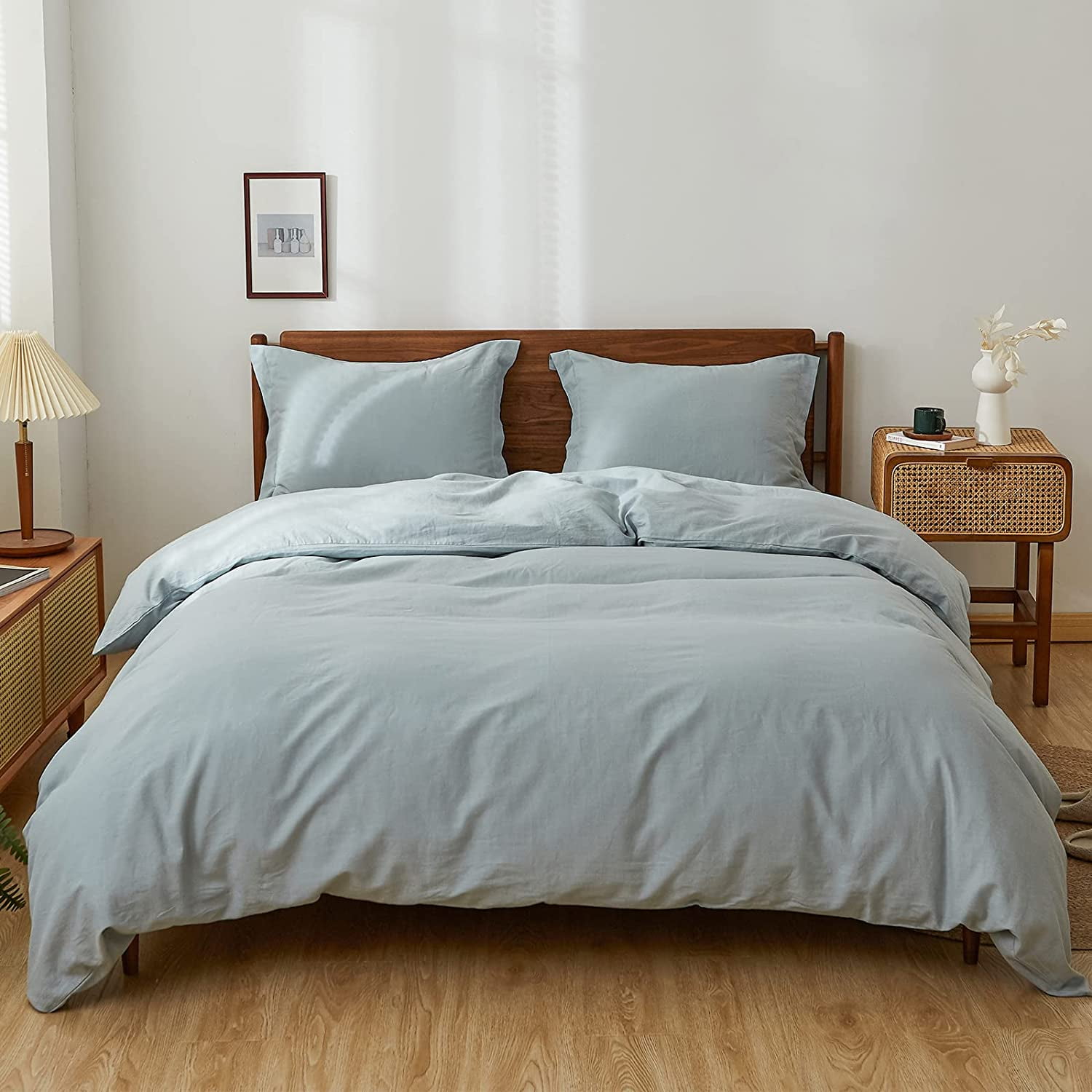
A duvet cover is a removable fabric case that fits over a duvet insert or compatible comforter. It protects the filled bedding, makes washing easier, and lets you change the look and feel of your bed without buying a new comforter.
In American homes, bedding often includes a fitted sheet, a flat sheet, blankets, and a comforter. A duvet cover offers another way to keep a bed warm and neat. It works like a pillowcase, but it is made for a large, filled bed covering. The insert goes inside, and the cover closes along one edge.
A duvet cover does not usually have any filling of its own. Instead, the duvet insert provides the warmth, while the outer cover provides the fabric surface you see and touch. This two-part design makes it easier to clean the bedding and change its style. You can use a light cotton cover in summer or a warmer fabric in colder months.
Many American bedding stores sell duvet covers in twin, full, queen, king, and California king sizes. Some packages include matching pillow shams, but the filled insert is often sold separately. Checking the package details before buying can prevent a common mistake: purchasing a cover without the item that goes inside it.
A duvet cover is a fabric covering designed to hold and protect a separate filled bedding layer. It has an opening on one side, allowing you to slide a duvet insert inside. Once the insert is in place, you close the opening with buttons, a zipper, snaps, or fabric ties.
Think of it as a large pillowcase for your bed. A pillowcase covers a pillow and protects its fabric. In the same way, a duvet cover surrounds a filled insert and protects its outer shell from everyday dirt, body oils, and light spills.
The cover itself is normally a simple fabric shell without thick padding. Its job is not to create most of the warmth. That comes from the insert, which may contain down, feathers, wool, cotton, or synthetic filling.
Because the cover is removable, you can change its color or material without replacing the entire bedding set. This is useful if you enjoy changing bedroom styles or want different fabrics for different seasons.
Source: fourgenerationsoneroof.com
Outer fabric layer
This is the visible part of the bedding. It affects the texture, color, pattern, and feel against your skin.
Opening and closure
One edge opens so the insert can go inside. Buttons, zippers, snaps, or fabric ties keep the insert enclosed.
Inner attachment points
Some covers have corner ties or small tabs that connect to matching loops on the insert and help prevent movement.
Removable construction
You can take the cover off for washing or replace it with another design while keeping the same insert.
What Goes Inside a Duvet Cover?
A duvet insert is the usual item placed inside a duvet cover. It is a filled blanket-like layer designed to provide warmth and a soft, full shape. It may have stitched boxes, channels, or other sections that help keep its filling spread out.
A compatible comforter can also fit inside a duvet cover. However, its measurements should be close to those of the cover. A comforter that is too small may move around, while one that is too large may create tight corners and uneven folds.
Duvet insert
The standard inner layer, made with down, down alternative, wool, or other filling.
Comforter
A finished filled bed covering that can sometimes be used as an insert if its dimensions fit.
Light blanket
A thin blanket may fit, but it can shift more easily and may not create a full duvet shape.
What Is the Purpose of a Duvet Cover?
The main purpose of a duvet cover is to protect the filled insert and make everyday bedding care easier. Since the cover sits around the insert, it takes much of the contact from skin, hair, dust, and normal household use.
Washing a large comforter can be difficult. It may not fit inside a standard home washing machine, and some filled bedding needs special care. A removable cover gives you a smaller outer layer that is often easier to wash separately.
A duvet cover also gives you more control over bedroom style. Instead of buying a new filled comforter whenever you want a different color, you can keep the same insert and change the cover.
Another benefit is that the cover can change the feel of the bed. Smooth cotton, textured linen, and soft flannel each create a different surface. The warmth still depends mostly on the insert, but the outer fabric can affect how the bedding feels against your body.
Source: beddley.com
Protects the insert
The fabric shell helps reduce direct contact with dirt, sweat, body oils, and everyday marks.
Simplifies laundry
You can remove the outer layer and wash it separately, following its care label.
Changes bedroom style
Different colors, prints, and textures let you update your room without replacing the filled insert.
Supports seasonal changes
You can switch between lighter cotton, breathable linen, or warmer flannel covers while keeping the same insert.
Extends practical use
A removable outer layer can help keep the insert cleaner, although it does not prevent every stain or form of wear.
Does a Duvet Cover Make a Bed Warmer?
A duvet cover can slightly change how warm or cool the bedding feels, but the insert usually has the greater effect. Its filling, thickness, construction, and warmth rating determine most of the insulation.
A thick flannel cover may feel warmer against the skin than a light cotton percale cover. However, changing the cover alone will not turn a thin summer insert into a thick winter one. Choose the insert according to your room temperature and personal comfort.
For warmer conditions
Consider a light cotton or linen cover with an insert that has a suitable low warmth level.
For colder conditions
A flannel cover may feel cozy, but a warmer insert is usually the more important choice.
Duvet Cover vs. Comforter: What Is the Difference?
A duvet cover and a comforter are not the same thing. A duvet cover is an empty fabric shell, while a comforter is a filled bed covering that can usually be used on its own.
A traditional duvet setup has two separate parts: the insert and the cover. The insert provides warmth, and the cover surrounds it. A typical comforter combines its outer fabric and filling into one finished product.
This difference affects cleaning and bedroom styling. With a duvet, you can remove the cover without washing the entire filled layer. With a comforter, you normally clean the whole item according to its care instructions.
Neither setup is right for every household. A comforter may suit someone who wants a simple bed with fewer parts. A duvet system may suit someone who prefers removable covers, flexible styling, and separate care for the outer fabric.
Source: hiendaccents.com
Construction
A duvet uses a separate insert and cover. A comforter normally has its filling permanently enclosed in its outer fabric.
Cleaning
A duvet cover can usually be removed for separate washing. A comforter must be cleaned as a complete filled item.
Appearance
A duvet cover can be changed to create a new look. A comforter’s outer design usually stays the same.
Setup
A comforter is generally ready to use. A duvet requires the insert to be placed and secured inside its cover.
Purchasing
A duvet cover and insert may be sold separately. A comforter is commonly sold as one filled item.
Can You Put a Comforter Inside a Duvet Cover?
Yes. You can put a comforter inside a duvet cover if the two items have compatible dimensions. This can be a useful way to protect an existing comforter or give it a new appearance.
Check the comforter’s actual width and length before choosing the cover. If the comforter has corner loops and the cover has matching ties, connect them to reduce shifting. Without attachment points, the comforter may move or fold inside the shell.
Also consider the thickness of the comforter. A bulky comforter inside a small cover may feel tight and uneven. A thin comforter inside a much larger cover may slide around and leave empty areas.
Measure first
Compare the actual dimensions rather than relying only on labels such as queen or king.
Check attachment points
Look for corner loops, ties, or snaps that can connect the two pieces.
What Materials Are Used to Make Duvet Covers?
Duvet covers come in natural and synthetic fabrics. The material affects softness, breathability, weight, texture, durability, and laundry needs. Your best option depends on the climate, your preferred sleeping feel, and how much care you want to provide.
Cotton is a common choice because it comes in several weaves and is available at many price points. Linen has a relaxed texture and allows air to move through its fabric. Polyester blends are often easy to maintain, while flannel offers a soft surface that many people prefer in colder weather.
The weave matters as well as the fiber. Cotton percale often has a crisp, matte feel, while cotton sateen usually feels smoother and has a slight sheen. Neither weave is automatically better. The right choice is the one that feels comfortable and suits your care routine.
Source: roughlinen.com
Cotton
A versatile fabric with a familiar feel. It is available in many weights, colors, and weaves.
Linen
Made from flax fibers, linen has a textured appearance and an airy feel. It can wrinkle more easily than some other fabrics.
Polyester
A synthetic fabric that is often affordable and easy to care for. Its breathability and feel depend on the fabric construction.
Cotton-polyester blend
Combines two fibers and may offer a balance of softness, price, and easier maintenance.
Flannel
A soft fabric with a brushed surface that can feel cozy during colder months.
Silk
A smooth natural fiber with a delicate feel. It usually requires more careful cleaning than basic cotton.
Which Duvet Cover Material Is Best for Everyday Use?
Cotton is a practical starting point for many households because it is widely available and comes in different fabric weights. A cotton percale cover may suit someone who likes a crisp, light feel. Cotton sateen may appeal to someone who prefers a smoother surface.
Linen can be useful if you like a relaxed look and a fabric with an airy feel. Polyester or a blended fabric may be more suitable if simple laundry care and a lower purchase cost are priorities.
There is no single best material for everyone. Read the care label, feel the fabric when possible, and consider whether you want a cool, crisp, smooth, or warm surface.
For everyday versatility
Look at cotton covers with a weave and weight that feel comfortable to you.
For a relaxed bedroom style
Consider linen if you like its natural texture and do not mind some wrinkles.
For colder months
Consider flannel if you want a softer, warmer-feeling outer layer.
How to Choose the Right Duvet Cover for Your Bed
Choose a duvet cover by checking its dimensions, fabric, closure, inner attachment points, and care instructions. These details matter more than the color or pattern alone. A cover that looks attractive but does not fit the insert can become uncomfortable and difficult to manage.
Start by measuring your duvet insert. Compare its width and length with the cover’s listed finished dimensions. Bedding sizes can vary between brands, so do not assume that every queen cover has the same measurements.
Next, consider the fabric. Think about your room temperature and the way you sleep. If you tend to feel warm, a lighter and more breathable-feeling fabric may be more comfortable. If you prefer a cozy surface, a brushed or heavier fabric may suit you better.
Finally, check how the cover closes and whether it has interior ties. A closure keeps the opening shut, but corner ties help hold the insert in place. These are separate features, and both can make the bedding easier to use.
Source: aanyalinen.com
Correct dimensions
Choose a cover that closely matches the insert’s actual width and length.
Suitable fabric
Select a material that matches your preferred texture, room conditions, and laundry routine.
Secure closure
Choose buttons, snaps, or a zipper according to your preference for access and fastening.
Interior ties
Look for corner ties or tabs if your insert has matching loops.
Clear care instructions
Check washing temperature, drying limits, and any special cleaning requirements.
Understanding Duvet Cover Sizes
Duvet covers are commonly sold in twin, full, queen, king, and California king sizes in the United States. These labels are useful starting points, but the exact measurements can differ between manufacturers.
A twin cover is generally intended for a twin insert, while queen and king covers are designed for larger beds. California king bedding may have a different shape and length from standard king bedding, so checking the measurements is especially important.
For the best result, compare the insert’s dimensions with the cover’s finished size. A close match usually helps the insert fill the shell without excessive empty space or strain. Do not automatically buy a larger cover to make the bed look fuller.
Twin
A common option for a single bed. Check whether the product is designed for a standard or extra-long twin insert.
Full or double
Designed for a full-size bed, although some brands use different labels or dimensions.
Queen
A common choice for queen beds. Match the cover to the insert rather than the mattress label alone.
King
A larger option for standard king bedding. Confirm the width and length before ordering.
California king
Made for the different proportions of a California king setup. Check the exact measurements because it is not identical to standard king.
Which Closure Should You Choose?
Duvet covers use several closure styles. Buttons are common and easy to recognize, although fastening a long row can take time. A zipper can close the opening quickly, while snaps offer another simple fastening option.
Some covers use an overlapping fabric flap instead of fasteners. This design is simple, but the insert may move toward the opening during use. Interior corner ties are worth checking regardless of which closure you choose.
Button closure
A familiar option that is simple to repair if an individual button comes loose.
Zipper closure
Closes quickly and keeps the opening together, but the zipper needs careful handling.
Snap closure
Offers quick fastening without a long row of buttons.
Envelope closure
Uses overlapping fabric instead of separate fasteners. It may be less secure if the insert moves.
How to Put a Duvet Cover on a Bed
Putting on a duvet cover means placing the insert inside the fabric shell, connecting the corners, spreading the filling, and closing the opening. The job is easier when you work on a large, flat surface such as your bed.
Before starting, check that the insert and cover have similar dimensions. Find the cover’s opening and identify any interior ties. If the insert has corner loops, make sure they can connect to the cover’s attachment points.
There are several ways to put on a duvet cover. The traditional corner-first method works well for many people. Another option is the roll-up or burrito method, which can make handling a large cover easier.
Source: blog.hemat.id
Step 1: Turn the cover inside out
Lay the cover flat on the bed with its opening near the foot of the bed.
Step 2: Place the insert on top
Spread the duvet insert over the inside-out cover and line up all four corners.
Step 3: Connect the corners
Tie the cover’s inner attachments to the matching insert loops when available.
Step 4: Turn the cover right side out
Reach through the opening, hold the top corners, and pull the cover over the insert.
Step 5: Spread the filling
Shake the duvet gently and smooth the edges until the insert sits evenly inside the cover.
Step 6: Close the opening
Fasten the buttons, zipper, snaps, or fabric ties along the open edge.
How to Use the Burrito Method
The burrito method is another way to fit a duvet cover. Start by turning the cover inside out and laying it flat. Place the insert on top and line up the corners.
Roll both layers together from the closed end toward the opening. When you reach the opening, pull the cover around the rolled insert and fasten the closure. Unroll the bedding and shake it gently to spread the filling.
This method can reduce the amount of lifting and pulling needed. It may take a little practice, especially with a large king-size duvet, but it can be helpful when working alone.
Keep the edges aligned
Line up the cover and insert before rolling so the finished bedding does not twist.
Secure the corners
Use compatible inner ties before closing the cover.
Unroll slowly
Smooth the fabric as you unroll to reduce folds and uneven filling.
How Do You Know the Duvet Cover Is Fitted Correctly?
A properly fitted duvet should look reasonably even across the bed. The insert should reach the corners, and the cover should not have large empty sections or tight areas that pull against the seams.
Check the opening to make sure it is fully closed. If the cover has interior ties, confirm that the insert is attached at each available corner. Give the duvet a gentle shake and see whether the filling stays in place.
Even shape
The insert fills the cover without large empty pockets.
Secure corners
The insert does not fall away from the cover’s corners during normal handling.
Closed opening
No part of the insert is exposed through an open or loose fastening.
How to Wash and Care for a Duvet Cover
Most basic duvet covers can be removed and washed separately, but the correct method depends on the fabric and the manufacturer’s care instructions. Always read the care label before putting a cover in the washing machine.
Remove the insert before washing the cover. Close buttons or zippers when the care instructions allow it, and check the fabric for loose threads or damaged seams. Washing a damaged cover without checking it first may make a small tear worse.
Use the recommended water temperature and detergent. Avoid adding more detergent than needed because leftover soap can make fabric feel stiff. If the cover has special care instructions, follow them instead of using a general bedding routine.
Dry the cover according to its label. Some fabrics can go in a dryer on a suitable setting, while others may need air drying. Make sure the cover is completely dry before putting the insert back inside.
Source: walmart.com
Check the label
Look for the recommended wash temperature, cycle, drying method, and any restrictions.
Remove the insert
Wash the outer cover separately unless the manufacturer specifically recommends another method.
Use suitable detergent
Choose a detergent appropriate for the fabric and follow its instructions.
Avoid excessive heat
Use the drying temperature allowed by the care label to reduce the risk of shrinkage or fabric damage.
Check before reassembly
Make sure the cover is fully dry and its seams and fasteners are in good condition.
How Often Should You Wash a Duvet Cover?
A practical starting point is to wash a duvet cover about every one to two weeks, similar to bed sheets. However, the right schedule depends on how you use your bed and your personal cleaning needs.
You may need to wash it more often if you sleep directly under the cover, have pets on the bed, sweat heavily, or notice visible dirt. If you use a flat sheet between your body and the duvet, the cover may receive less direct contact.
There is no single schedule that fits every household. Regularly check the fabric and follow the care instructions to keep the bedding fresh without unnecessary washing.
Regular use
A one-to-two-week washing routine is a useful starting point for many households.
Pets or frequent spills
Wash sooner when the cover becomes dirty or exposed to spills.
Seasonal storage
Wash and fully dry the cover before storing it for an extended period.
Common Duvet Cover Problems and How to Fix Them
Most duvet cover problems come from a poor size match, loose attachment points, or an unsuitable care routine. You can often fix them by checking the insert and cover before buying replacement bedding.
If the insert keeps moving, check whether the cover has corner ties and whether the insert has matching loops. If the duvet looks uneven, remove it and spread the filling again. A cover that is too large or too small may need to be replaced with one that has closer dimensions.
A damaged zipper, loose button, or torn seam can also affect how well the cover works. Small problems may be repairable, but replace a cover if the fabric or closure can no longer hold the insert securely.
Source: roughlinen.com
The insert slides to one side
Possible cause: missing or unsecured corner attachments. Fix: reconnect compatible ties and loops, then spread the filling evenly.
The duvet looks flat or uneven
Possible cause: the insert is too small, poorly distributed, or not suited to the cover. Fix: check the dimensions and reposition the insert.
The insert keeps coming out
Possible cause: an open or damaged closure. Fix: fasten the opening fully and repair or replace damaged buttons or zippers.
The cover feels too tight
Possible cause: the insert is larger or thicker than the cover can hold. Fix: compare actual measurements and use a compatible size.
The fabric shrinks after washing
Possible cause: unsuitable water temperature or drying heat. Fix: follow the fabric’s care label and avoid excessive heat.
The cover develops a bad smell
Possible cause: trapped moisture or incomplete drying. Fix: wash as directed and let the fabric dry fully before reassembly.
Can You Use a Duvet Cover Without an Insert?
Yes. You can use an empty duvet cover as a lightweight bed layer, especially during warm weather. It may feel similar to a thin sheet or light blanket, depending on its fabric and construction.
However, an empty cover will not provide the fullness or insulation of a filled duvet. It may also move more easily because there is no insert holding its shape. If you want a traditional duvet feel, use a suitable insert.
Suitable for light coverage
A thin cotton cover may work as a simple top layer when you do not need much warmth.
Not a full duvet replacement
An empty cover does not have the filling needed to create the usual loft and warmth.
Can You Put a Duvet Cover Directly on a Mattress?
No. A duvet cover is designed to surround a filled insert, not to cover a mattress. It does not have the fitted corners or elastic needed to stay securely in place like a fitted sheet.
Use a fitted sheet to cover the mattress. Place the duvet and its cover over the sheet as the top bedding layer. This arrangement gives each item a clear purpose.
Fitted sheet
Covers the mattress and usually uses elastic corners to stay in place.
Duvet cover
Surrounds a filled insert and acts as the removable outer bedding layer.
Frequently Asked Questions
Q
Is a duvet cover the same as a bed cover?
Not always. A duvet cover is a removable fabric shell made to hold a separate duvet insert or compatible comforter. The term bed cover can refer to several different products, including bedspreads, quilts, blankets, and decorative coverings. Check the product description to understand exactly what you are buying.
Q
Do you need a duvet insert with a duvet cover?
You need a filled inner layer if you want the traditional warmth and fullness of a duvet. A duvet insert is the usual choice, although a compatible comforter may also work. You can use the cover alone as a light fabric layer, but it will not provide the same insulation.
Q
Does a duvet cover go over or under a comforter?
The duvet cover goes around the comforter when you use a comforter as an insert. Open the cover, place the comforter inside, align the corners, and connect any compatible ties. The cover becomes the outer fabric layer.
Q
Is a duvet cover better than a comforter?
Neither option is automatically better. A duvet cover and insert offer more flexibility because you can wash or change the outer cover separately. A comforter is simpler because it is usually one finished piece. Your choice depends on how you prefer to make the bed, wash bedding, and change bedroom styles.
Q
Do duvet covers come with inserts?
Many duvet covers are sold without inserts. Some bedding packages include both pieces, but this depends on the seller and product. Read the included-items section carefully before purchasing. A duvet cover set may include matching pillow shams without including the filled insert.
Q
Can I use a duvet cover with a regular comforter?
Yes, if the comforter fits the cover properly. Compare their actual measurements and check for interior ties or matching loops. A comforter that is too large may create tight, uneven areas, while one that is too small may shift around.
Q
Should a duvet cover be bigger than the insert?
The cover should generally be close to the insert’s actual measurements. A very large cover can leave empty spaces and allow the insert to move. A very small cover can compress the filling and strain the seams. Compare the listed width and length instead of choosing by size name alone.
Q
Do you sleep directly under a duvet cover?
Some people sleep directly under the covered duvet, while others place a flat sheet between themselves and the duvet. Both arrangements are common. If you sleep directly under it, wash the cover regularly because it receives direct contact with your skin.
Q
Can a duvet cover make a bed look fuller?
The cover can give a bed a neat, coordinated appearance, but the insert provides most of the fullness. Choose an insert with suitable dimensions and loft. A cover that is too large or too small can make the bedding look uneven.
Q
What is included in a duvet cover set?
A duvet cover set commonly includes one duvet cover and one or two matching pillow shams. Some sets include extra bedding pieces, but the contents vary. The duvet insert is often sold separately, so check the package description before ordering.
✦ Wrapping Up
Conclusion
A duvet cover is a removable fabric shell that fits around a duvet insert or compatible comforter. It protects the filled bedding, makes routine cleaning more convenient, and gives you an easy way to change your bedroom’s appearance. The insert provides most of the warmth, while the cover provides the outer feel and style.
When choosing one, focus on the actual measurements, fabric, closure, and inner attachment points. Cotton is a useful everyday option, linen offers a relaxed texture, polyester blends can simplify care, and flannel may feel cozy in colder weather. Always check the manufacturer’s washing instructions before cleaning.
A duvet cover can be a practical part of your bedding setup if you want a removable outer layer and more control over your bedroom style. It is not the same as a comforter, fitted sheet, or bedspread, so make sure the product matches the purpose you have in mind.
💡 Key Takeaway
Before buying a duvet cover, measure your existing insert, compare its dimensions with the cover, check for matching corner ties, and confirm whether the package includes an insert. These four checks will help you choose bedding that fits well, stays in place, and is easier to care for.