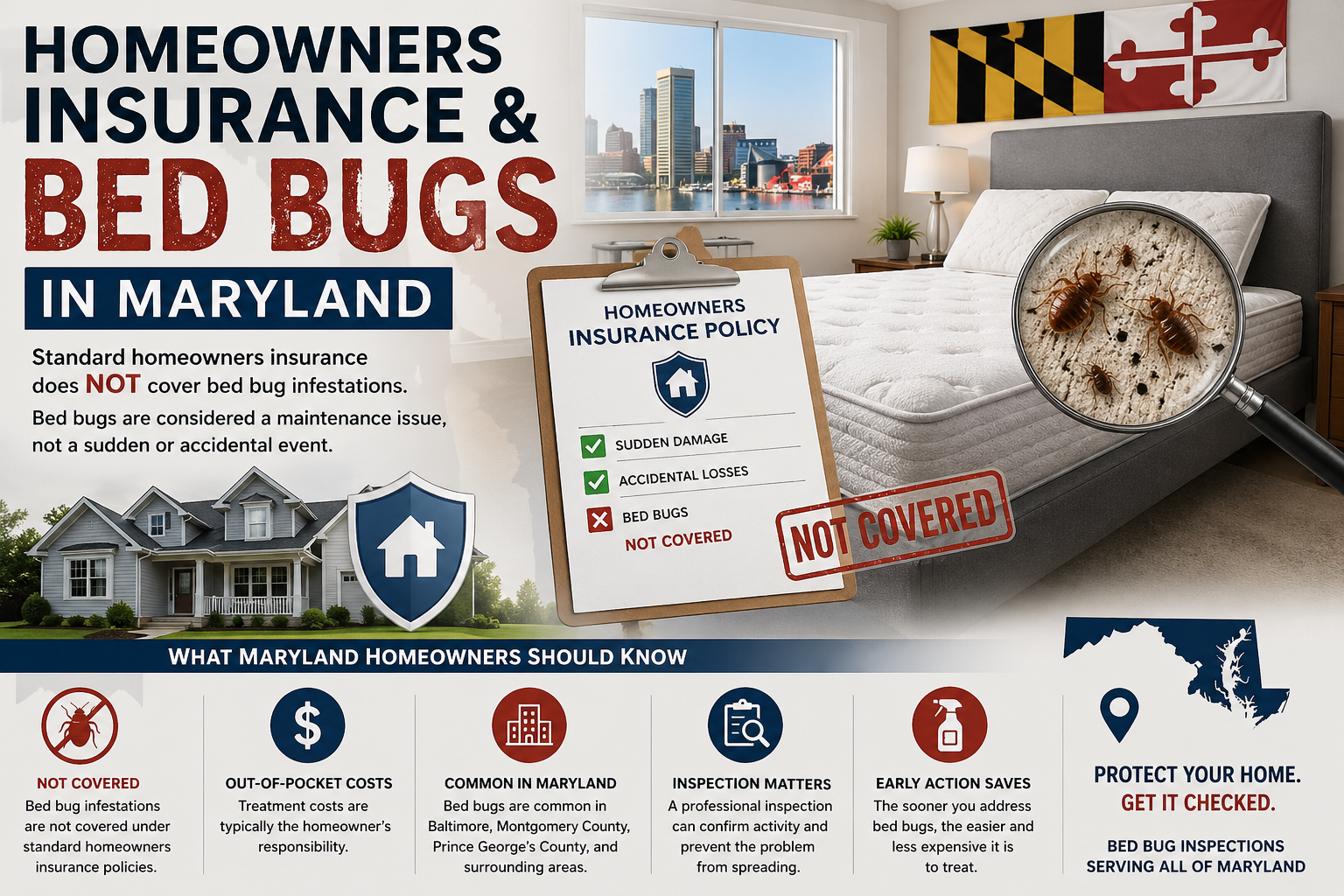
Most standard U.S. homeowners and renters insurance policies do not cover bed bug infestations or extermination. However, certain state-specific policy options, specialty pest protection plans, and landlord or commercial insurance arrangements may provide limited help.
Finding bed bugs in an American home or apartment can bring stress and unexpected bills. A professional treatment may require several visits, special equipment, laundry, and careful preparation. Replacing furniture can add even more expense.
Many people turn to their insurance company for help. Unfortunately, standard homeowners and renters insurance usually treats bed bugs as a pest or maintenance problem rather than a sudden covered event. This means the cost of finding and removing the insects often falls outside normal coverage.
Still, the answer is not always a simple no. Some insurance products may offer special pest-related benefits, and certain insurers list bed bug coverage as an additional option in specific states. The actual policy wording, location, and type of property all matter.
This guide explains what insurance companies cover bed bugs, what major types of policies normally exclude, and where to look for possible financial help. It also explains how landlord laws may affect who pays for treatment, since insurance and legal responsibility are two different things.
Most major insurance companies do not cover ordinary bed bug infestations under their standard homeowners or renters policies. This includes the cost of extermination, inspections, and many items damaged or discarded because of an infestation.
Companies such as State Farm, Nationwide, Progressive, and Lemonade generally explain that pest infestations are not covered under ordinary renters insurance. However, policy details are not identical, and a special endorsement or state-specific benefit may change the answer.
State Farm is worth checking because its renters coverage information lists bed bugs among possible additional coverage options where applicable in the policyholder’s state. This is an important exception to investigate, not proof that every customer has bed bug protection.
The National Association of Insurance Commissioners explains that damage from infestations is not typically covered by homeowners insurance. This reflects a common industry approach: insurance is mainly designed to address covered accidental losses, not ongoing pest problems or routine maintenance.
Therefore, the best way to find out whether an insurance company covers bed bugs is to examine the exact policy rather than rely on the company’s name alone.
Source: i.ytimg.com
State Farm
Its renters coverage information lists bed bugs as a possible additional coverage item in applicable states. Ask an agent whether the benefit is offered in your state, whether it is included in your policy, and what limits or exclusions apply.
Nationwide
Nationwide states that renters insurance does not typically cover bug or rodent infestations, including bed bugs. Ask about any separate protection that may be available.
Progressive
Progressive explains that standard renters policies generally do not cover bed bug treatment or resulting infestation costs. Landlord responsibility may be relevant in rental housing.
Lemonade
Lemonade explains that its standard renters coverage does not pay for bed bug treatment. Its guidance also points renters toward checking their landlord’s responsibility.
Does State Farm Cover Bed Bugs?
State Farm is one company worth contacting when looking for possible bed bug insurance coverage. Its renters coverage information identifies bed bugs as a possible additional coverage item in states where the benefit applies.
However, the company also explains that termites and other pests are generally excluded as maintenance-related problems. The difference between a possible additional benefit and standard pest coverage is important.
Ask the agent to confirm whether the bed bug benefit is available in your state, whether it must be purchased separately, and whether it pays for extermination, damaged belongings, or temporary housing. Request the relevant policy endorsement in writing.
Check state availability
Ask whether your state-approved policy includes a bed bug benefit.
Confirm the payment limit
Find out whether there is a maximum amount for inspection, treatment, or replacement costs.
Review exclusions
Check whether existing infestations, repeated treatments, or failure to report the problem are excluded.
Do Other Major Insurance Companies Offer Coverage?
Nationwide, Progressive, and Lemonade describe bed bug infestations as generally excluded from standard renters insurance. Their published explanations do not establish that every policy they issue has identical wording.
Do not assume that an insurer offers bed bug protection just because it covers fire, theft, water damage, or other household losses. A pest-specific benefit must be clearly stated in the contract.
Ask about endorsements
An endorsement is an addition or change to an insurance policy. Ask whether a pest-related endorsement is available.
Get written confirmation
A phone representative’s general answer is not a replacement for the policy wording or written coverage decision.
Does Homeowners Insurance Cover Bed Bug Infestations?
Standard homeowners insurance usually does not pay to remove bed bugs from a house. It also generally excludes damage caused by insects and other pests.
A homeowners policy is designed to protect against certain covered events. Depending on the contract, these may include fire, wind damage, theft, and certain types of accidental water damage.
An infestation is usually treated as a maintenance issue. Bed bugs can spread over time, and insurers generally do not consider their presence a sudden covered event.
For example, suppose a homeowner finds bed bugs in a bedroom. A pest control company recommends an inspection, heat treatment, and follow-up visits. The homeowner may have to pay these bills personally if the policy has no applicable pest benefit.
The same issue can affect furniture, mattresses, clothing, and other household items. Standard homeowners insurance does not automatically replace these belongings just because bed bugs have damaged or infested them.
Source: bedbugexterminatorsbaltimore.com
Extermination costs
Professional inspection, chemical treatment, heat treatment, and follow-up visits are generally excluded.
Furniture replacement
A mattress, sofa, or chair that must be discarded because of bed bugs is not normally covered under a standard policy.
Clothing and bedding
Washing, drying, replacing, or treating infested belongings is generally the homeowner’s responsibility.
Temporary accommodation
Additional living expenses normally require a covered loss that makes the home uninhabitable. A bed bug problem alone does not automatically qualify.
Can a Special Homeowners Insurance Endorsement Help?
Possibly, but homeowners should not assume that a regular policy includes this protection. A special endorsement or separate pest protection product may be available through an insurer or another provider.
The exact benefit matters more than the product name. One plan might pay for professional treatment but exclude furniture replacement. Another may cover inspections up to a stated limit but exclude an infestation that existed before enrollment.
Ask for a sample contract before buying. Check the waiting period, annual limit, number of treatments, deductible, and rules for reporting an infestation.
Treatment benefit
Check whether the plan pays the pest control company directly or reimburses you after payment.
Existing infestation
Ask whether problems discovered before the coverage start date are excluded.
Property replacement
Confirm whether the plan covers mattresses, furniture, clothing, or only pest removal.
Does Renters Insurance Pay for Bed Bug Treatment?
Most standard renters insurance policies do not pay for bed bug extermination. They also generally do not replace belongings simply because an infestation has made them unusable.
Renters insurance protects a tenant’s personal property against certain covered events. It may also provide personal liability coverage and additional living expenses after a covered loss.
Bed bugs usually fall outside these protections because an infestation is treated as a pest or maintenance issue. Even if the insects damage a mattress or sofa, the resulting loss is not automatically covered.
However, renters should not immediately assume they must pay every treatment bill. A landlord may have a legal duty to investigate and remove bed bugs under state or local housing rules. The lease may also contain relevant duties.
For example, a renter in an apartment building discovers bed bugs near a bedroom wall. The tenant reports the problem to the property manager. If the infestation involves the building or another unit, the landlord’s legal responsibilities may affect who arranges and pays for treatment.
Source: myinsuranceplanet.com
Personal belongings
Mattresses, clothing, bedding, and upholstered furniture are generally not covered when the loss results from an infestation.
Professional extermination
Routine bed bug inspections and treatment are generally excluded from standard renters insurance.
Moving expenses
A temporary move caused only by bed bugs does not automatically qualify for additional living expenses.
Landlord responsibility
State and local housing laws may require a landlord to investigate or arrange treatment.
What Should Renters Do After Finding Bed Bugs?
Report the infestation to the landlord or property manager as soon as possible. Use email or another written method so you have a record of when you reported the problem.
Take clear photographs of visible insects, stains, shed skins, and other signs. Keep copies of pest inspection reports, treatment recommendations, receipts, and messages from the landlord.
Ask the property manager to arrange a professional inspection. Do not move infested furniture into hallways, another apartment, or a friend’s home because this can spread the insects.
Before paying for treatment, check your lease and local housing rules. If the landlord refuses to respond, contact a local housing department or tenant assistance organization.
Document the problem
Record the date, room, visible signs, and any professional inspection findings.
Notify the landlord
Send a clear written notice and save a copy.
Ask about treatment
Request a qualified pest control professional and a written treatment plan.
Check local rules
Contact the local housing authority or tenant legal aid service if responsibility is disputed.
Can Renters Make an Insurance Claim for Bed Bug Bites?
A bed bug bite does not automatically create an insurance claim. Renters insurance is not health insurance, and ordinary personal property coverage does not pay medical bills simply because insects have bitten someone.
If the infestation occurred in a rental property, a separate question may arise about the landlord’s legal responsibility. Liability depends on the facts, applicable law, notice, and whether the property owner failed to meet a legal duty.
Keep medical records if treatment is needed and save communications about the infestation. Seek legal advice before assuming that an insurance company or landlord must reimburse you.
Keep medical records
Save relevant bills and records if a healthcare professional treats a bite-related problem.
Record communications
Keep copies of reports and requests sent to the property manager.
Does Landlord Insurance Cover Bed Bugs?
Standard landlord insurance generally does not cover the cost of removing a bed bug infestation. Most property policies are designed to cover specified accidental losses, not routine pest control or maintenance.
A landlord may have building insurance that protects the structure against covered events. However, this does not mean the insurer will pay for extermination, mattress replacement, or cleaning after a pest problem.
Landlords who own apartment buildings should review both property and liability coverage. These policies serve different purposes, and neither should be assumed to include pest treatment without clear wording.
Legal responsibility can also differ from insurance responsibility. A landlord may have to pay for extermination under local housing law even when the insurer refuses to cover the expense.
This distinction is important for property owners. A lack of insurance coverage does not remove a legal duty to maintain a rental property.
Source: renters.com
Building coverage
A standard property policy generally does not pay for pest removal or repairs caused by an ordinary bed bug infestation.
Landlord liability
A liability claim involving tenant injuries or alleged negligence requires a separate review of the facts and policy wording.
Rental income
Loss of rental income usually depends on a covered cause of property damage. A pest infestation alone may not qualify.
Pest management contracts
A separate service agreement may provide scheduled inspections or treatment, subject to its own limits and conditions.
How Landlords Can Reduce Bed Bug Expenses
A clear pest management plan can help property owners respond before an infestation spreads. Regular inspections, prompt tenant communication, and professional treatment can reduce the risk of a larger problem.
Landlords should also review state and city rules. Some places require inspections, written notices, treatment plans, or specific action after a tenant reports bed bugs.
For example, Delaware has rules that assign responsibility for investigating and treating bed bug infestations. The timing of the tenant’s report and the presence of an infestation in an adjoining unit can affect how treatment costs are shared.
Connecticut also has detailed requirements for inspection and treatment in rental housing. These examples show why landlords should check the law in the exact location of the property.
Create a response plan
Set out how tenants should report suspected infestations and how management will arrange inspections.
Use licensed professionals
Hire qualified pest control providers who can document their findings and treatment work.
Keep records
Save inspection reports, treatment invoices, tenant notices, and follow-up results.
Review insurance
Ask a commercial insurance broker whether a specific pest-related endorsement or separate product is available.
Does Commercial Insurance Cover Bed Bugs in Hotels?
Hotels, motels, vacation rentals, and other lodging businesses face different insurance questions from homeowners and renters. A bed bug complaint may involve pest treatment, guest property, lost bookings, or a claim that the business failed to maintain safe premises.
Standard commercial property insurance does not automatically cover the cost of extermination. Bed bug infestations are commonly treated as maintenance or pest control issues rather than covered property losses.
Commercial general liability insurance is a separate matter. It may respond to certain third-party injury or property damage claims, depending on the policy, exclusions, facts, and applicable law. However, it should not be treated as automatic coverage for every guest complaint.
For example, a hotel guest claims that bed bugs in a room caused bites and damaged personal belongings. The hotel may need to notify its insurer and provide inspection records, cleaning logs, and guest communications. Whether the insurer accepts the claim depends on the actual liability policy.
Hotels should also distinguish insurance from pest control service agreements. A commercial pest management contract may include routine inspections, emergency response, or limited treatment services without being an insurance policy.
Source: myinsuranceplanet.com
Commercial property insurance
Usually does not automatically pay for bed bug inspections, extermination, or replacement of infested furnishings.
General liability insurance
May respond to covered third-party claims, but pest-related exclusions and other policy conditions can affect coverage.
Business interruption
Lost income from closing a room or property because of bed bugs is not automatically covered. The policy’s covered-cause requirements matter.
Pest management agreements
May offer scheduled inspections and emergency treatment, but the service contract must be reviewed for limits and exclusions.
What Should a Hotel Do After a Bed Bug Complaint?
The hotel should respond quickly and avoid dismissing a guest’s report. Staff should follow the property’s pest response plan and arrange an inspection by a qualified professional.
The affected room should be managed according to the pest professional’s instructions. Staff should avoid moving potentially infested bedding, furniture, or other items into clean rooms.
Management should document the guest complaint, inspection findings, treatment, and any communication about compensation. If a claim is possible, the hotel should notify its insurance carrier promptly and follow the policy’s reporting requirements.
Inspect the room
Arrange a professional assessment instead of relying only on a visual check by housekeeping staff.
Protect nearby rooms
Ask the pest professional whether adjoining rooms require inspection.
Preserve evidence
Keep photographs, reports, room records, and guest communications.
Contact the insurer
Report a potential liability claim within the required policy period.
What Types of Bed Bug Insurance Are Available?
People looking for bed bug insurance may find several different products. These products are not all traditional insurance, and their names can make the differences hard to understand.
A specialty pest protection plan may cover professional inspections or treatments. A pest control service agreement may provide treatment under certain conditions. A traditional insurance endorsement may add a specific benefit to an existing policy.
Before purchasing anything, find out who provides the protection and what legal contract controls it. A service guarantee is not automatically an insurance policy, and a marketing promise does not establish that every expense will be reimbursed.
Pest protection plans
These may provide inspections or treatment for certain pests, including bed bugs, subject to the contract’s coverage limits and exclusions.
Insurance endorsements
An endorsement changes an existing insurance policy and may add a limited pest-related benefit where offered.
Pest control contracts
A pest company may offer scheduled visits, treatment, or follow-up services. This is generally a service arrangement rather than homeowners or renters insurance.
Commercial pest agreements
Hotels and property managers may arrange regular inspections and response services under a business contract.
How to Compare Bed Bug Protection Plans
The cheapest plan is not always the most useful. A low monthly fee may cover only an inspection, while a more expensive contract may include treatment and follow-up visits.
Read the complete agreement before signing. Check whether the provider pays for treatment, reimburses expenses, or only offers access to a discounted service.
Also check whether there is a waiting period. Some plans may not cover an infestation discovered soon after enrollment or a problem that already existed before the coverage began.
Coverage limit
Find the maximum amount the provider will pay for inspections and treatment.
Waiting period
Check how long you must wait before benefits become available.
Existing problems
Ask whether an infestation already present at enrollment is excluded.
Treatment frequency
Find out how many visits are included and whether follow-up treatments cost extra.
Replacement benefits
Check whether damaged furniture, mattresses, and clothing are included or excluded.
Cancellation terms
Review the contract period, renewal conditions, and cancellation fees.
Who Is Legally Responsible for Bed Bug Treatment in a Rental?
The person who pays for bed bug treatment may be determined by state or local housing law rather than an insurance policy. A landlord may have to arrange pest control even when the landlord’s insurer excludes the expense.
The rules differ across the United States. Some laws focus on the landlord’s duty to provide a habitable home, while others set specific requirements for inspection, notice, and treatment.
The timing of an infestation can matter. Some laws distinguish between a problem reported soon after a tenant moves in and one discovered much later. Other rules consider whether nearby units are also infested.
The U.S. Environmental Protection Agency explains that many states have laws or regulations addressing bed bugs, with requirements often focusing on landlords, hotels, and property managers. Cities may also have their own rules.
This means renters should check the law where the property is located. A general online statement about landlord responsibility may not apply to every state or rental arrangement.
Check state law
Look for state housing, landlord-tenant, and public health rules that address pest control.
Check city rules
Some local governments have additional bed bug reporting and treatment requirements.
Read the lease
Review pest control clauses, reporting deadlines, and tenant preparation duties.
Contact housing officials
Ask the local housing or health department how to report an unresolved infestation.
Examples of State Bed Bug Rules
Delaware provides a useful example of how specific these laws can be. Under its bed bug remediation rules, the landlord is responsible for investigation and treatment when a tenant reports an infestation within 60 days of moving in or within 30 days after discovering an infestation in an adjoining unit.
When the report occurs later and outside the adjoining-unit condition, the landlord remains responsible for investigating and treating the problem, but the tenant may have to share reasonable treatment costs for that unit under the law.
Connecticut also has detailed bed bug provisions. Its law addresses inspection, treatment, access to rental units, and the responsibilities of landlords and tenants.
These examples should not be applied to a home in another state. Always check the current law for the property’s exact location and circumstances.
Delaware
Specific notice periods and the discovery of bed bugs in adjoining units can affect how remediation costs are assigned.
Connecticut
State law includes specific inspection and treatment requirements for rental housing.
Other states
Rules differ, so check the state housing code and any applicable city ordinance.
How to File a Bed Bug Insurance Claim
If you believe your policy includes bed bug protection, contact the insurance company before arranging expensive work whenever practical. Early reporting helps the insurer explain its requirements and may prevent a problem with documentation.
Do not assume that a claim will be accepted just because an agent says pest coverage might be available. Ask the company to identify the exact policy provision that applies.
The following steps can help homeowners, renters, and property owners organize a claim or coverage inquiry.
Step 1: Read your policy
Check the declarations page, coverage sections, exclusions, endorsements, and claim reporting requirements.
Step 2: Contact the insurer
Explain when the infestation was discovered, where it was found, and what damage or expenses have occurred.
Step 3: Request an inspection
Ask whether the insurer requires an approved pest control professional or an inspection before treatment.
Step 4: Collect evidence
Save photographs, inspection reports, treatment estimates, receipts, and written communications.
Step 5: Submit the claim
Provide the requested documents and keep a copy of everything you send.
Step 6: Request a written decision
If the insurer denies the claim, ask for the exact policy language and the reason for the decision.
What Documents Should You Prepare?
Good records can make a coverage discussion easier. They also help establish when the infestation was discovered and what steps were taken to control it.
Keep documents in one folder, either on paper or digitally. If you are a renter, save your messages to the landlord separately from your insurance records.
Insurance policy
Include the policy number, declarations page, and any pest-related endorsements.
Photographs
Take clear pictures of visible bed bugs, stains, shed skins, and affected areas.
Inspection report
Obtain a written report from the pest control professional.
Treatment estimates
Save itemized estimates showing inspection, preparation, treatment, and follow-up costs.
Receipts
Keep proof of payments for approved work and related expenses.
Written notices
Save emails and letters sent to the insurer, landlord, or property manager.
What If the Insurance Company Denies Your Claim?
A denial does not always mean that the decision is correct, but it also does not mean that the insurer must pay. First, read the denial letter and identify the exclusion or policy condition the company used.
Compare that explanation with your actual policy and any endorsements. If the company overlooked a benefit or important document, ask for a review and provide the missing information.
If the dispute continues, contact your state’s department of insurance. The department may explain complaint procedures and review whether the insurer followed applicable rules. For a complex dispute involving significant costs, consider speaking with a qualified insurance attorney.
Request the reason
Ask the insurer to explain the denial and identify the exact policy wording.
Submit supporting records
Provide relevant endorsements, inspection reports, and receipts that may have been overlooked.
File a complaint
Contact your state insurance department if you believe the insurer mishandled the claim.
Seek legal advice
Consider professional advice if the dispute involves substantial losses or unclear policy language.
How Much Does Bed Bug Treatment Cost Without Insurance?
Without insurance or a pest protection plan, the homeowner, renter, or responsible property owner may need to pay for treatment. The final price depends on the size of the affected area, the severity of the infestation, the treatment method, and the number of visits required.
A small room may need less work than a large apartment or a multi-unit building. Heat treatment, chemical treatment, inspection, preparation, and follow-up visits can also affect the final bill.
There is no single reliable price that applies to every U.S. property. A local pest control company can provide a more useful estimate after reviewing the home and the extent of the problem.
Ask for an itemized estimate instead of accepting a single unexplained total. This helps you compare service providers and understand which tasks are included.
Inspection
The provider checks beds, furniture, seams, cracks, and other likely hiding places.
Treatment
The company may use an approved heat, chemical, or combined treatment method.
Preparation
The property may require laundry, decluttering, vacuuming, and other steps before treatment.
Follow-up visits
Additional inspections or treatments may be needed to confirm that the infestation has been controlled.
Furniture handling
Moving, treating, or replacing affected furniture can create additional costs.
How to Reduce Out-of-Pocket Costs
The best way to control costs is to respond early and avoid actions that spread the infestation. A qualified professional can identify affected areas and recommend an appropriate treatment plan.
Compare written estimates from local providers. Ask whether follow-up visits are included and whether there are extra charges for additional rooms or repeat treatment.
If you rent, notify your landlord before paying for treatment yourself. If you own a home, check for a valid pest protection plan or insurance endorsement before deciding that every expense must come from your own pocket.
Act early
Report suspected bed bugs promptly so the problem can be inspected before it spreads.
Compare estimates
Request itemized prices from qualified local pest control companies.
Check service guarantees
Ask whether follow-up treatment is included and what conditions apply.
Avoid unnecessary replacement
Do not discard every mattress or piece of furniture without professional advice.
Review other payment options
Ask the landlord, property manager, or pest service about available assistance or payment arrangements.
Common Mistakes When Looking for Bed Bug Insurance
Insurance language can be confusing, especially when a company advertises pest protection or an additional household benefit. A few common mistakes can lead to unexpected bills or a denied claim.
Understanding the difference between insurance, a service agreement, and a treatment guarantee is essential before choosing a plan.
Assuming every homeowners policy covers pests
Standard homeowners insurance usually excludes infestations. Read the exclusions and do not rely on general coverage descriptions.
Confusing a pest control guarantee with insurance
A company may promise follow-up treatment without paying for damaged belongings or other losses.
Waiting too long to report the problem
Delays can make treatment more difficult and may affect responsibilities under a lease or policy.
Discarding furniture without checking
Replacing infested items can be expensive and may spread bed bugs if items are moved carelessly.
Assuming the landlord is always responsible
State and local rules differ. The lease, timing, building conditions, and local law may affect responsibility.
Buying a plan after finding bed bugs
A new policy or service agreement may exclude pre-existing infestations or impose a waiting period.
Relying on verbal promises
Ask for written coverage terms, exclusions, limits, and claim requirements before paying for protection.
Important Safety Rules During Treatment
Bed bug treatment requires care. Never use outdoor pesticides inside a home or apply a chemical to a mattress unless its label specifically permits that use.
The U.S. Environmental Protection Agency advises consumers to follow pesticide labels and use appropriate pest control methods. Improper pesticide use can create health risks without solving the infestation.
Do not use household insect foggers as a substitute for a proper treatment plan. Follow the pest professional’s instructions for preparing rooms, handling belongings, and returning to treated areas.
Use approved products
Choose products registered for the intended use and follow every label direction.
Hire qualified providers
Use licensed pest control professionals where required by state law.
Avoid unsafe chemical use
Never mix pesticides or apply products to surfaces where the label prohibits use.
Follow re-entry instructions
Stay out of treated rooms for the period specified by the product label or pest professional.
Frequently Asked Questions
Q
What insurance companies cover bed bugs?
Most major insurance companies, including Nationwide, Progressive, and Lemonade, generally exclude bed bug infestations from standard renters coverage. State Farm lists bed bugs as a possible additional coverage item in applicable states. Availability and protection depend on the exact policy, state, and endorsements.
Q
Does State Farm homeowners insurance cover bed bugs?
Do not assume that a standard State Farm homeowners policy covers bed bugs. State Farm’s renters coverage information identifies a possible bed bug benefit in applicable states, but homeowners coverage must be checked separately. Ask your agent for written confirmation of any applicable endorsement.
Q
Does renters insurance cover bed bug extermination?
Usually, no. Standard renters insurance generally excludes pest infestations and the cost of extermination. However, a landlord may be legally responsible for treatment under state or local housing laws.
Q
Does homeowners insurance pay to replace a bed bug mattress?
Most standard homeowners policies do not replace mattresses or other belongings damaged by bed bugs. A specific pest-related endorsement or separate protection plan may offer limited benefits, but the contract must clearly include replacement costs.
Q
Does landlord insurance cover bed bug treatment?
Standard landlord insurance generally does not pay for routine bed bug inspections or extermination. Some specialty products may offer limited protection. Even without insurance coverage, a landlord may have a legal duty to arrange treatment under applicable housing laws.
Q
Does Airbnb insurance cover bed bugs?
Do not assume that a vacation rental protection program or commercial policy pays for bed bug extermination. Property damage, pest removal, guest complaints, and liability claims are separate issues. Review the exact platform protection terms and any commercial insurance policy.
Q
Can I get bed bug insurance after finding an infestation?
You may be able to purchase a future pest protection plan, but it may not cover an infestation that already exists. Many contracts have pre-existing problem exclusions or waiting periods. Disclose the problem honestly and read the terms before buying.
Q
Will insurance pay for hotel expenses during bed bug treatment?
Standard additional living expenses coverage usually applies when a covered loss makes the insured home uninhabitable. Bed bugs alone do not automatically qualify. Ask your insurer whether a specific endorsement applies before booking temporary accommodation.
Q
Can a landlord make tenants pay for bed bug treatment?
It depends on state and local law, the lease, and the circumstances of the infestation. Some laws place most treatment duties on landlords, while others may allow tenants to share costs under specific conditions. Check local housing rules before paying or refusing a charge.
Q
What should I do if my insurance company refuses to cover bed bugs?
Request a written denial and ask the insurer to identify the exact exclusion or policy condition. Review your endorsements and submit any relevant documents that may have been overlooked. If you believe the decision violates the policy or state rules, contact your state department of insurance.
✦ Wrapping Up
Conclusion
Most standard U.S. homeowners and renters insurance policies do not cover bed bug infestations, extermination, or the replacement of infested belongings. Nationwide, Progressive, and Lemonade generally describe this exclusion in their renters coverage guidance. State Farm lists a possible additional bed bug benefit in applicable states, making it worth asking about specific policy options.
Landlords and hotel owners should also understand that commercial and property insurance does not automatically pay for pest removal. Their legal duties, liability coverage, and pest management agreements must be reviewed separately.
If you discover bed bugs, act promptly. Document the problem, contact your landlord if you rent, arrange a qualified inspection, and review your insurance documents before spending money on treatment or replacing furniture.
💡 Key Takeaway
Call your insurance company and ask: Does my exact policy include bed bug treatment or replacement coverage? Is there a separate endorsement, waiting period, deductible, or payment limit? Request the answer in writing, and check your state or local housing rules if you rent.