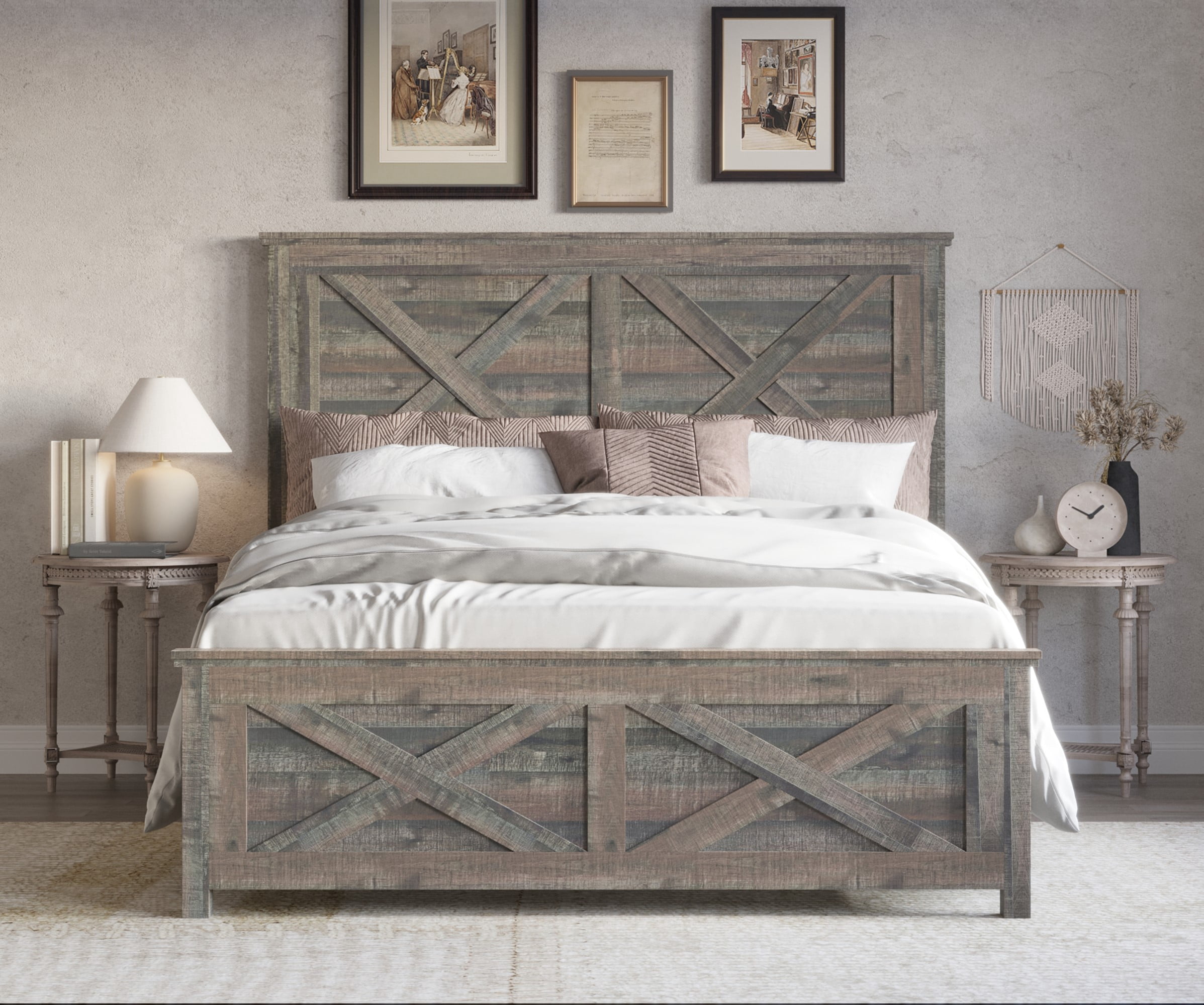
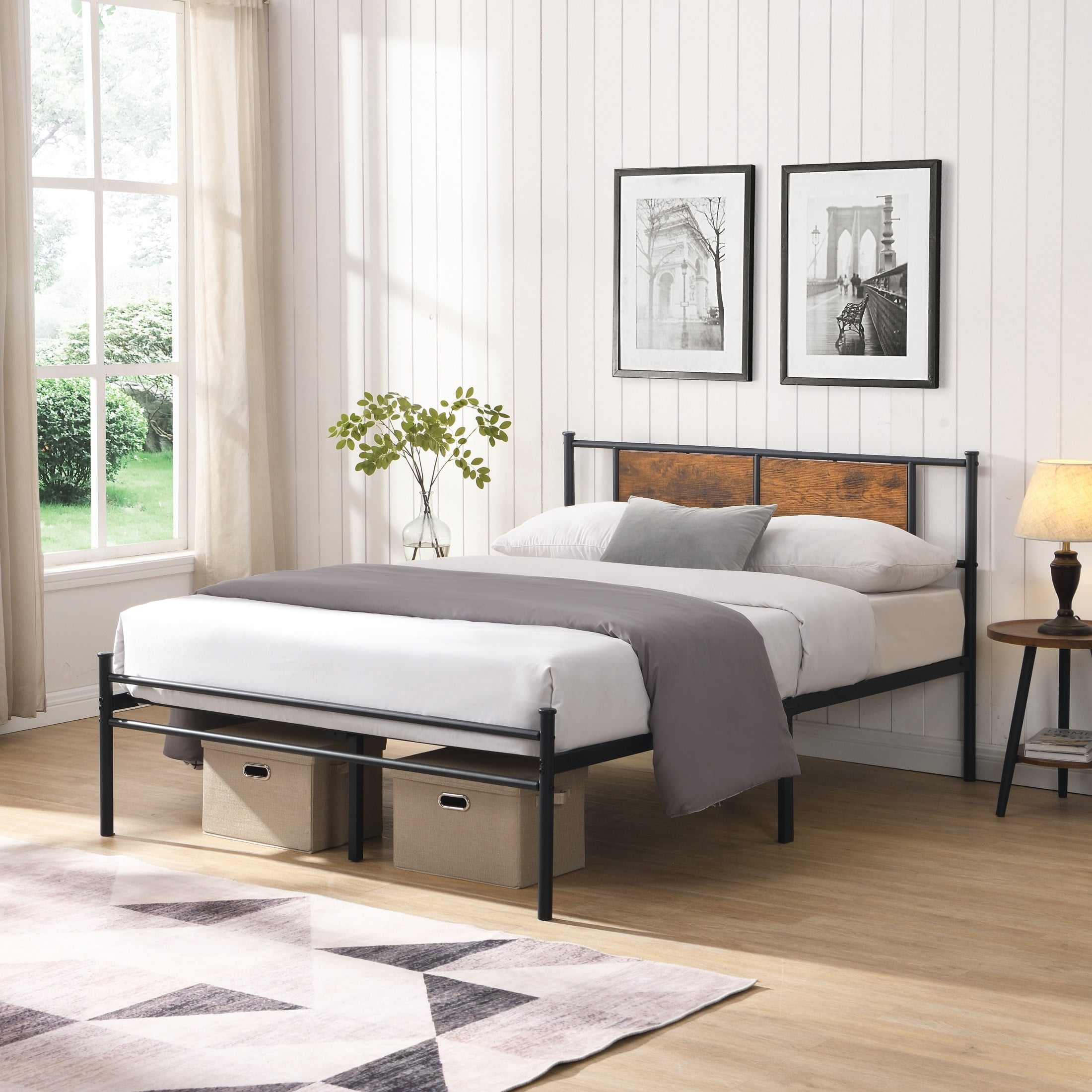
A panel bed frame is a traditional bed frame with a headboard, side rails, and usually a footboard. It holds a mattress foundation, such as a box spring, on an internal support system.
When shopping for bedroom furniture in the United States, you may see panel beds at furniture stores, mattress retailers, and online home stores. They come in common American mattress sizes, including twin, full, queen, king, and California king. Their large headboards and framed sides give bedrooms a classic, finished look.
The main feature of a panel bed is its frame design. The headboard and footboard use broad panels instead of a simple open frame. Side rails connect these pieces, while a set of wooden slats or metal supports holds a mattress foundation. In many traditional designs, the mattress rests on a box spring or another approved foundation rather than directly on the frame.
However, not every bed sold as a panel bed has the same support system. Some newer designs include closely spaced slats that can support a mattress directly. This detail matters because the frame‘s name alone does not tell you whether you need a box spring. Always check the manufacturer’s instructions and your mattress warranty before setting up the bed.
A panel bed can suit someone who likes a classic bedroom style, wants a prominent headboard, or prefers a higher sleeping surface. Understanding its parts and support needs can help you avoid buying an extra foundation you do not need or using a mattress on an unsuitable base.
A panel bed frame is a bed structure built with broad panels at the head and foot of the bed. Side rails join these end pieces and form a frame around the mattress area. The frame usually has a lower support system made from wood slats, metal bars, or another approved structure.
The word panel describes the bed’s visible construction. It does not mean the whole mattress base is one solid board. In a traditional design, the lower slats support a separate foundation, and the foundation supports the mattress. This layered setup is one of the main features that sets a classic panel bed apart from a platform bed.
Panel beds come in many styles. A wooden model may have a plain rectangular headboard, raised trim, carved details, or a paneled footboard. An upholstered model may have padded fabric over a wood frame. Metal versions can use broad metal panels or decorative inserts.
Source: i5.walmartimages.com
Headboard
The large panel at the top of the bed gives the frame its main visual feature. It may be plain, carved, padded, or decorated.
Footboard
The panel at the foot of the bed completes the traditional frame. Some designs use a tall panel, while others have a low footboard or no footboard.
Side rails
These long pieces connect the headboard and footboard. They help hold the frame together and support the mattress foundation.
Support slats
Wooden or metal pieces span the frame and carry the weight of the foundation or mattress, depending on the design.
Center support
Larger beds may use a center rail and support legs to help spread weight across the frame.
Why Is It Called a Panel Bed?
The name comes from the broad panels used in the headboard and often the footboard. These panels create a framed appearance that differs from a simple metal bed frame with an open head and foot. The term describes a furniture style and construction, not one exact material or mattress support method.
A panel bed can look traditional, modern, rustic, or contemporary. The finish, shape, fabric, and details affect its appearance. A plain wood panel can look simple and modern, while a carved headboard can create a more formal style.
Panel construction
Broad surfaces form the visible ends of the bed.
Framed appearance
The headboard, footboard, and side rails create a clear outline around the mattress.
What Are the Main Parts of a Panel Bed?
A panel bed has several parts that work together to keep the frame stable. Knowing what each part does makes assembly, inspection, and mattress setup easier. It also helps you spot missing hardware or worn support pieces.
The headboard and footboard form the ends of the bed. The side rails connect them and keep the frame square. Slats or metal supports carry the foundation or mattress, while brackets and bolts keep the main pieces attached.
Source: mobileimages.lowes.com
Headboard panel
This is the upright panel behind the pillows. It can protect the wall from direct contact with the bed and provide a surface to lean against when sitting up.
Footboard panel
This is the panel at the opposite end. Its height and shape vary by design, and some panel beds leave this part open.
Side rails
The rails run along both sides of the mattress. They connect the end panels and help keep the mattress and foundation in place.
Slats or support bars
These cross the width of the frame. Their number, spacing, thickness, and material affect how much support they can provide.
Center rail and legs
Some queen and king frames use a center support system. It helps reduce the span carried by the side rails and spreads the load toward the floor.
How Do the Parts Work Together?
The end panels provide the main frame structure, and the side rails join them into a stable rectangle. The lower supports then carry the foundation or mattress. Each connection must be secure for the frame to work as intended.
If a bolt becomes loose, the bed may squeak or shift. If a slat cracks, the support surface may become uneven. A missing center leg can also place more strain on other parts. These signs call for an inspection before continued use.
Stable connections
Tight, correctly fitted hardware helps prevent the frame from rocking or separating.
Even support
Sound slats and center supports help keep the foundation level.
Does a Panel Bed Need a Box Spring?
A traditional panel bed usually needs a box spring or another suitable mattress foundation. Its lower slats may be spaced too far apart to support a mattress on their own. The foundation bridges those gaps and provides a more even surface for the mattress.
However, a box spring is not a universal requirement for every panel bed. Some newer frames have closely spaced slats or a solid support deck. These models may allow the mattress to rest directly on the frame if the manufacturer approves that setup.
The safest way to decide is to read the bed frame manual and mattress support rules. Check the required foundation type, slat spacing, center support, and maximum load. Do not assume that a box spring is needed just because the bed has a panel headboard.
Source: sleepjunkie.com
Traditional panel bed
Usually uses a box spring or a separate foundation because the lower supports are designed to carry that layer.
Panel bed with close slats
May support a mattress directly when the slats and center supports meet the mattress maker’s requirements.
Panel bed with a bunkie board
May use a bunkie board as a low-profile support layer when both manufacturers allow it.
What Is the Difference Between a Box Spring and a Foundation?
A box spring is a mattress support unit that traditionally uses a wood or metal frame with springs or a similar internal structure. It sits between the bed frame and mattress. It can add height and change how the mattress responds to movement.
A foundation is a broader term for a support base. Some foundations use a rigid frame with a flat or slatted top rather than traditional springs. A manufacturer may require a specific foundation type, so check the mattress label and warranty before choosing one.
A bunkie board is a thin, firm support board. It can provide a flatter surface over a frame with widely spaced slats, but it is not a fix for a weak or damaged bed frame. Confirm that its use is allowed by both the bed and mattress makers.
Box spring
A raised support unit that may contain springs or a flexible support system.
Foundation
A support base that may be rigid or flexible, depending on its design.
Bunkie board
A thin support layer used in some setups to create a more even surface.
How Can You Check Whether Your Mattress Needs a Foundation?
Start with the mattress maker’s care guide. Look for rules about the approved base, slat spacing, center support, and use of a box spring. Foam and latex mattresses often need a firm, even base, but the exact support rules vary by model.
Next, check the panel bed manual. If it says to use a foundation, follow that direction. If it allows direct mattress placement, compare the slat spacing and support layout with the mattress requirements before setting it up.
Read both manuals
The bed frame and mattress must both allow the same support setup.
Measure the slat gaps
Use a tape measure to check the open space between each support slat.
Check the center support
Confirm that all required rails and legs are present and touch the floor as designed.
Panel Bed vs. Platform Bed: What Is the Difference?
The main difference between a panel bed and a platform bed is how each one supports the mattress. A traditional panel bed often uses a separate foundation, while a platform bed is designed to support the mattress directly.
Panel beds usually have a prominent headboard and may have a footboard. Platform beds can also have headboards and footboards, but their defining feature is the built-in mattress support. A platform bed may use close-set slats or a solid deck.
This difference affects more than appearance. It can change the total setup cost, bed height, mattress compatibility, and amount of space under the bed. The best choice depends on the exact frame and mattress rather than the style name alone.
Source: media.diy.com
Panel bed
Often has a traditional framed design and uses a separate foundation between the frame and mattress.
Platform bed
Has a built-in support surface intended to hold the mattress without an extra box spring.
Panel Bed vs. Platform Bed Comparison
The table below shows common differences. These are typical design patterns, not rules that apply to every model. Some panel beds have direct-mattress support, and some platform beds have tall or decorative headboards.
Support system
Panel beds often use a separate foundation; platform beds use built-in slats or a solid deck.
Overall height
Panel beds often sit higher when paired with a box spring. Platform beds often have a lower profile.
Appearance
Panel beds often look traditional or formal. Platform beds often have a simple, modern shape.
Extra purchase
A traditional panel bed may need a separate foundation. A platform bed usually does not.
Storage
Both styles can offer under-bed space. The actual clearance depends on the frame and support setup.
Can a Panel Bed Look Modern?
Yes. A panel bed does not have to look old-fashioned. A flat headboard, clean edges, a simple finish, or neutral upholstery can give it a modern look. Some designs use narrow vertical panels or geometric details instead of ornate carving.
The frame’s support system remains separate from its visual style. A modern-looking panel bed may still need a foundation, while a traditional-looking frame may have direct mattress support. Check the specifications rather than judging by appearance.
Minimal wood panels
Plain surfaces and simple lines create a clean, uncluttered look.
Upholstered panels
Fabric or leather-like coverings can soften the frame’s appearance.
What Materials Are Used to Make Panel Bed Frames?
Panel bed frames can be made from solid wood, engineered wood, metal, or a mix of materials. The material affects the frame’s weight, appearance, care needs, and repair options. It does not by itself prove how much weight the bed can safely hold.
The quality of the joints, rails, support slats, fasteners, and center legs also matters. A solid wood headboard cannot make up for weak rails or poor support hardware. Look at the complete frame rather than judging it by the visible panels alone.
Source: i5.walmartimages.com
Solid wood
Wood such as pine, oak, or rubberwood can provide a natural grain and may allow some repairs. Strength and stability depend on the species, dimensions, joints, and build quality.
Engineered wood
Plywood, MDF, and particleboard are common furniture materials. They can offer a smooth, consistent finish, but water damage and poor fastener joints can affect their service life.
Metal
Steel or other metals may form the rails, support structure, or decorative panels. Check welds, brackets, coating, and center supports.
Upholstered construction
Fabric, foam, or other padding may cover a wood or metal frame. The inner structure still carries the load.
Is a Wooden Panel Bed Better Than a Metal Panel Bed?
Neither material is automatically better. A wooden panel bed may suit a room where a warm grain or painted finish matters. A metal panel bed may suit someone who wants a lighter visual style or a frame with metal support parts.
A poorly built wooden frame can loosen, split, or crack. A poorly built metal frame can bend, develop noisy joints, or have weak welds. Compare the rail design, hardware, support layout, finish, and warranty instead of choosing by material alone.
Choose by room style
Wood offers varied grain and stain options, while metal can create a more industrial or open look.
Choose by upkeep
Wood may need protection from moisture and scratches. Metal may need checks for loose joints, chipped coatings, or corrosion.
What Are the Benefits of a Panel Bed Frame?
A panel bed can offer a classic appearance, a defined headboard, and a flexible foundation setup. It can also raise the mattress to a more comfortable height when used with a suitable box spring. These benefits depend on the model and the room where you place it.
The broad panels can make the bed a strong visual focus. This may help anchor a larger bedroom, especially when the headboard matches other wood or upholstered furniture. A panel bed can also work with many bedding styles, from simple cotton sets to layered comforters.
Source: mobileimages.lowes.com
Classic design
A visible headboard and footboard can give the room a more complete furniture look.
Added bed height
A foundation can raise the mattress, which some people find easier when sitting down or standing up.
Many finish choices
Panel beds come in different woods, colors, fabrics, and decorative styles.
Flexible foundation options
Some frames work with a box spring, low-profile foundation, or an approved direct-support setup.
Defined bedroom layout
The headboard and side rails create a clear focal point and help frame the bed area.
Does a Panel Bed Provide More Under-Bed Storage?
A panel bed can leave useful space under the frame, but storage depends on its clearance and foundation design. A box spring may raise the mattress without changing the space below the side rails. Some models have a low clearance, while others leave room for bins.
Measure the floor-to-rail distance and the space between the legs before buying storage containers. Also check whether the footboard or side rails block access. Do not force a large bin under a frame if it pushes against a support leg or center rail.
Measure clearance
Check the usable height beneath the side rails, not just the height of the headboard.
Check access
Look at the position of the legs, center support, and footboard before choosing storage bins.
What Are the Disadvantages of a Panel Bed?
A traditional panel bed may cost more to set up because it often needs a separate foundation. Its larger panels can also make it heavier and harder to move than a simple metal frame. These are practical trade-offs to consider before buying.
Some panel beds take up more visual space than open-frame designs. A tall headboard or footboard may not suit a small room, a low ceiling, or a layout with limited walking space. Measure the full frame, including its widest points, before ordering.
The support system can also limit mattress choices. If the frame requires a foundation, placing a mattress directly on widely spaced slats may not provide proper support. Using the wrong base can lead to sagging or may conflict with the mattress warranty.
Extra foundation cost
A traditional panel bed may need a box spring or approved foundation in addition to the mattress.
Larger footprint
Wide headboards, footboards, and side rails may take up more room than a simple frame.
Moving can be harder
Large panels and long rails may need more space during delivery, assembly, and relocation.
Support rules matter
The frame may not support every mattress directly. Slat spacing and foundation requirements must match.
Joints may need attention
Bolts and brackets can loosen over time, so periodic checks may be needed.
Can a Panel Bed Make a Small Bedroom Feel Crowded?
Yes, a large panel bed can make a small bedroom feel more crowded. A tall headboard can dominate the wall, and a footboard can reduce the open feel at the foot of the mattress. This does not mean every panel bed is too large for a small room.
Measure the room and mark the bed’s full dimensions before buying. Leave enough space to open closet doors, reach drawers, and walk around the bed. A low-footboard or simple-panel design may fit better than a large, ornate model.
Measure the whole frame
Include the headboard, footboard, side rails, and any parts that extend beyond the mattress.
Protect walking space
Plan clear paths to doors, closets, and other furniture.
How to Choose the Right Panel Bed Frame
Choose a panel bed by checking mattress size, foundation needs, frame dimensions, support construction, and room style. Start with the mattress you own or plan to buy. Then confirm that the bed frame can support it in the way the mattress maker requires.
Do not choose by appearance alone. A beautiful headboard will not solve a poor support layout. A few checks before purchase can prevent a costly return or an unsuitable mattress setup.
Confirm the mattress size
Match the frame to a standard twin, full, queen, king, or California king mattress. Check the exact dimensions because the outside frame will be larger.
Check the foundation requirement
Find out whether the frame needs a box spring, a rigid foundation, a bunkie board, or direct mattress support.
Review slat spacing
Compare the gap between supports with the mattress maker’s rules.
Inspect center support
For larger sizes, check whether the design includes the required center rail and legs.
Read the weight limit
Check the stated load capacity and whether it includes the mattress, foundation, and sleepers.
Measure the room
Check the outside width, length, headboard height, footboard height, and under-bed clearance.
Review delivery and assembly
Check package size, access through stairs and doors, assembly needs, and whether all hardware is included.
A Simple Panel Bed Buying Checklist
Use this checklist before you place an order. It focuses on the details that affect fit, support, and long-term use.
Mattress fit
The frame matches the mattress size and leaves no unsafe gaps.
Approved support
The mattress and frame manuals allow the same foundation arrangement.
Sound construction
Rails, panels, brackets, slats, and center supports appear secure and well made.
Room fit
The frame leaves enough room for walking, doors, drawers, and other furniture.
Clear warranty
The warranty explains coverage, exclusions, and any required support setup.
What Should You Check Before Assembly?
Lay out the parts and compare them with the instruction sheet. Check for cracked panels, bent rails, missing bolts, damaged brackets, or broken slats before building the bed. Do not force parts together if the holes do not line up.
Use the supplied hardware and follow the assembly order. Tighten connections as directed, and place the bed on a level floor. If the frame rocks or a support leg does not touch the floor, stop and correct the issue before adding the mattress.
Count the parts
Make sure all rails, panels, slats, legs, and fasteners are present.
Follow the manual
Use the correct hardware and assembly sequence for the exact model.
Test the frame
Check for rocking, loose joints, and uneven support before normal use.
How to Maintain a Panel Bed Frame
Regular checks can help keep a panel bed stable and reduce noise. Inspect the main joints, support slats, center rail, and legs from time to time. The frequency depends on use and the manufacturer’s care instructions.
A squeak does not always mean the frame is damaged. It may come from a loose bolt, a rubbing joint, or a slat that has shifted. Find the source before tightening or adding any material.
Tighten loose hardware
Check bolts and brackets and tighten them as the manual directs. Avoid overtightening, which can damage some materials.
Inspect slats
Look for cracks, bends, movement, or missing support pieces.
Check center legs
Make sure each required leg is fitted correctly and rests on the floor.
Clean the panels
Use a cleaning method suited to the wood, metal, or upholstery finish.
Avoid excess moisture
Keep water away from wood joints and engineered wood panels. Follow the maker’s cleaning instructions.
How Do You Fix a Squeaky Panel Bed?
First, remove the mattress and foundation if the manual allows it, then inspect the frame. Check bolts, brackets, slats, and the points where the rails meet the headboard and footboard. A loose connection is a common place to start.
Tighten the correct fasteners and make sure each slat sits in its intended position. If two parts rub, use only a suitable material or repair method approved for the frame. Do not add random screws, drill new holes, or wedge objects into a load-bearing joint.
If a rail is cracked, a panel is split, or a metal support is bent, stop using the bed until the damaged part is repaired or replaced. Contact the maker if the correct replacement part is not clear.
Find the noise
Check each joint and support point instead of tightening every part at random.
Replace damaged parts
Use parts made for the frame model and follow the maker’s repair guidance.
Do not overload the frame
Stay within the stated load limit and avoid jumping or placing heavy objects on the bed.
Common Mistakes to Avoid With Panel Beds
Many panel bed problems begin with a mismatch between the frame, foundation, and mattress. A bed may look fully assembled but still lack the support its mattress needs. Check the setup before regular use rather than waiting for sagging or damage.
Putting a mattress directly on wide slats
Wide gaps may leave parts of the mattress without proper support. Use only a support arrangement approved by the mattress maker.
Buying the wrong foundation height
A thick box spring can make the mattress sit too high or cover too much of the headboard. Measure the complete setup first.
Ignoring center support
A missing or poorly fitted center leg can place extra strain on the frame.
Guessing the weight capacity
Do not assume that a large-looking bed can carry any load. Follow the manufacturer’s stated limit.
Skipping room measurements
The outside dimensions may be much larger than the mattress itself.
Using damaged hardware
Bent brackets, missing bolts, and cracked slats can affect stability. Replace them with suitable parts.
Can You Turn a Traditional Panel Bed Into a Platform Bed?
Not safely in every case. A traditional panel bed may rely on a box spring or foundation to spread the mattress load across its support rails. Removing that layer and placing a mattress directly on widely spaced slats can leave the mattress without enough support.
Some frames can accept an approved slat kit or a different foundation. However, this depends on the frame’s construction and the mattress requirements. Ask the manufacturer before changing the support system.
Check the frame design
Find out whether the rails and slats are designed for direct mattress support.
Check mattress rules
Confirm the required support surface and slat spacing.
Use approved parts
Do not rely on improvised boards or extra hardware to change the bed’s load path.
Who Should Consider a Panel Bed Frame?
A panel bed may suit someone who wants a framed, traditional look and likes the option of using a separate mattress foundation. It can also work for people who prefer a taller bed, provided the final height is comfortable and safe for them.
It may be less suitable for someone who wants the simplest mattress-only setup, needs a very compact frame, or wants to avoid the cost of a separate foundation. A platform bed may meet those needs more directly, but its support layout must still match the mattress.
Good fit for classic rooms
The broad headboard and optional footboard can complement traditional, farmhouse, and transitional bedroom styles.
Useful for a higher bed setup
A suitable foundation can raise the mattress, though the final height should be checked before purchase.
Worth considering for flexible styling
Wood, metal, and upholstered panels offer a wide range of finishes and shapes.
Less suited to a no-foundation preference
A traditional model may require an extra support base and add to the total setup cost.
Frequently Asked Questions
Q
Is a panel bed frame the same as a platform bed?
No. A panel bed is defined mainly by its panel-style headboard and footboard, joined by side rails. A traditional panel bed often uses a separate box spring or foundation. A platform bed is defined by its built-in support surface, which holds the mattress directly without a separate box spring.
Some modern panel beds also have direct mattress support. Check the exact model specifications before deciding whether a foundation is needed.
Q
Do all panel beds need a box spring?
No. Traditional panel beds commonly need a box spring or another approved foundation because their support slats may be widely spaced. Some newer models have closely spaced slats or a solid support system that can hold a mattress directly.
Read the frame manual and mattress warranty to confirm the correct setup.
Q
Can you use a memory foam mattress on a panel bed?
Yes, if the panel bed provides the firm, even support required by that specific memory foam mattress. Some models may need a suitable foundation or bunkie board to bridge gaps between slats.
Check the mattress maker’s rules for slat spacing, support type, and center support. Do not place a foam mattress directly on widely spaced slats unless the manufacturer allows it.
Q
Are panel bed frames sturdy?
A well-built panel bed can be sturdy, but the style name alone does not prove its strength. Material thickness, rail design, joint quality, slat construction, center supports, and proper assembly all affect stability.
Check the stated weight limit and inspect the frame for loose bolts, cracked panels, bent rails, and damaged support pieces.
Q
Are panel beds good for small bedrooms?
They can work in small bedrooms if the outside dimensions fit the available space. However, a large headboard or footboard may make the room feel crowded.
Measure the full frame and leave room for doors, drawers, and walking paths. A simple design with a low footboard may be easier to fit than a large decorative model.
Q
What is the difference between a panel bed and a sleigh bed?
A panel bed has broad, usually flat headboard and footboard panels. A sleigh bed has curved or scroll-shaped ends that resemble the shape of a traditional sleigh.
Both styles can use side rails and a separate foundation. Their main difference is the shape and appearance of the headboard and footboard.
Q
Can a panel bed have drawers underneath?
Yes. Some panel beds include drawers or storage units beneath the mattress area. Others leave open space below the side rails.
Check the drawer dimensions, access space, and center support layout. A storage feature should not block a required support leg or interfere with the frame’s stability.
✦ Wrapping Up
Conclusion
A panel bed frame is a traditional bed design with a headboard, side rails, and usually a footboard made with broad panels. Its support system sits inside the frame and may use wooden slats or metal bars. Many classic models need a box spring or separate foundation, while some newer designs can support a mattress directly.
The main benefits include a finished bedroom look, many material and finish options, and the ability to create a taller sleeping surface. The main trade-offs can include extra foundation costs, a larger footprint, and specific mattress support needs. These details vary by model, so the product manual matters more than the label.
Before buying, measure your room, confirm the mattress size, check the support rules, and review the frame’s weight limit. A suitable panel bed should fit both your bedroom and your mattress without relying on guesswork.
💡 Key Takeaway
Before ordering a panel bed frame, compare its assembly manual with your mattress support requirements. Confirm the foundation type, slat spacing, center support, weight limit, and full outside dimensions.