The end of a bed frame near your feet is called the footboard. The opposite end, where your pillows sit, is called the headboard.
When shopping for bedroom furniture in the United States, you may see terms such as headboard, footboard, bed rails, and platform frame. These names can be confusing, especially when you are assembling a new bed, replacing a broken part, or comparing furniture at an American home store. The good news is that each part has a simple name and purpose.
The footboard is the panel or raised structure at the foot of a bed. It sits opposite the headboard and usually runs across the width of the frame. Some beds have a tall decorative footboard, while others use a short rail or have no raised panel at all.
Understanding these terms makes it easier to read assembly instructions, identify replacement parts, and choose a frame that fits your bedroom. It also helps you describe exactly which part needs repair. This guide explains the footboard, its purpose, the other parts of a bed frame, and the differences between common bed designs.
The end of a bed frame near your feet is called the footboard. It is one of the two main end sections found on traditional bed frames. The other is the headboard, which sits behind your head and pillows.
A traditional footboard is a panel that stretches across the width of the bed. It may be made from solid wood, metal, upholstered material, or a combination of materials. Its height and design depend on the style of the bed.
The footboard helps give a bed a finished appearance. On some designs, it also helps keep bedding in place and provides a boundary at the end of the mattress. However, its main role varies by frame design.
You may also hear people call this area the foot of the bed or the foot end. These expressions describe a location rather than a specific furniture part. The word footboard refers to the actual panel or structure.
Source: cdn.homedit.com
Footboard
The panel or raised structure at the end of the bed where your feet rest.
Headboard
The panel at the opposite end, usually behind your head and pillows.
Foot end
The general area of the bed closest to your feet, whether or not a footboard is present.
End rail
A horizontal frame member connecting the two side rails at the foot end.
Where Is the Footboard Located?
The footboard is located at the short end of the bed, opposite the headboard. If you lie down with your head on the pillows, the footboard is in front of your feet.
Most rectangular beds have two short ends and two long sides. The headboard and footboard occupy the short ends, while the side rails run along the longer edges.
Some footboards stand higher than the mattress. Others rise only a few inches above the frame. A low-profile design may look like a simple strip of wood or metal rather than a large panel.
Is the Footboard the Same as the End of the Bed?
Not exactly. The footboard is a specific component, while the foot end describes the entire area at the bottom of the bed.
For example, a platform bed can have a foot end without a separate footboard. Its frame may simply have two side rails joined by a low horizontal support. A traditional wooden bed may have a large decorative footboard in the same position.
This difference matters when ordering furniture parts. If you need a replacement panel, ask for a footboard. If you only need the horizontal connecting piece, an end rail may be the correct term.
What Is the Purpose of a Footboard?
A footboard gives the foot end of a bed a finished structure and can serve several practical purposes. Its exact function depends on its height, material, and connection to the rest of the frame.
In traditional furniture, the footboard often matched the headboard. Both panels helped create a balanced appearance. Modern furniture still uses this design, although many newer frames have smaller or open foot ends.
A footboard is not required for every mattress or sleeping setup. Many modern platform beds work properly without one. The important thing is that the frame has the support system required by the mattress manufacturer.
Source: purple.com
Creates a finished appearance
A footboard completes the visual shape of a traditional bed. It can match the headboard in color, material, height, and decorative details.
Helps define the sleeping area
A raised panel creates a clear boundary at the foot of the mattress and gives the bed a more enclosed appearance.
Can help keep bedding in place
A suitably designed footboard may reduce how easily loose blankets and comforters slide beyond the foot end. It does not replace proper bedding placement.
Provides structural connections
On some traditional frames, the footboard connects with the side rails and forms part of the frame assembly.
Supports a matching furniture style
A footboard can complement a bedroom’s other furniture, especially when the bed has a coordinated headboard and matching posts.
Does a Footboard Support the Mattress?
A footboard does not normally provide the main support beneath a mattress. That job belongs to the frame’s slats, platform surface, foundation, or other approved support system.
The footboard may help hold the frame together when it connects to the side rails. However, this is different from supporting the mattress across its sleeping surface.
If your mattress sags, check the slats, center support, foundation, and frame connections. Replacing a decorative footboard will not correct a missing or damaged mattress support system.
Can a Footboard Stop Blankets From Falling?
A raised footboard can create a physical boundary that may help limit bedding movement. This can be useful when blankets are loosely arranged or when the bed has a traditional enclosed design.
However, it does not guarantee that bedding will stay in place. A slippery comforter, loose sheet, or oversized blanket can still move during sleep.
A low footboard may provide little practical restraint. Its main purpose may be visual rather than functional.
Is a Footboard Necessary?
No. A bed can work perfectly well without a footboard if its frame and mattress support system are designed for an open foot end.
Many platform beds, adjustable bases, and simple metal frames do not have traditional footboards. Their side rails and support structures provide the required stability.
Before removing a footboard, check the assembly instructions. Some designs use the footboard as a structural connection point, so removing it without an approved alternative can weaken the frame.
What Are the Other Parts of a Bed Frame Called?
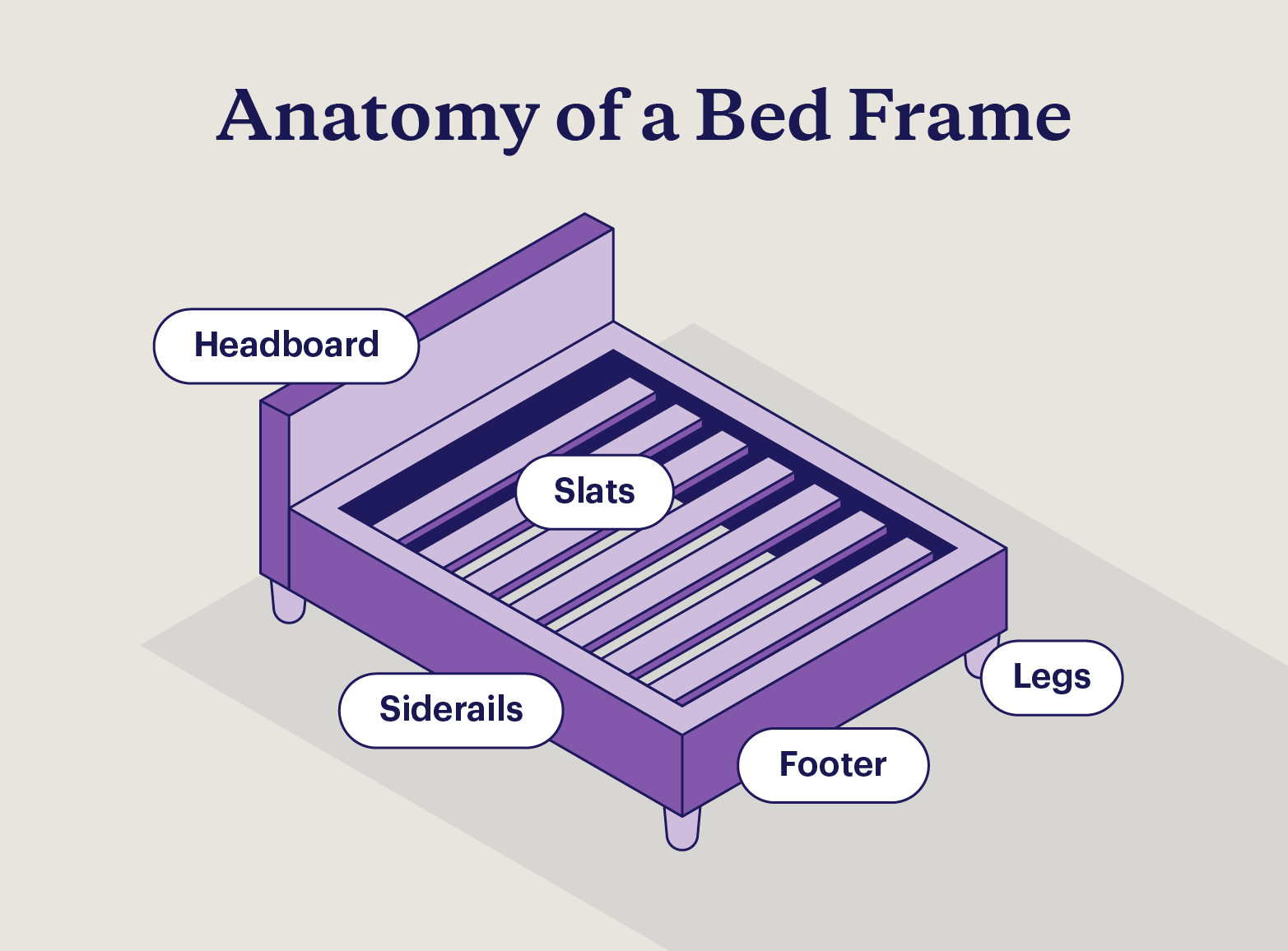
A bed frame contains several parts that work together to hold the mattress and keep the bed stable. Knowing their names helps you understand assembly diagrams and identify the correct replacement component.
The main parts include the headboard, footboard, side rails, slats, center support beam, legs, and connecting hardware. Not every bed uses all these parts as separate pieces. Some modern frames combine several functions into one structure.
The following table explains the common names, their locations, and their main purposes.
Source: homestratosphere.com
Headboard
The headboard is the panel at the head end of a bed. It is usually located behind the pillows and may be attached directly to the bed frame or mounted separately on the wall.
Headboards come in many styles. Some have a flat wooden surface, while others use metal bars, padded upholstery, decorative panels, or built-in shelves.
Many people use a headboard as a backrest when reading or sitting in bed. It can also protect the wall from direct contact with pillows and bedding.
Common materials
Wood, metal, upholstered fabric, leather, and engineered wood.
Main location
At the end where your head and pillows are placed.
Side Rails
Side rails are the two long structural pieces that run along the left and right sides of the bed. They usually connect the headboard and footboard.
These rails help form the outer frame and may carry the slats or mattress support system. Their construction varies. Wooden beds often use thick boards, while metal frames may use steel tubes or shaped metal sections.
Side rails should not be confused with safety guardrails. Guardrails are barriers designed to reduce the risk of falling from a bed, while structural side rails are part of the bed frame itself.
End Rails
An end rail is a horizontal piece that connects the side rails across the width of a bed. It may be located at the foot end or the head end, depending on the design.
A footboard is usually a larger or more visible end structure. An end rail may be much lower and may sit below the mattress level.
This distinction is useful when reading furniture assembly instructions. A parts list may identify an end rail, footboard panel, or footboard support bar as separate components.
Bed Slats
Bed slats are narrow pieces of wood or metal that cross the width of the frame. They sit beneath the mattress or an approved foundation and help distribute weight across the support structure.
Some beds use individual slats, while others have slats connected by fabric straps. Their spacing, thickness, and material depend on the frame and mattress requirements.
A damaged or missing slat can affect mattress support. Always check the manufacturer’s required slat spacing before replacing one.
Center Support Beam
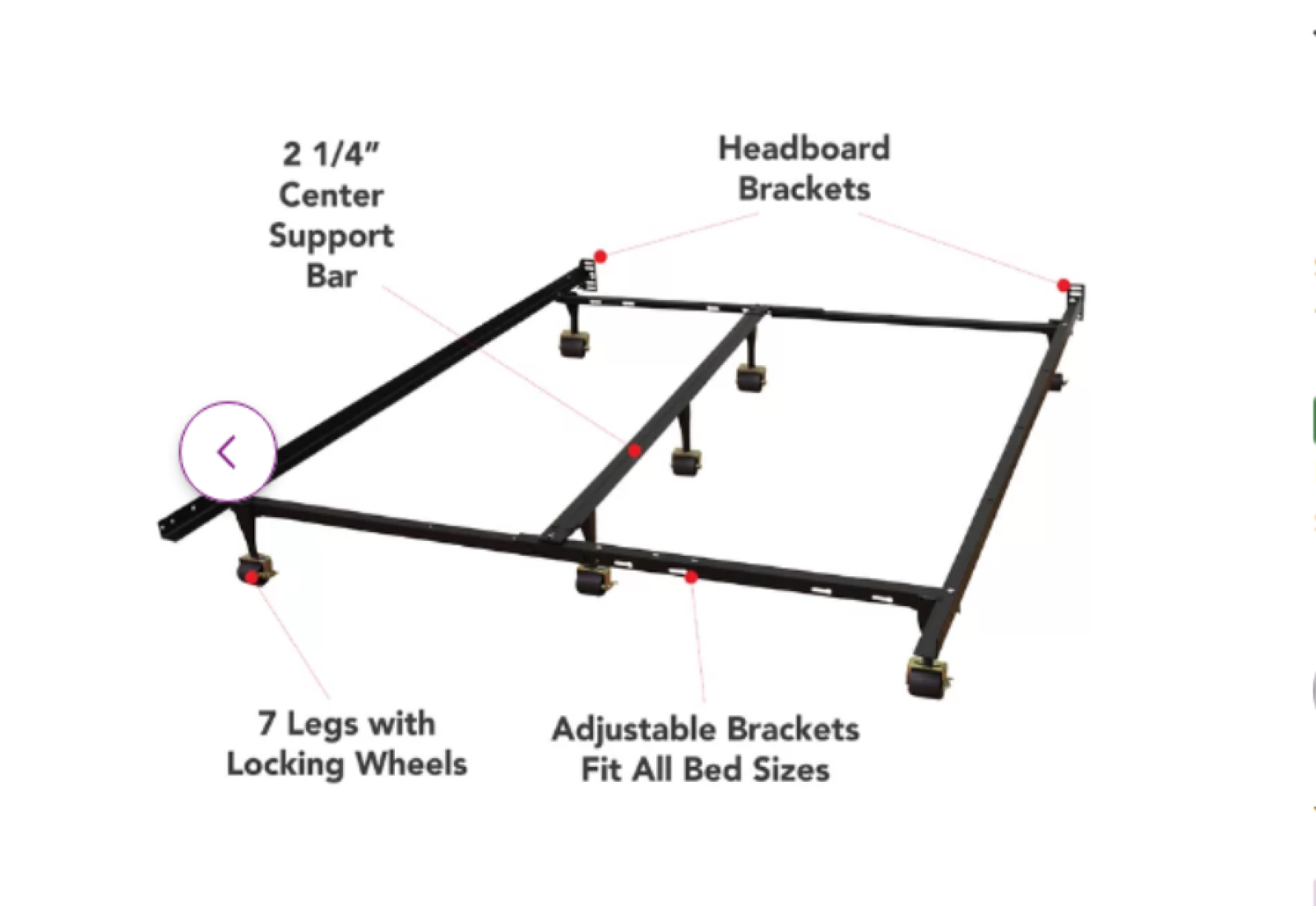
A center support beam, also called a center rail or midbeam, runs lengthwise through the middle of certain bed frames. It helps support the mattress system across a wider span.
Some designs include support legs beneath the beam. These legs transfer part of the load toward the floor and help prevent excessive movement or sagging.
The beam and its support legs are different components. If a replacement parts list mentions center support, check the diagram to see which piece it identifies.
Bed Legs and Feet
Bed legs are the vertical supports that raise the frame above the floor. They may be attached at the corners, beneath the center beam, or at other points specified by the design.
Some frames have adjustable feet that help level the bed on an uneven floor. Others use fixed legs, plastic glides, or casters.
A loose or damaged support leg should be checked before the bed is used again. The correct replacement must fit the frame and provide the required support.
Different Types of Footboards Found on Bed Frames
Footboards come in several designs, from large decorative panels to simple horizontal rails. The right name for a particular component may depend on how the manufacturer builds the frame.
A traditional wooden bed may have a tall footboard with decorative posts. A modern upholstered bed may use a padded panel. A minimalist platform bed may have only a low end rail or no visible footboard.
Understanding these differences helps when comparing bedroom furniture or looking for a replacement part.
Source: homoper.com
Traditional footboard
A raised panel that often matches the headboard in height, material, and decorative style.
Low-profile footboard
A short panel that sits near the mattress level and gives the bed a more open appearance.
Upholstered footboard
A padded panel covered with fabric or another upholstery material.
Wooden footboard
A panel made from solid wood or engineered wood, sometimes with carved or painted details.
Metal footboard
A structure made from metal bars, tubes, or panels.
Open foot end
A frame design without a raised footboard, sometimes using only a low connecting rail.
Wooden Footboards
Wooden footboards are common on traditional and farmhouse-style beds. They may have a flat panel, raised molding, decorative posts, or carved details.
Solid wood and engineered wood are not the same. Solid wood uses natural lumber, while engineered wood uses processed wood fibers, particles, or layers. The product description should identify the actual material.
When replacing a wooden footboard, check its thickness, width, finish, and connection points. A panel that looks similar may not fit the original frame.
Upholstered Footboards
An upholstered footboard has a padded surface covered with fabric, leather, or a synthetic upholstery material. It often matches the headboard.
This style can create a softer visual appearance than exposed wood or metal. However, the fabric may need routine cleaning, and the care method depends on the covering.
Check whether the upholstery is attached to a removable panel or built into the frame before attempting repairs.
Metal Footboards
Metal footboards may use straight bars, curved tubes, decorative scrollwork, or solid metal panels. They are common on both traditional and modern frames.
Their open construction can make a bed look less bulky. Some designs also make the frame easier to clean around, although the actual clearance depends on the leg and rail arrangement.
When identifying a replacement, check the metal profile, finish, mounting brackets, and distance between attachment points.
Platform Beds Without Footboards
Many platform beds have an open foot end. Instead of a large panel, they use a simple perimeter frame and an integrated mattress support surface.
This design can create a less enclosed appearance and make it easier to reach the foot of the mattress when changing sheets. It may also suit smaller rooms where a large panel would feel visually heavy.
An open foot end does not mean the bed is incomplete. If the manufacturer’s assembly diagram shows no footboard, the frame is designed to work without one.
Footboard vs. Headboard vs. Foot Rail: What Is the Difference?
The easiest way to distinguish these bed parts is to look at their position and shape. A headboard is at the pillow end, a footboard is at the opposite end, and a foot rail is generally a lower horizontal structural piece.
These names sometimes overlap in casual conversation. However, furniture assembly manuals and replacement parts lists may use them for different components.
The comparison below makes the differences easier to understand.
Source: simplegoodideas.com
Headboard
A panel or structure at the head end of the bed, often used for decoration and back support.
Footboard
A panel or raised structure at the foot end of the bed.
Foot rail
A horizontal rail at the foot end that connects or supports the frame.
Side rail
A long structural piece running along either side of the mattress.
Footboard vs. Headboard
The headboard and footboard are located at opposite ends of a traditional bed. The headboard sits behind the pillows, while the footboard sits near the feet.
They may share the same design, but their heights do not always match. Many modern beds have a tall headboard and a much shorter footboard.
Some frames allow the headboard to be attached to the wall. Others use it as a structural part of the frame. The attachment method depends on the manufacturer’s design.
Footboard vs. Foot Rail
A footboard is generally a visible panel or raised structure. A foot rail is usually a horizontal frame member at the same end.
For example, a wooden bed might have a decorative footboard attached to two posts. A simple metal frame might have a low steel rail connecting its side rails without any large panel.
If you are ordering a replacement part, do not assume these terms mean the same thing. Check the original parts diagram and identify the shape of the missing component.
Footboard vs. Bed Frame
A bed frame is the complete supporting structure or assembly, while a footboard is only one possible component of that structure.
The frame may include the headboard, footboard, side rails, support legs, and mattress support system. Some designs combine these parts into a single platform.
A footboard alone is not a complete bed frame. It needs the correct supporting components and connections to form a stable assembly.
How to Identify or Replace a Footboard
If your bed has a damaged or missing footboard, start by identifying the exact frame model. A replacement should match the original dimensions and attachment system, not just the general appearance.
Bed frames with the same mattress size can have different construction methods. A queen-size footboard from one manufacturer may not fit another queen-size frame.
Use the following steps before buying a replacement or attempting a repair.
Source: homestratosphere.com
Step 1: Find the manufacturer and model
Look for a product label, receipt, order confirmation, or original assembly manual. Record the brand, model name, and bed size.
Step 2: Confirm the damaged component
Check whether the missing piece is the footboard panel, foot rail, support bar, post, or connecting bracket.
Step 3: Measure the original part
Record its width, height, thickness, and the distance between mounting holes or brackets.
Step 4: Check the connection system
Identify whether the part uses bolts, hooks, brackets, screws, or another connection method.
Step 5: Contact the manufacturer
Ask whether the original component or an approved replacement is available for your exact model.
Step 6: Follow the assembly instructions
Install the replacement using the specified hardware and assembly sequence. Check all connections before using the bed.
What Measurements Should You Take?
Accurate measurements help prevent ordering the wrong footboard. Measure the actual component when possible rather than relying only on the advertised mattress size.
For a typical rectangular footboard, record the overall width, height, thickness, and mounting-hole spacing. Also note whether the posts are separate or built into the panel.
If the part uses metal brackets, measure the distance between the holes from center to center. Record the bolt diameter and length if they are specified in the manual.
Width
The distance from the left side of the footboard to the right side.
Height
The distance from the bottom of the component to its top edge.
Thickness
The depth of the panel or structural piece.
Mounting spacing
The distance between attachment holes, hooks, or brackets.
Where Can You Find a Replacement Footboard?
The original furniture manufacturer is usually the best starting point. Its support department may have a parts diagram, replacement panel, or hardware list for your specific model.
You can also check the retailer that sold the bed. Some retailers can contact the manufacturer or provide information about replacement components.
If the original part is unavailable, a furniture repair professional may be able to assess whether a custom replacement is practical. The new part must match the frame’s structural requirements and attachment points.
When Should You Avoid a DIY Repair?
Do not continue using a bed with a cracked structural panel, loose connection, or unstable frame. A damaged footboard may affect the stability of a frame when it forms part of the load-bearing assembly.
Avoid drilling new holes or changing the mounting hardware without confirming that the design allows it. Incorrect connections can weaken the frame or cause the parts to separate.
For a heavy, complex, or badly damaged bed, ask a qualified furniture repair professional to inspect it. Follow the manufacturer’s instructions for any repair or replacement.
Common Mistakes When Identifying the End of a Bed Frame
Bed terminology becomes confusing when people use location names and component names interchangeably. A small difference in wording can lead to ordering the wrong replacement part or misunderstanding assembly instructions.
These are some common mistakes to avoid when describing the foot end of a bed.
Source: commahome.com
Calling every foot-end component a footboard
A low horizontal connector may be an end rail rather than a traditional footboard. Check its shape and position.
Confusing the footboard with the headboard
The headboard is at the pillow end. The footboard is at the opposite end.
Assuming every bed has a footboard
Many modern platform beds and adjustable bases have open foot ends.
Confusing the footboard with the mattress foundation
The footboard is part of the bed’s end structure. A foundation is a support unit beneath the mattress.
Buying a replacement based only on bed size
Matching a twin, full, queen, or king label does not guarantee compatible dimensions or mounting hardware.
Does the Footboard Always Match the Headboard?
No. Traditional furniture often uses matching panels, but modern designs may have a tall headboard and a short footboard. Some beds use different materials or finishes at each end.
A matching appearance is a design choice, not a universal requirement. The frame must meet its structural specifications regardless of how the panels look.
Is the Footboard the Bottom Part of the Mattress?
No. The footboard belongs to the bed frame, not the mattress. It is located beyond the mattress at the foot end or forms part of the frame around it.
The bottom of a mattress refers to its underside. The foundation or slats beneath it provide support, depending on the bed design.
Can You Use a Bed Without Its Original Footboard?
That depends on the frame. Some beds are designed to work without a footboard, while others use it as a structural connection between the side rails.
Check the original manual before removing it. If the footboard is a required structural component, do not use the bed until the frame has been repaired or fitted with an approved replacement.
A Quick Guide to Bed Frame Terminology
If you are shopping for a bed, assembling furniture, or talking to a repair service, a few basic terms can make the process easier. The table below provides a simple reference for the most common bed frame components.
Use the location and function together when identifying a part. This is more reliable than guessing from its appearance alone.
Source: homoper.com
Bed Frame Parts and Their Names
A typical bed has an outer structure and a mattress support system. The outer structure defines the shape of the bed, while the support system holds the mattress or foundation.
Some beds combine these functions. A platform frame, for example, may include its own slatted or solid support surface rather than requiring a separate foundation.
Headboard
The panel at the head end of the bed.
Footboard
The panel at the foot end of the bed.
Side rails
The long frame members along the two sides.
End rail
A horizontal connector across an end of the frame.
Slats
Crosswise strips that support the mattress or foundation.
Center beam
A lengthwise support beneath the middle of the frame.
Support legs
Vertical pieces that transfer weight toward the floor.
Foundation
A separate or integrated support unit beneath the mattress.
Observed Questions and Useful Next Information
A review of bed terminology pages, an illustrated bed-parts guide, furniture terminology references, and an American bedstead reference shows that the basic footboard definition is consistent. The main difference between these resources is how much detail they give about replacement parts and frame connections.
The following gap map separates common questions from practical next needs. The coverage labels describe the pages reviewed for this article, not every page available online.
What is the end near your feet called?
Observed question. Coverage: answered by the reviewed terminology and bed-parts references. Priority: high. Placement: opening answer.
Is a footboard the same as an end rail?
Inferred next need based on the different component names in furniture manuals. Coverage: shallow or missing in some reviewed pages. Priority: high. Placement: terminology comparison.
Can a bed work without a footboard?
Inferred next need based on open-end bed designs. Coverage: answered in some reviewed guides. Priority: high. Placement: necessity and design sections.
How do you replace a broken footboard?
Inferred next need based on furniture repair and assembly tasks. Coverage: shallow in the basic terminology references. Priority: high. Placement: replacement instructions.
Will a footboard from another queen bed fit?
Inferred next need based on replacement compatibility. Coverage: not fully addressed by basic definition pages. Priority: medium. Placement: measurement and replacement guidance.
Frequently Asked Questions
Q
What is the end of a bed frame near your feet called?
The end of a bed frame near your feet is called the footboard. It is opposite the headboard, which sits behind your pillows. Some beds have a tall footboard, while others use a short end rail or have an open foot end.
Q
What is the bottom end of a bed called?
The bottom end of a bed is commonly called the foot end or foot of the bed. If that end has a raised panel, the panel is called the footboard. These terms describe related things, but they do not mean exactly the same thing.
Q
What is the difference between a footboard and a headboard?
A headboard is located at the end where your head and pillows rest. A footboard is located at the opposite end, near your feet. Traditional beds often have matching panels, but modern designs may use different heights, materials, or shapes.
Q
What is the rail at the foot of a bed called?
It is often called a foot rail or end rail. It usually connects the two side rails across the foot end of the frame. A footboard is generally a larger or raised panel, while an end rail may be a simple horizontal structural piece.
Q
Do all bed frames have footboards?
No. Many platform beds, adjustable bases, and modern metal frames do not have traditional footboards. They may have an open foot end or a low connecting rail. This is normal when the frame is designed and assembled that way.
Q
Can I remove the footboard from my bed?
Some footboards are decorative and can be removed, but others form part of the structural frame. Check the manufacturer’s instructions before removing one. If the footboard connects the side rails or supports the frame assembly, removing it without an approved replacement may make the bed unstable.
Q
What is the piece between the headboard and footboard called?
The long pieces running between the headboard and footboard are called side rails. Most traditional frames have one on each side. They connect the two ends and may support the bed slats or mattress foundation.
Q
Is a footboard needed to support a mattress?
A footboard is not usually the main component that supports a mattress. That function belongs to the slats, platform surface, foundation, or other approved support system. However, a footboard may form part of the structural frame, so follow the original assembly instructions.
Q
What is the footboard of a bed usually made of?
A footboard may be made from solid wood, engineered wood, metal, or upholstered materials. Some designs combine a wooden or metal frame with a padded fabric panel. The material depends on the bed’s construction and style.
Q
Can I buy a replacement footboard separately?
Sometimes. Contact the original manufacturer or retailer with the bed’s model number, size, and photographs. Replacement availability varies. If the original part is no longer available, a furniture repair professional may be able to assess a compatible custom replacement.
✦ Wrapping Up
Conclusion
The end of a bed frame near your feet is called the footboard. It sits opposite the headboard and may be a tall decorative panel, a low-profile structure, or an upholstered or metal design. Some modern beds do not have a separate footboard at all.
The footboard is only one part of a complete bed frame. Side rails connect the ends, slats or a platform support the mattress, and legs help transfer the weight toward the floor. An end rail may also connect the frame at the foot without forming a traditional raised panel.
Knowing these names can help you shop for bedroom furniture, follow assembly instructions, and find the correct replacement part. Always check the manufacturer’s parts diagram when the exact component or its structural role is unclear.
💡 Key Takeaway
If you need to identify or replace the end of your bed, look for the term footboard first. Then check whether your frame uses a separate footboard or a simple end rail, and confirm the model, measurements, and mounting connections before ordering a replacement.