
Moving a mobile home is a big project. I have helped plan dozens of moves for owners, parks, and lenders. Here is the short answer you want first: the average cost to move a mobile home ranges from $3,000 to $15,000 for a short local move with basic setup. Long-distance moves can reach $20,000 or more. Your final price depends on size, distance, route, permits, setup, and site work. In this guide, I break down every cost, share real examples, and give smart ways to save without risking safety. If you want a clear, stress-free plan for how much does it cost to move a mobile home, you are in the right place.

Source: homeguide.com
Cost Overview At A Glance
Most owners ask for a single number. But this job has many parts. Here are typical cost ranges in the United States.
- Local move within 50 miles: $3,000 to $15,000
- Long-distance 100 to 500 miles: $7,000 to $20,000
- Single-wide home: $3,000 to $12,000
- Double-wide home: $7,000 to $20,000
- Triple-wide or multi-section: $12,000 to $35,000+
What is included in the base price? It often covers disconnection, transport, and basic setup. What is not included? Permits, escorts, pilot cars, utility drops, skirting, decks, and complex site work. Ask for a written scope so there are no surprises.
What Drives The Cost
Many factors come together to set your price. Think of it like a puzzle. Each piece adds or removes dollars.
- Size and weight of the home Larger and heavier homes need more trucks, axles, and crew.
- Distance and route More miles cost more. Tight roads, mountains, and bridges add time and fees.
- Disassembly and reassembly Removing skirting, porches, and add-ons adds labor.
- Setup level Basic blocking and tie-downs cost less than a full foundation.
- Permits and escorts Wide loads need permits. Many states need pilot cars.
- Seasonal timing Busy months and winter weather raise rates.
- Access and site conditions Soft ground, slopes, and tight entrances need special gear.
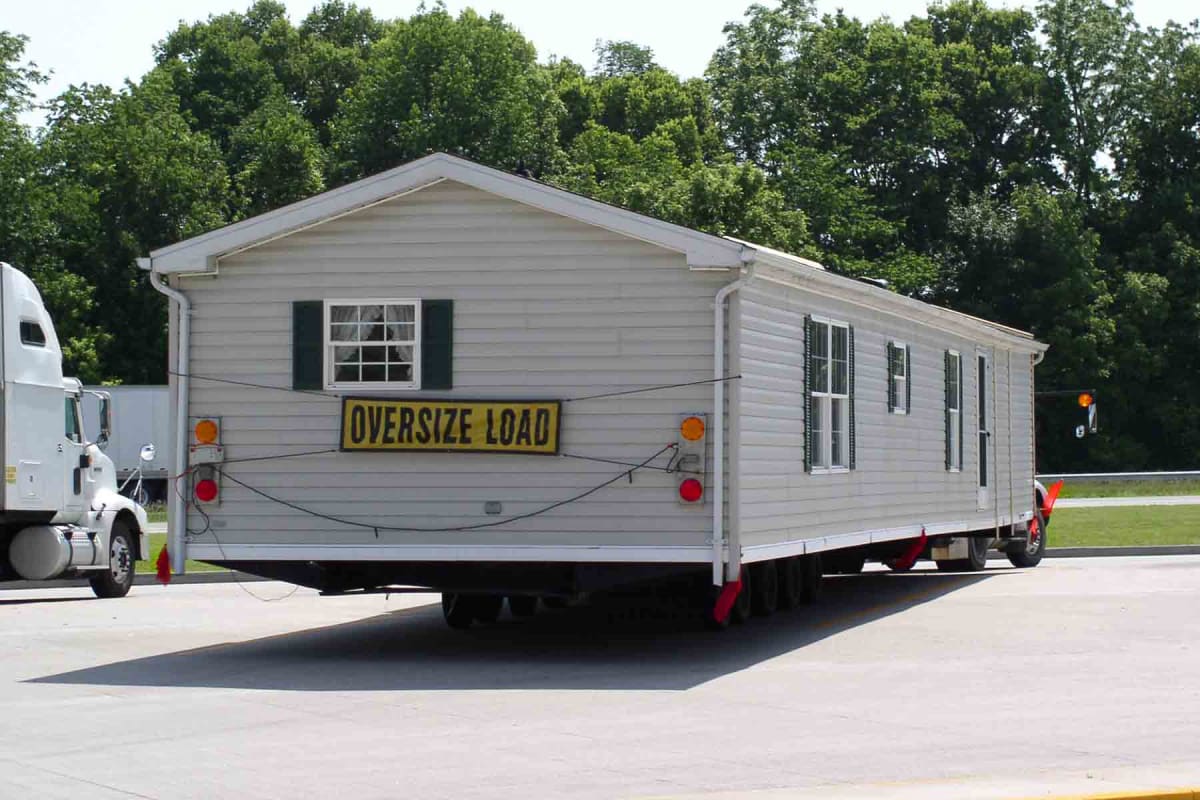
In my experience, access is the top hidden driver. A tough driveway can add a day and thousands in extra gear and labor.
Source: homeguide.com
Typical Line-Item Costs
Here are common items I see on bids. Your numbers may vary by state.
- Transport per mile $5 to $15 per mile for the main haul.
- Permits and escorts $200 to $1,000+ for permits; $1.50 to $3.00 per mile per pilot car.
- Disconnect services $300 to $1,200 for utilities and skirting removal.
- Axles, tires, and hitches $300 to $1,200 if replacements are needed.
- Basic setup at new site $1,500 to $5,000 for blocking and leveling.
- Tie-downs and anchoring $800 to $2,500 depending on soil and wind zone.
- Utility reconnection $500 to $3,000 for water, sewer, power, and gas.
- Skirting and steps $1,000 to $4,000 if new or upgraded.
- Crane or winch if needed $1,000 to $5,000 for tight sites or multi-section sets.
- Park or HOA fees $500 to $2,500 for move-in or pad prep.
- Insurance for transit $250 to $1,000 for cargo or mover’s coverage.

Source: homeguide.com
Single-Wide, Double-Wide, And Multi-Section Moves
– Single-wide Often one truck and one permit. Short local moves can be $3,000 to $8,000. Bigger or older units can push higher if tires and axles need work.
– Double-wide Two sections moved in two trips. Costs often double. Expect $7,000 to $15,000 for local moves with setup.
– Triple-wide or park model Multi-section moves need more planning. Crews, cranes, and longer routes raise prices fast. Budgets of $12,000 to $35,000+ are common.
If your home is older, budget extra for frame checks, brakes, lights, and seals. Movers will not haul unsafe units.

Source: homeguide.com
Permits, Regulations, And Legal Rules
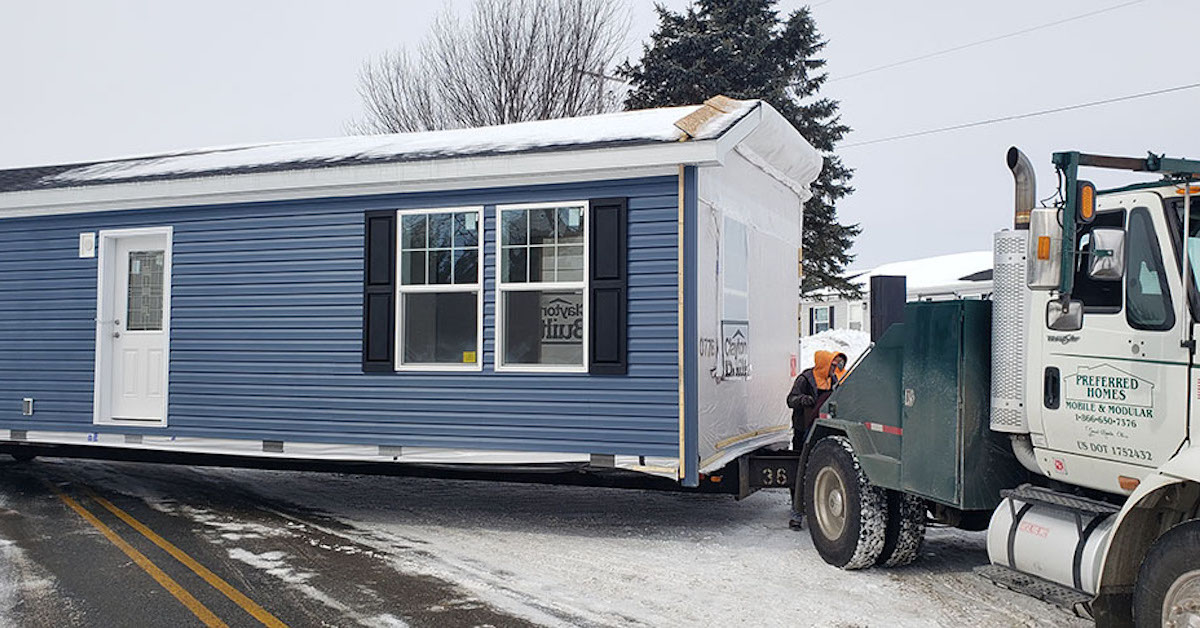
Every state has rules for wide loads. Most mobile homes are over-width. This means you need permits, flags, lights, and sometimes pilot cars.
- Over-width permits Required in most states for loads over 8.5 feet wide.
- Travel hours Some states limit travel to daylight or weekdays.
- Route checks Bridges, steep grades, and low wires may block the path.
- County and city rules Local permits may be needed for entering or leaving.
Good movers handle permits. Still, ask for a copy of the permit pack. It protects you if there is a stop on the road.
Source: preferredhomesmi.com
How To Prepare Your Home For Moving Day
Prep work may save you money and stress. Here is a quick checklist I use with clients.
- Remove skirting and steps if not included.
- Disconnect utilities and cap lines safely.
- Clear a 10- to 15-foot path around the home.
- Empty water heaters and secure loose items.
- Take down awnings, carports, and attached decks.
- Confirm tire, axle, and light condition.
Take photos of everything before the crew arrives. It helps with insurance if there is a claim.

Source: blog.mhvillage.com
Real-World Cost Scenarios
Here are three examples based on past moves I managed. These are realistic and help set expectations.
- Single-wide, 25 miles, basic setup Transport $1,000. Permits and pilot car $350. Disconnect and reskirt $800. Setup and tie-downs $1,600. Utilities $900. Total about $4,650.
- Double-wide, 80 miles, standard set Transport $3,600. Permits and two pilot cars $1,100. Section split and rejoin $1,400. Setup and anchoring $2,800. Utilities $1,700. Skirting update $1,500. Total about $12,100.
- Double-wide, 300 miles, rural to mountain route Transport $7,500. Permits and escorts $2,000. Route survey and utility drops $1,200. Setup with extra piers $3,400. Crane assist $2,200. Insurance $600. Total about $16,900.

Source: themiamimovers.com
Money-Saving Tips That Do Not Cut Safety
– Get three written bids with the same scope Ask movers to include or exclude the same items.
– Move in the off-season Late fall can be cheaper in many regions.
– Handle light prep yourself Remove skirting, steps, and debris before the crew arrives.
– Improve access Lay down gravel for soft areas to avoid stuck trucks and extra hours.
– Combine services Bundle transport, setup, and skirting with one mover for a package rate.
– Avoid rush fees Book two to four weeks ahead when possible.
One client saved $1,200 by moving mid-week and doing skirting removal over a weekend.
Hiring The Right Mover Vs. DIY
DIY is risky for mobile homes. You need permits, gear, and insurance. Wrong moves cause frame damage or legal trouble. I always advise hiring a licensed, insured mobile home mover.
- Check license and insurance Ask for DOT number and cargo coverage.
- Read the contract Scope, schedule, and damage limits should be clear.
- Ask about crews and gear Who drives, and what trucks and dollies are used?
- Verify setup credentials Installers in some states must be certified.
The cheapest bid is often missing key steps. Choose value over the lowest number.
Timeline, Risks, And What To Expect
Most local moves take one to three days end to end. Weather can delay you. So can permits and escorts.
- Day 1 Prep, disassembly, and loading.
- Day 2 Transport and arrival.
- Day 3 Setup, leveling, and connections.
Common risks include tire blowouts, loose siding, and wire strikes on back roads. A good mover plans routes and checks heights to avoid damage.
Insurance And Liability
Ask what the mover’s insurance covers. Many policies cover the home while hooked to the truck, not during setup.
- Mover’s cargo insurance Covers transit damage up to a limit.
- General liability Covers third-party property damage.
- Your homeowner’s policy May exclude transit. Ask for a rider.
- Proof of insurance Get certificates before you sign.
Take a walk-around with the foreman before and after. Note any damage in writing.
Hidden Costs And How To Budget
Build a buffer of 10 to 20 percent. Here are costs that often pop up late.
- Utility drops Power lines or cable moves can cost $200 to $1,500.
- Extra axles or tires Older homes need replacements.
- Soil and pad work Extra piers or gravel to meet code.
- Permit delays Rush fees if paperwork is late.
- Park rules Fees for move-in, skirting style, or new steps.
A clean, written scope with unit prices keeps surprises in check.
Regional And Seasonal Price Trends
Prices change by state, season, and market demand.
- Sun Belt states Many moves and strong demand means tighter schedules.
- Northern winters Snow and ice add delays and gear costs.
- Coastal wind zones Stronger tie-down rules add material and labor.
- Rural routes Longer pilot car legs and fewer crews increase price.
Call two or three movers in your county. Local knowledge beats guesswork.
Frequently Asked Questions Of How Much Does It Cost To Move A Mobile Home
Q. What Is The Cheapest Way To Move A Mobile Home?
Book in the off-season, handle simple prep, and improve access. Get three bids with the same scope. Do not skip permits or setup. Safety first.
Q. How Much Does It Cost Per Mile?
Most movers charge $5 to $15 per mile for transport. This does not include permits, escorts, or setup. Ask for an all-in quote.
Q. Can I Move A Mobile Home Myself?
It is not recommended. You need permits, pilot cars, and special gear. DIY can void insurance and cause legal issues. Hire a licensed mover.
Q. How Long Does It Take To Move And Set Up?
A local move with setup takes one to three days if all is ready. Add time for permits, weather, and utility work.
Q. Do I Need New Skirting And Steps?
Not always. If old skirting breaks during removal, you may need new panels. Many parks require updated skirting and safe steps at move-in.
Q. What If My Home Is Very Old?
Older homes can be moved if the frame is sound. Budget extra for tires, axles, and seals. A mover will inspect before booking.
Q. Are Pilot Cars Always Required?
Not always. It depends on width, route, and state rules. Many double-wides need at least one pilot car per section.
Conclusion
Moving a mobile home can be smooth and predictable when you know the numbers and the process. Most local moves cost $3,000 to $15,000, while long hauls can run $7,000 to $20,000 or more. Your price depends on size, distance, permits, setup, access, and season. Get clear scopes, verify insurance, and plan your prep. If you take the time to compare three solid bids and fix access issues early, you will save money and stress.
Ready to move forward? Gather your details, request written quotes, and build a simple checklist. If this guide helped, subscribe, share it with a friend, or leave a comment with your situation. I am happy to weigh in on your rough cost.
Watch This Video on how much does it cost to move a mobile home
>>> Get More Review Here: Keurig K-Express Single Serve K-Cup Pod Coffee Maker <<<