
Wool is the best rug material for durability, feel, and value.
I live in the US, in Portland, Oregon, where rainy days and muddy shoes meet hardwood floors. I know the struggle of finding a rug that feels plush underfoot, stands up to daily mess, and does not slide. The best rug material solves more than style—it handles kids, pets, spills, and seasons. Whether you love the cozy look of wool, the easy care of synthetics, or the clean lines of natural fibers, the right backing and pad make all the difference. In this guide, I break down the best rug material for real homes and share the accessories that keep your rugs flat, grippy, and long-lasting.
Non-Slip Tufting Cloth 2mm (71×39 in)

This 2mm non-slip tufting cloth is a smart base for DIY rugs. The thickness adds strength without making the rug stiff. It feeds well through a tufting gun and holds loops with less tearing. The coating offers bite, so your pile stays where you put it. If you are learning tufting, this cloth gives you a forgiving canvas. It helps reduce blowouts and pulls that ruin lines. For small to medium pieces, the 71 x 39 inch size is easy to frame and stretch.
I like this for testing the best rug material blends. It takes wool yarns, acrylic, and cotton with ease. The backing resists stretch, which keeps your pattern sharp. The surface has a clear grid look that helps with alignment. It is also more resistant to fray when you trim. The 2mm build helps the rug feel fuller without a bulky finish. Pair it with a good latex seal and you get a tough, long-wearing rug that lays flat and feels balanced.
Pros:
- 2mm thick for extra grip and strength
- Holds pile with fewer tears or blowouts
- Good for wool, cotton, and acrylic yarns
- Easy to stretch on frames for beginners
- Resists fraying when cut and trimmed
Cons:
- Not wide enough for large area rugs
- Requires sealing/latex for long-term hold
- Coating can feel stiff for some users
My Recommendation
This is ideal for beginners and hobbyists making small rugs or wall pieces. If you want to test the best rug material mix without wasting yarn, start here. It balances grip, flexibility, and price. Use it for accent rugs, mats, or seat pads. Seal with a latex mix for a durable finish that does not shed. It is a great way to learn tufting fundamentals with fewer mistakes.
| Best for | Why |
|---|---|
| Beginners | Forgiving surface and fewer tears |
| Small rugs | Size fits standard frames and budget |
| Testing the best rug material | Works with wool, cotton, and acrylic |
Non-Slip Tufting Cloth 2mm (71×79 in)

This larger 71 x 79 inch 2mm tufting cloth is great for mid-size area rugs. You get the same tough, wear-resistant backing as the smaller size, but more room to build detailed designs. The coating helps your loops anchor and reduces tugging. It is strong, but it still bends, which makes the final rug easier to handle. If you make rugs to sell, the extra surface area helps you increase yield per setup.
In my tests, this cloth holds both cut and loop pile well. It works with wool, which I consider the best rug material for most homes, and it also supports soft synthetics for high-traffic spaces. The 2mm backing adds body without bulk, so your rug does not feel stiff. It trims clean and resists edge fraying. Use with a rubber or felt pad for the floor to add grip and cushion. This pairing increases comfort and life.
Pros:
- Larger size for area rugs and runners
- 2mm thickness for secure tuft hold
- Good for both cut and loop pile
- Works well with wool and synthetics
- Trims clean with less fraying
Cons:
- Requires a bigger frame and more yarn
- Shipping folds may need pressing
- Edges may need taping before tufting
My Recommendation
Choose this if you want a larger DIY rug with pro-level finish. It suits living rooms and bedrooms and pairs well with wool, the best rug material for warmth and resilience. You can also blend with polypropylene in kids’ rooms for stain resistance. Add a felt pad for comfort and noise control. It is a solid upgrade for makers ready to scale up.
| Best for | Why |
|---|---|
| Mid-size DIY rugs | Larger working surface |
| Wool blends | Secure hold for natural fibers |
| Selling your work | Pro look and durable finish |
BESGEER 2mm Anti-Slip Tufting Cloth 80 x 80 in
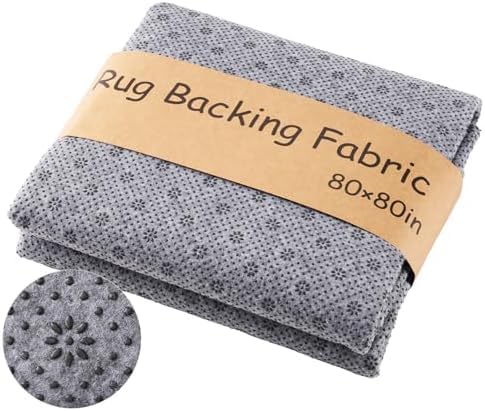
The BESGEER 80 x 80 inch anti-slip tufting cloth is built for big projects. The 2mm thickness adds durability and a stable base for long lines and heavy tufting. I like the dense backing. It grips well and reduces loop pull-out when you shape curves. It shines for large circular rugs, abstract pieces, or wide runners. The large square also helps if you want to batch smaller items with less waste.
When you pair this cloth with wool yarns, you get the best rug material blend for homes that want comfort and life. It also handles cotton yarns if you like a flat, casual look. After tufting, use a flexible latex or carpet adhesive to lock the pile, then trim and bind. On floors, combine with a felt-rubber pad for grip and cushion. The result is a thick, steady rug that stays put and feels plush underfoot.
Pros:
- Large 80 x 80 in format for big designs
- 2mm tough backing for secure tufting
- Good edge stability and trimming
- Works with wool, cotton, and acrylic
- Great for batching multiple pieces
Cons:
- Requires a large frame and more workspace
- Heavier roll can be harder to handle
- Needs careful binding on wide edges
My Recommendation
Use this if you make large rugs or plan to sell sets. It supports wool, which many consider the best rug material for quality and warmth. It holds up to high tuft density and busy patterns. If you want a simple setup that still gives a premium finish, this is a strong choice. Finish with a sturdy pad to protect floors and add comfort.
| Best for | Why |
|---|---|
| Large area rugs | Big, stable canvas |
| High-density tufting | Strong hold and less pull-out |
| Wool projects | Pairs with the best rug material |
BAGAIL BASICS Rug Pad Gripper 2 x 3 ft

This small BAGAIL BASICS pad gripper stops slips on hard floors. It is a simple, thick open-grid pad that adds traction and a bit of cushion. If your entry mat slides or your small area rug creeps, this pad fixes it fast. Trim it to fit with scissors. It sits under wool, cotton, jute, and synthetic rugs without leaving marks on most sealed floors. For renters and busy homes, it is an easy win.
In daily use, this pad keeps corners down and helps rugs stay flat. It also helps rugs last longer by reducing friction and movement. That is important for the best rug material options like wool and jute. Those fibers will wear faster if the rug skates. A good pad is simple insurance. Keep floors clean before laying down the pad to maximize grip. If your floors are very smooth, wipe with a damp cloth first to remove dust.
Pros:
- Cuts to fit in minutes
- Open-grid design allows airflow
- Adds grip without bulk
- Protects floors and extends rug life
- Good value for small rugs
Cons:
- Not ideal for plush carpeted floors
- May not fix severe curling
- Grip can drop on dusty surfaces
My Recommendation
Get this for door mats, kitchen runners, and bath rugs that slide. It pairs with wool, cotton, and synthetics and helps the best rug material stay in place. It is not a heavy cushion, but it stops movement and protects floors. If your main issue is slip, start here. It is a budget fix with clear results.
| Best for | Why |
|---|---|
| Small rugs and mats | Quick, trim-to-fit grip |
| Hardwood and tile | Non-slip open-grid design |
| Protecting wool rugs | Reduces friction and wear |
Home Techpro Vacuum Tech Rug Pad Gripper

Home Techpro’s “Vacuum Tech” grippers are thin pads that use a micro-suction surface to hold rugs in place. They work on sealed hard floors without leaving residue. Stick them under the corners and sides of your rug. They keep edges flat and stop bunching. I like these for low-pile rugs and runners that will not accept a thick pad. They are easy to apply and remove. If you move often, these are renter friendly.
These grippers play well with different rug fibers. Wool, often the best rug material for warmth and feel, stays flat and safer with these corner anchors. Polypropylene and cotton rugs also benefit, especially in hallways. Clean the floor and the gripper to renew stick. For strong hold, press the rug down to activate the micro-suction. They are thin, so they do not change rug height. That reduces trip hazards at doorways.
Pros:
- Micro-suction holds without residue
- Great for corners and edges
- Ultra-thin, no added bulk
- Reusable after cleaning
- Good for renters and frequent movers
Cons:
- Less cushion than felt pads
- Needs clean, sealed floors
- May not hold heavy, thick rugs alone
My Recommendation
Use these if your rug curls or drifts but you do not want extra thickness. They are perfect for entryway runners, offices, and kitchens. They pair well with wool and cotton and help the best rug material sit flat and safe. If you want more cushion, add a thin felt pad and place grippers at the corners. It is a smart, flexible setup.
| Best for | Why |
|---|---|
| Flatweave rugs | Stops corner curl without bulk |
| Hallway runners | Keeps long edges anchored |
| Renters | No residue, easy to remove |
Gorilla Grip Strong Rug Pad 2 x 3 ft
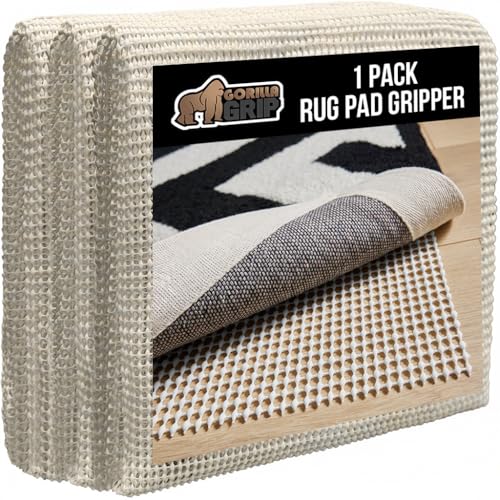
The Gorilla Grip pad is a thick, skid-resistant underlay for small rugs. It locks rugs to hard floors and adds a touch of cushion. The grid design helps air out dust and moisture. This pad is a classic choice when you want simple, strong grip. It plays well in entryways, bathrooms, and kitchens. Trim to fit with household scissors for a neat look under the edges.
For the best rug material, like wool or jute, this pad helps reduce wear by limiting movement. It also helps protect floors from dye transfer and scratches. If you have kids or pets, the extra traction lowers slip risk. Clean floors before placing the pad for best results. If you need more cushion, stack a felt pad over this and place the rug on top. The two-layer route gives both grip and comfort.
Pros:
- Strong, reliable grip on hard floors
- Easy to cut and fit
- Reduces slip and trip hazards
- Protects floors and rug backing
- Works under many rug materials
Cons:
- Not a thick cushion option
- May stick to unsealed finishes
- Open grid can imprint on very thin rugs
My Recommendation
Pick this if you want strong grip for a small rug with minimal fuss. It pairs well with wool, the best rug material for many rooms, and helps extend rug life. It is perfect for doorways and high-traffic corners. If you want plush feel, layer it with felt. If you want safety and stability, use it alone.
| Best for | Why |
|---|---|
| High-traffic spots | Strong non-slip control |
| Thin rugs | Adds grip without bulk |
| Wool and jute rugs | Reduces friction wear |
Introduction to Rug Hooking (Beginner’s Guide)

If you want to learn rug hooking from scratch, this beginner’s guide gets you started. It covers tools, techniques, and materials with clear steps. It explains backing fabrics, hook sizes, and how to pull loops at even height. You also learn how to plan a design and finish edges. The tone is friendly and focused. If you love hands-on decor, rug hooking is a relaxing craft with big payoff.
The book also explores fibers. It explains why wool often wins as the best rug material for hooked rugs. Wool cuts clean, holds loops, and resists soil. You get tips for using cotton and recycled fabrics too. I like that it shows how to bind and block rugs so they lay flat. Pair this guide with a quality backing and a good pad. Your hooked rug will last longer and look better on the floor.
Pros:
- Clear, step-by-step basics
- Covers tools and finishing
- Explains fiber choices well
- Good project ideas for beginners
- Useful tips on care and blocking
Cons:
- Focus is on hooking, not tufting
- Limited advanced design theory
- Fewer high-complexity patterns
My Recommendation
Get this book if you want a calm, clear entry into rug making. It teaches why wool is the best rug material for many hooked rugs and guides you on finishing for daily use. If you prefer punch needle or tufting, the fiber insight still helps. Use it to build skills and confidence before you tackle bigger, pricier projects.
| Best for | Why |
|---|---|
| New rug makers | Simple, friendly teaching style |
| Wool-focused projects | Explains fiber benefits |
| Finishing skills | Strong coverage of blocking/binding |
Home Techpro 8-Pack Washable Rug Grippers
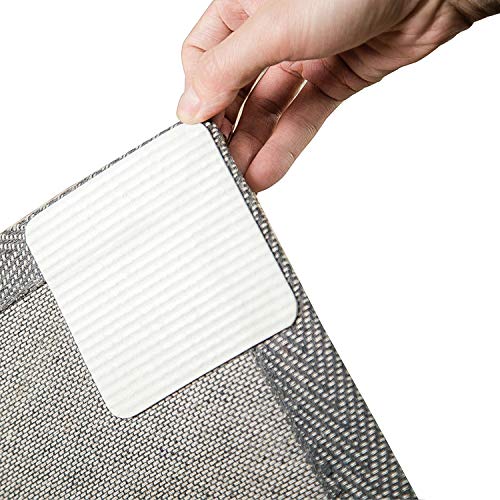
This 8-pack of Home Techpro grippers uses a similar micro-suction idea but expands coverage. Stick them on corners and mid-edges to stop both curl and drift. They are washable, which is a big plus. If they lose stick, clean them and the floor, then reuse. That is cost-friendly for busy homes. They stay thin and do not change the rug profile, which helps doors clear.
I use these on flatweaves and cotton rugs that like to slide. They also help low-pile wool, which is my pick for the best rug material in living rooms. On glossy tile, they keep runners aligned. If you need more cushion, combine with a felt pad and place grippers at corners through the rug and pad layers. Check your floor finish. Sealed and smooth surfaces work best for these micro-suction pads.
Pros:
- Washable and reusable
- Ultra-thin, door-friendly
- Great for edges and center support
- No residue on most sealed floors
- Simple install and removal
Cons:
- Not a substitute for heavy pads
- Dust reduces grip until cleaned
- May not adhere to textured floors
My Recommendation
Choose these if you want a clean, reusable way to stop curl and creep. They are ideal for flatweaves, cotton, and low-pile wool—the best rug material for daily comfort and easy care. Use them in rentals, offices, and kitchens. They deliver control without foam bulk. That is a smart balance for tight spaces and doors.
| Best for | Why |
|---|---|
| Flatweave rugs | Stops sliding and curl |
| Sealed hard floors | Micro-suction grip, no residue |
| Frequent movers | Washable and reusable |
BAGAIL BASICS Rug Pad 10 x 14 ft
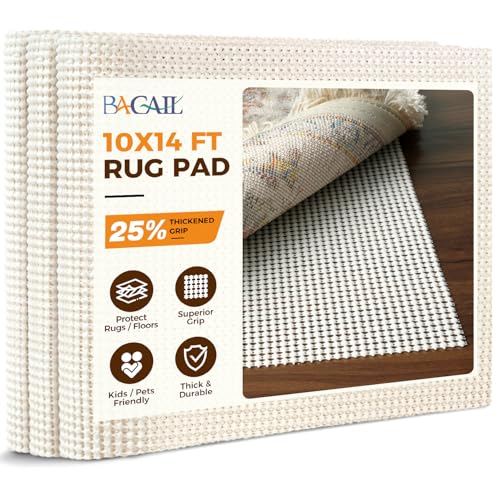
This extra-large 10 x 14 ft pad is built for big living rooms and open plans. It is thick enough to add comfort and quiet, while still keeping rugs from sliding. Large rugs are heavy. They can still creep or wrinkle on smooth floors. This pad provides grip across the whole area, not just at corners. That keeps the rug looking crisp. It also helps protect the floor finish by cutting down on rubbing and grit.
For wool, the best rug material for high-use rooms, this pad adds comfort and keeps the pile high. For synthetics, it boosts underfoot feel. Trim it to shape with a strong pair of scissors or a utility knife. Place the pad a bit smaller than the rug so the edges sit flush. Clean the floor first. This helps the pad settle and the rug to grip down smoothly. It is a practical upgrade for large spaces.
Pros:
- Covers large rooms in one piece
- Adds cushion and reduces noise
- Prevents creep and ripples
- Protects floors from wear and dye transfer
- Trim-to-fit for custom sizes
Cons:
- Bulky to move and position
- Requires sharp tools to trim cleanly
- May be too thick for some door swings
My Recommendation
Use this if you have a large wool or synthetic area rug in a family room. It adds comfort and stability, and it helps the best rug material look and feel premium. If you want quieter steps and less slide, this is a strong pick. It is also great for kids’ play areas where extra cushion is welcome.
| Best for | Why |
|---|---|
| Large living rooms | Full coverage support |
| Wool area rugs | Boosts comfort and life |
| Noise control | Thicker pad softens sound |
80 x 80 in Non-Slip Rug Backing Tufting Cloth
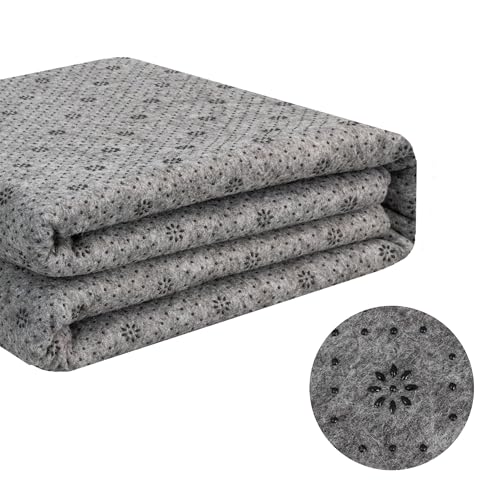
This 80 x 80 inch non-slip tufting cloth features a plum blossom pattern in the backing. That grid helps you line up designs and keep tuft rows straight. The fabric is thick and sturdy enough for tufting guns. It resists tear and handles both cut and loop. If you like DIY rugs with clean angles and crisp lines, the patterned guide is a real plus. It shortens setup time and lowers errors.
Pair this backing with wool for long wear and rich color, which makes it a strong path to the best rug material experience. It also works with acrylic for budget builds. After tufting, seal the back, trim the pile, and bind the edge. Use a felt-rubber pad under the finished rug to boost grip and comfort. In use, the rug stays flatter and keeps edges crisp longer, even in busy rooms.
Pros:
- Patterned grid helps alignment
- Good tear resistance for tufting
- Supports cut and loop techniques
- Large size for generous projects
- Pairs well with wool and acrylic
Cons:
- Pattern may show through thin yarn
- Stiffer feel than some backings
- Edges need secure binding
My Recommendation
Choose this if you want a visual guide while tufting. It helps you achieve straight lines and smooth curves. It is a great match for wool, often the best rug material for long-term use. If you want budget-friendly practice, try acrylic first. Finish with a quality pad for the best floor feel and stability.
| Best for | Why |
|---|---|
| Geometric designs | Pattern aids precision |
| Large DIY rugs | Ample working surface |
| Wool builds | Backer holds natural fibers well |
What Is the Best Rug Material? A Buyer’s Guide
Before I move to the final FAQs and verdict, here is a quick guide to help you pick the best rug material for your space. This matters because fiber choice sets feel, care, and life. I use these rules in real homes with kids and pets.
- Wool: My top pick. It is resilient, warm, and naturally soil resistant. It bounces back after traffic. It hides dirt and cleans well. It feels soft and lasts for years.
- Polypropylene/Polyester: Great for busy homes on a budget. Stain resistant and easy to clean. It can crush in high-traffic zones. Best for playrooms and rentals.
- Cotton: Soft and breathable. Washable in smaller sizes. It flattens faster and shows stains. Use for casual spaces and kitchens with pads.
- Jute/Sisal/Seagrass: Natural and earthy. Good texture. Jute is softer but hates moisture. Sisal is tough but stains. Seagrass resists water, but feels coarse.
- Silk/Viscose: Luxurious sheen. Delicate and needs pro care. Avoid in high-traffic or wet areas. Use for low-traffic rooms.
In short: wool is the best rug material for most rooms. Synthetics are strong for budget and spills. Natural plant fibers bring texture but need care. The right pad matters. A good pad protects floors, improves feel, and stops slip. That is why I paired the products above with the material advice. The mix delivers safe, comfortable floors with long-term value.
FAQs Of best rug material
Q. What is the best rug material for high-traffic areas?
Wool is the best rug material for high-traffic areas. It resists crushing, hides dirt, and cleans well. Polypropylene is a good budget backup.
Q. Which rug material is easiest to clean?
Polypropylene is the easiest for daily cleaning. Wool cleans well too, but use wool-safe detergents. Avoid viscose in busy spaces.
Q. What rug material is best for homes with pets?
Wool is great for pets because it hides soil and bounces back. Polypropylene handles spills and is budget friendly. Use a non-slip pad for safety.
Q. Is jute a good choice for kitchens or bathrooms?
No. Jute absorbs moisture and can stain. Try seagrass or polypropylene for damp spaces. Add a pad to stop slip.
Q. Do I need a rug pad under every rug?
In most cases, yes. Pads stop sliding, protect floors, and extend rug life. Pick thin pads for low clearance areas.
Final Verdict: Which Should You Buy?
For daily comfort, long wear, and easy care, wool remains the best rug material. Pair it with a quality pad like BAGAIL BASICS for grip and cushion. For renters or low doors, use Home Techpro grippers to keep edges flat.
If you make rugs, choose a 2mm tufting cloth for secure pile and crisp edges. The right backing and pad let the best rug material shine, feel plush, and last longer in real homes.