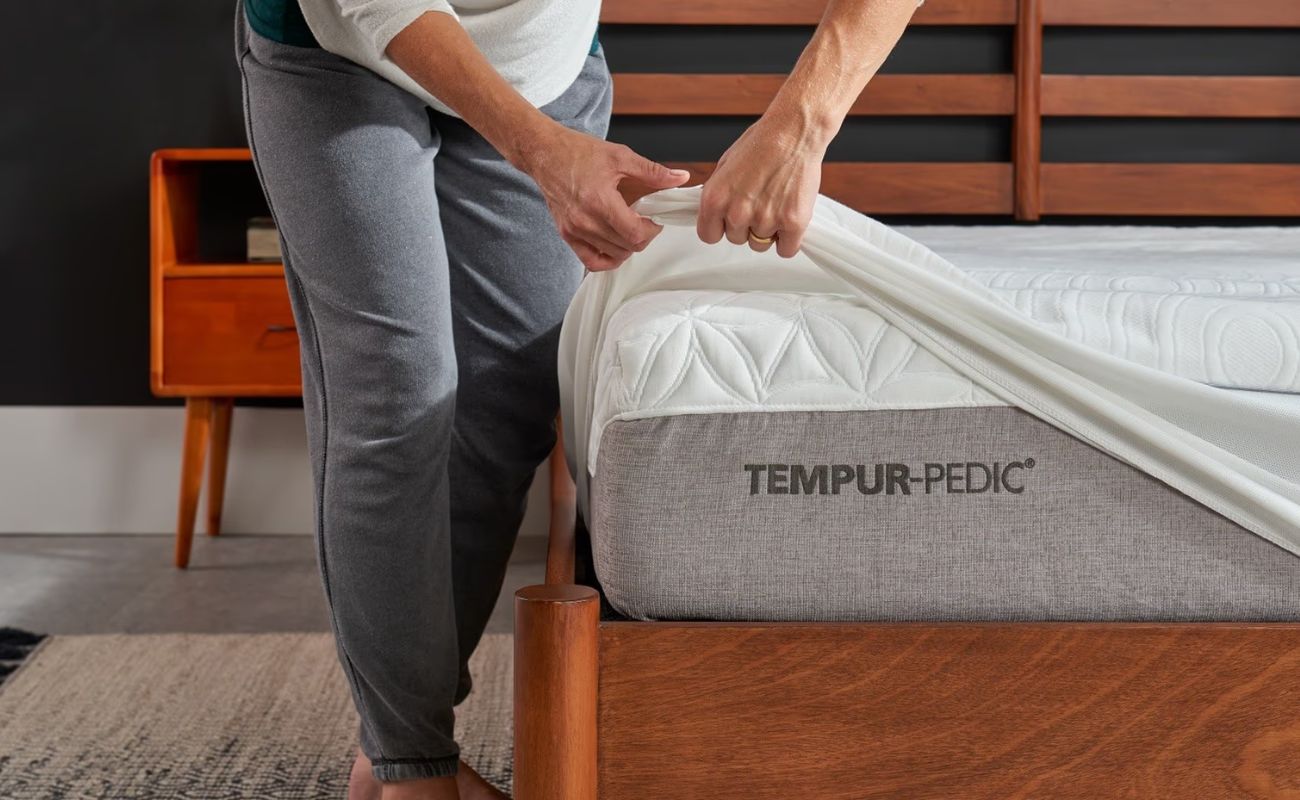
Inflate your air mattress fully, spread the elastic bed cover over it, fit the top corners first, and pull each elastic corner beneath the mattress. Smooth the fabric and check that the cover does not pull on the air valve or pump.
An air mattress can make a useful guest bed in an American home. It works well in a spare room, a small apartment, or a living room when family visits. But loose bedding can make the bed look messy and feel less comfortable. An elastic bed cover helps solve that problem by holding the fabric around the mattress.
Putting an elastic cover on an air mattress is not quite the same as making a regular bed. Air mattresses can have smooth vinyl sides, rounded corners, and extra height. A cover that fits a standard bed may be too tight or too loose. The key is to match the sheet size and pocket depth to the mattress before you start.
This guide explains how to fit an elastic bed cover step by step. It also covers ways to stop the corners from slipping, what to do when a sheet does not fit, and how to protect the air mattress while making the bed. These steps apply mainly to ordinary household and camping air mattresses. Medical air mattresses may have different bedding rules, so always follow their specific instructions.
What You Need Before Putting On An Elastic Bed Cover
Gather the right bedding before you start. You do not need special tools for most household air mattresses. A fitted sheet, a clean air mattress, and a little room around the bed are usually enough.
The most important item is a cover with the correct size and pocket depth. Pocket depth means how far the corners of the fitted sheet reach down the sides of the mattress. A sheet may have the right width and length but still fail to cover a tall air bed.
Check the mattress label or product manual for its size and dimensions. If those details are not available, measure the bed after inflation. This gives you a better idea of how much fabric you need.
Source: storables.com
Elastic fitted sheet
Choose a cover that matches the air mattress size and height. Full-edge elastic is useful because it holds the sheet around the whole mattress.
Measuring tape
Use it to check the length, width, and height of the fully inflated air mattress.
Mattress pad or topper
A thin, compatible pad can add comfort and create a less slippery surface beneath the fitted sheet.
Clean cloth
Wipe dust and dirt from the mattress before covering it. Let the surface dry before adding bedding.
Air pump
Use the pump recommended for your air mattress. Follow the manufacturer’s inflation instructions.
Choose The Right Sheet Size
Start by checking whether your air mattress is twin, full, queen, or king. These labels help you choose the basic sheet size, but they do not tell you everything. Two air mattresses with the same bed size can have very different heights.
For example, a low camping air mattress may work with a standard fitted sheet. A raised guest air bed may need a deep-pocket or extra-deep-pocket cover. Compare the sheet’s listed pocket depth with the height of your inflated mattress before using it.
If the sheet packaging lists a mattress depth range, make sure your air mattress falls within it. Avoid choosing a very small sheet and stretching it to fit. Excess tension can pull the corners off or put unnecessary strain on the elastic.
Twin air mattress
Look for a twin fitted sheet with enough pocket depth for the inflated bed.
Full or queen air mattress
Match the sheet to the exact mattress dimensions. Do not assume that a regular queen sheet will fit every raised queen air bed.
King air mattress
Check the length and width carefully. Some air beds have dimensions that differ from standard residential king mattresses.
Measure The Inflated Mattress
Inflate the mattress to the firmness recommended by its manufacturer. Measure from the top sleeping surface down to the bottom edge to find its height. Then measure the length and width across the widest parts.
Include the mattress topper or pad in your height measurement if you plan to leave it under the fitted cover. A thicker pad changes how far the sheet must stretch around the sides.
Write down the measurements before shopping. This simple step can prevent the common problem of buying a sheet that fits the mattress from side to side but cannot reach underneath its corners.
Length
Measure from the head end to the foot end.
Width
Measure from one side to the other at the widest point.
Height
Measure from the bottom support surface to the top sleeping surface after inflation.
How To Put An Elastic Bed Cover On An Air Mattress Step By Step
The easiest way to put an elastic bed cover on an air mattress is to inflate the bed first and work one corner at a time. Start at the head of the mattress and finish at the foot. This gives you better control over the elastic and helps prevent the fabric from bunching.
Place the mattress on a flat, clean surface before you begin. Move it away from sharp furniture edges, rough floors, and objects that could damage the material. Make sure you can reach all four corners without dragging the mattress.
Source: easyrest.com
Step 1: Inflate The Air Mattress
Use the correct pump and inflate the mattress according to its manual. Stop when it reaches the recommended firmness. Do not overinflate it to make the cover fit more tightly.
Step 2: Find The Head And Foot Ends
Identify the air valve, pump housing, or other controls. Position the mattress so the fitted sheet can cover it without blocking these parts.
Step 3: Identify The Sheet Corners
Hold the fitted sheet open and locate all four elastic corners. Check the direction of the fabric so the top side faces upward and the seams line up with the mattress corners.
Step 4: Fit The First Top Corner
Stand at the head of the mattress. Stretch one elastic corner over the top corner of the air bed and pull it down until the elastic sits beneath the edge.
Step 5: Fit The Second Top Corner
Move to the other side and fit the second top corner. Keep the fabric smooth across the sleeping surface. Avoid pulling one side so hard that the first corner comes loose.
Step 6: Secure The Bottom Corners
Move to the foot of the mattress. Pull the sheet over the first bottom corner, then stretch the last corner into place. Use steady pressure rather than a sudden tug.
Step 7: Smooth The Cover
Run your hands across the top and sides. Remove wrinkles and make sure the elastic edge sits evenly under the mattress. Check that no corner is partly exposed.
Step 8: Check The Final Fit
Look at all four corners and the full elastic edge. Make sure the cover is not too tight, the valve remains accessible, and the sheet does not interfere with the mattress controls.
How To Fit A Tight Elastic Bed Cover
A tight fitted sheet can be difficult to pull over a raised air mattress. Do not force it by pulling hard on one corner. This can stretch the elastic or shift the mattress.
Instead, lift a small section of the mattress edge with one hand while guiding the sheet over it with the other. Work around the mattress in short sections. If the elastic still will not reach underneath, the cover may have a pocket depth that is too small.
Check the sheet label before trying again. A larger pocket depth is usually a better fix than repeatedly stretching a sheet that was not made for the mattress.
Use two hands
Hold the mattress edge steady while guiding the elastic over the corner.
Work slowly
Fit one corner at a time instead of pulling the whole sheet across the bed.
Check the dimensions
Replace a sheet that is clearly too small rather than forcing it onto the mattress.
How To Fit A Cover On A Rounded Air Mattress
Some air mattresses have rounded corners instead of the square corners found on regular beds. A fitted sheet may not line up perfectly with these curves. The best approach is to center the cover first and spread the extra fabric evenly around the sides.
Pull the elastic over the widest part of each rounded corner. Do not twist the elastic or leave a thick fold underneath. If the cover keeps sliding off, consider a stretch-knit air mattress cover designed for rounded shapes.
Center the sheet
Make sure the fabric covers the sleeping surface evenly before fitting the corners.
Spread extra fabric
Distribute loose material along the sides rather than gathering it at one corner.
How To Keep An Elastic Bed Cover From Slipping Off
An elastic bed cover may slide off an air mattress even when you put it on correctly. The most common reasons are an incorrect pocket depth, a slippery mattress surface, weak elastic, or a loose fit.
Many household air mattresses have a flocked top. This is a soft, fabric-like surface that can provide more grip than smooth vinyl. However, the sides may still be slippery, so the fitted sheet needs enough depth to stay underneath the mattress edges.
Start by checking the sheet size and elastic before adding accessories. A properly fitted cover is usually more useful than several extra items placed under a sheet that is already the wrong size.
Source: furniturepeek.com
Choose Full-Perimeter Elastic
A fitted sheet with elastic around its entire edge can hold more evenly than one with elastic only at the four corners.
Use A Compatible Mattress Pad
A thin mattress pad can add a little friction between the mattress and the fitted sheet. Choose a pad that is suitable for inflatable mattresses and does not interfere with their design.
Try Sheet Suspenders
Purpose-made sheet suspenders can connect opposite sheet edges beneath the mattress. Use them only if they can be fitted without squeezing, puncturing, or damaging the air bed.
Replace Weak Elastic
Old fitted sheets may have stretched or worn elastic. A new sheet with a suitable pocket depth may hold better.
Check The Mattress Firmness
A mattress that is too soft may change shape under body weight and allow the sheet to shift. Follow the manufacturer’s recommended inflation level.
Use A Mattress Topper When Needed
A thin mattress topper can help when the fitted sheet slides across a smooth surface. It adds another layer between the sleeper and the air mattress. It may also make the bed feel softer and warmer.
Choose a topper that matches the air mattress dimensions. Avoid a heavy or oversized topper that hangs far over the edges. A loose topper can move during sleep and make the bedding less stable.
If the air mattress has a special built-in comfort layer, check the product instructions before adding another pad. Some designs are intended to be used with only specific bedding.
Thin foam pad
Can add cushioning without creating a large change in mattress height.
Quilted mattress pad
Can provide a soft surface and a little extra grip beneath the fitted sheet.
Stretch-knit cover
Can work well when a traditional fitted sheet does not follow the shape of a rounded air bed.
Avoid Unsafe Sheet-Fixing Tricks
Never use sewing pins, safety pins, nails, or sharp metal clips to hold a fitted sheet on an air mattress. Even a small puncture can cause the mattress to lose air. Strong adhesive tape can also leave residue or damage the mattress surface when removed.
Avoid wrapping ordinary tight cords or narrow elastic bands around the air bed. They can place uneven pressure on the material and may damage seams. Use only accessories designed for the mattress and follow their instructions.
No pins or needles
They can puncture the air mattress and create an air leak.
No strong adhesive
Tape and glue may damage the surface or leave difficult residue.
No excessive tension
Tight straps can pull on seams and interfere with the mattress shape.
What To Do When The Elastic Bed Cover Does Not Fit
If the cover will not stay on, stop pulling and find the cause. A fitted sheet that is too small can look almost right at first but pop off as soon as someone sits or lies down. A sheet that is too large can also bunch up and slide around.
Check the mattress dimensions, the sheet pocket depth, and the location of the elastic. Then compare the results with the sheet manufacturer’s size information. This is a better way to solve the problem than buying several covers without checking their measurements.
Source: i.pinimg.com
The Corners Keep Popping Off
The pocket depth may be too shallow, or the elastic may have lost its stretch. Try a deeper fitted sheet with stronger full-edge elastic.
The Sheet Bunches Up
The cover may be too large for the mattress. Check its length, width, and pocket depth before choosing a smaller size.
The Sheet Slides On The Surface
The mattress may have a smooth surface. Try a compatible mattress pad or an airbed-specific cover.
One Corner Will Not Reach
The sheet may be too small, or the mattress may be taller than expected. Measure the inflated bed again.
The Cover Pulls On The Valve
Move the sheet so the valve and pump remain clear. If the cover cannot fit without blocking them, choose another design.
Should You Put The Sheet On Before Inflating?
For most household air mattresses, fitting the elastic cover after inflation is the simpler method. The mattress has reached its final shape, so you can see where the corners and edges sit. You can also judge whether the sheet is too tight or too loose.
Putting a sheet on a flat, deflated mattress may seem easier, but the fabric can shift when the bed expands. The sheet may end up twisted or pulled unevenly. Inflate first unless your specific mattress instructions recommend another setup method.
Inflate first
Best for most standard household and camping air mattresses.
Follow the manual
Some specialty air mattresses have specific cover installation instructions that take priority over general advice.
What If The Air Mattress Loses Firmness?
A fitted sheet cannot repair an air leak or stop normal material stretching. If the mattress becomes noticeably softer, check the valve and inspect the surface for damage. Follow the manufacturer’s instructions to adjust the air pressure.
Do not keep pulling the cover tighter to make a soft mattress look firm. This will not solve the underlying problem and may place extra strain on the elastic. Repair an air leak with a compatible repair kit before using the mattress again.
Check the valve
Make sure the valve cap is closed and properly seated.
Inspect the surface
Look for cuts, punctures, or damaged seams.
Follow repair instructions
Use a repair method approved for the mattress material.
How To Choose The Best Fabric For An Air Mattress Cover
The fabric of an elastic bed cover affects how the air mattress feels during sleep. It can also change how easily the sheet moves across the surface. Cotton, microfiber, and stretch-knit fabrics are common options for household bedding.
There is no single fabric that works best for every air mattress. Think about the room temperature, how often the bed will be used, and how much grip the material provides. A guest bed used for several nights may need different bedding from a camping bed used for one night.
Source: i.ytimg.com
Cotton
Cotton is breathable and comfortable for many sleepers. It can be a practical choice for a guest room or regular home use.
Microfiber
Microfiber is often lightweight and easy to wash. It can be useful for temporary guest beds and camping setups.
Jersey Knit
Stretch-knit fabric can adjust more easily to rounded corners and slightly different mattress shapes. Check the product’s actual size range.
Flannel
Flannel can add warmth in a cool room or during cold-weather camping. It may feel too warm in a hot room.
Polyester Blends
These can be easy to care for and may resist wrinkles. Their feel and stretch depend on the fabric construction.
Which Cover Is Better For A Raised Air Mattress?
A raised air mattress often needs a deeper fitted sheet than a low-profile camping mattress. Look for a cover that lists a suitable pocket depth rather than relying only on the words twin, full, queen, or king.
Stretch-knit sheets can be helpful when the air bed has rounded corners. However, stretch does not replace correct sizing. A cover that is far too small can still pull off, even when the fabric feels flexible.
Check pocket depth
Make sure the sheet reaches below the mattress edges without excessive stretching.
Check elastic quality
Look for elastic that holds its shape and runs around the full edge.
Check the mattress shape
Choose a cover that can accommodate rounded or raised corners.
How To Care For The Elastic Cover And Air Mattress
Good care helps keep the bedding clean and the mattress in usable condition. Remove the fitted cover regularly and wash it according to its care label. Do not assume that every elastic sheet can handle hot water or high-heat drying.
Before putting the cover back on, check the air mattress for dirt, moisture, and damage. A clean, dry surface makes it easier to fit the sheet and reduces the chance of trapping moisture between the layers.
If you use the air mattress only when guests visit, remove the cover after use and store it separately. Fold the mattress according to its instructions rather than forcing it into a tight roll while the bedding is still attached.
Source: sweetislanddreams.com
Wash The Cover Properly
Follow the fabric care label. Use the recommended wash temperature and drying method to protect the elastic.
Dry The Mattress Surface
Make sure the air mattress is dry before covering it. Moisture trapped beneath bedding can cause odors and other problems.
Check The Seams
Look for damage around the air mattress seams, valve, and pump area before each use.
Store The Bedding Separately
Keep the fitted sheet clean and dry in a storage bag or linen closet when the air mattress is not in use.
Follow Storage Instructions
Deflate and fold the mattress as directed by its manufacturer. Avoid sharp folds or unnecessary pressure on the pump.
How Often Should You Wash An Air Mattress Cover?
Wash the cover after each guest stay or whenever it becomes dirty or damp. If the air mattress is used regularly, wash the bedding on a schedule that matches normal bed linen care.
A mattress protector can help keep sweat and dirt away from the air mattress itself. However, it should be compatible with the mattress and should not block any controls or required openings.
After guest use
Wash the fitted sheet and other bedding before storing them.
After spills
Remove the cover and clean it as soon as practical.
Before long-term storage
Make sure the cover and mattress are fully dry.
Important Safety Tips When Covering An Air Mattress
A properly fitted cover should improve comfort without changing how the air mattress works. Never sacrifice the mattress’s safety or function just to make the bed look neat.
Keep built-in pumps, electrical connections, control panels, and air valves accessible. A cover should not trap heat around a pump or stop you from reaching a control when needed.
Ordinary inflatable guest mattresses are also different from medical alternating-pressure mattresses. Medical air systems may use special covers and carefully selected bedding to support pressure relief and patient care. Do not place an ordinary tight fitted sheet on such a mattress unless the manufacturer or responsible care professional approves it.
Source: i.pinimg.com
Do Not Overinflate
Use the recommended inflation level. Extra pressure can place unnecessary strain on the mattress material and seams.
Keep Electrical Parts Clear
Do not cover a built-in pump, power connection, or control panel with bedding.
Avoid Sharp Accessories
Never use pins, sharp clips, or metal fasteners that could puncture the air mattress.
Use The Correct Bedding For Medical Air Systems
Follow the exact mattress manual and care plan. Incorrect sheets can affect the intended operation of some medical air systems.
Keep Children Safe
Follow the mattress manufacturer’s age and use warnings. An inflatable mattress is not a safe sleep surface for infants.
Can A Tight Sheet Damage An Air Mattress?
A correctly sized elastic cover should not need extreme stretching. However, a sheet that is much too small may pull hard on the corners and place unnecessary tension on the mattress edges.
If the mattress changes shape, the seams look strained, or the cover will not reach underneath without force, stop and choose a better-fitting sheet. The elastic should hold the cover in place without squeezing the mattress.
Use the correct pocket depth
Choose a sheet made for the mattress height.
Avoid excessive stretching
Do not force a small cover over a large mattress.
Inspect the mattress
Remove the sheet and check for damage if you notice unusual pressure or distortion.
A Quick Checklist For A Neat And Secure Air Mattress
Before using the finished bed, take a moment to check the cover. A good fit should look smooth, feel comfortable, and stay in place without pulling hard on the mattress.
This final check is useful when preparing a temporary guest bed. It can also help you spot a sizing problem before someone lies down and shifts the bedding.
Source: housedigest.com
Correct mattress size
The fitted cover matches the length and width of the air mattress.
Correct pocket depth
The elastic reaches beneath the mattress without excessive tension.
Secure corners
All four corners remain in place when you gently smooth the sheet.
Smooth sleeping surface
There are no large folds, twisted seams, or uncomfortable fabric bunches.
Accessible controls
The valve, pump, and required controls remain uncovered.
Safe inflation
The mattress has the firmness recommended by its manufacturer.
Signs That The Cover Is Fitted Correctly
The cover should stay on all four corners without constant adjustment. The top should be mostly smooth, and the sides should have enough fabric to reach beneath the mattress edge.
You should also be able to remove the cover without fighting the elastic. If it takes too much force to pull off, it may be too tight. A good fit holds the fabric in place while allowing normal movement.
Even fabric
The sheet lies evenly across the top of the mattress.
Stable corners
The elastic does not pop off during normal use.
No unusual pressure
The mattress retains its normal shape without visible distortion.
Frequently Asked Questions
Q
Can You Put A Regular Fitted Sheet On An Air Mattress?
Yes. You can use a regular fitted sheet if its length, width, and pocket depth match the air mattress. A low-profile air bed may fit a standard sheet, while a raised model may need a deep-pocket or extra-deep-pocket cover.
Measure the inflated mattress before choosing the sheet. Do not rely on the bed size label alone.
Q
Should You Inflate An Air Mattress Before Putting On The Fitted Sheet?
Yes, for most ordinary household air mattresses. Inflating the bed first allows you to fit the sheet around its actual shape and height. It also makes it easier to see whether the elastic reaches underneath the corners.
Follow the manufacturer’s instructions if your particular model requires a different installation method.
Q
Why Does My Elastic Bed Cover Keep Coming Off My Air Mattress?
The most common causes are incorrect sheet dimensions, shallow pockets, weak elastic, and a slippery mattress surface. An air mattress that is too soft may also change shape and allow the sheet to move.
Start by checking the pocket depth and elastic condition. If the size is correct, try a compatible mattress pad or sheet suspenders designed for the job.
Q
What Size Fitted Sheet Do I Need For A Raised Air Mattress?
Choose a fitted sheet that matches the air mattress length and width and has enough pocket depth to cover its inflated height. Raised air mattresses can be much taller than standard low-profile beds.
Measure the mattress from the bottom edge to the top sleeping surface. Include any pad that will remain underneath the sheet when comparing the measurement with the sheet’s listed pocket depth.
Q
Can I Use Sheet Suspenders On An Air Mattress?
You may use compatible sheet suspenders if they can be attached without damaging or squeezing the air mattress. They can help hold a fitted sheet in place by connecting opposing edges beneath the bed.
Avoid sharp clips, pins, or fasteners that could puncture the mattress. If the suspenders create too much tension, remove them and use a better-fitting cover.
Q
Can I Use A Mattress Topper Under An Elastic Bed Cover?
Yes, many household air mattresses can be used with a compatible thin mattress topper. Place the topper evenly on the inflated bed, then fit the elastic cover over both layers if its pocket depth allows.
A topper may add cushioning and help reduce sheet movement. Check the air mattress instructions first, especially if the bed has a special built-in surface or medical function.
Q
Can I Use A Flat Sheet Instead Of An Elastic Bed Cover?
Yes. A flat sheet can cover the top of an air mattress and may work well when the mattress has a flocked surface. However, it does not have elastic corners, so it may move more easily during sleep.
If you prefer a tidy bed that needs less adjustment, a properly sized fitted sheet is usually more practical.
✦ Wrapping Up
Conclusion
Putting an elastic bed cover on an air mattress is simple once you have the right size. Inflate the mattress, check its height, and place the fitted sheet over the top corners first. Then secure the bottom corners, smooth the fabric, and make sure the elastic sits evenly underneath the mattress.
If the cover keeps slipping, check its pocket depth before trying other fixes. A full-edge elastic sheet, compatible mattress pad, or suitable sheet suspenders may help. Avoid pins, strong adhesives, and tight straps that could damage the air mattress.
The best result comes from a cover that fits without force. Keep the pump and air valve clear, follow the mattress care instructions, and wash the bedding after use. With these simple steps, you can make a temporary air bed look neat and feel more comfortable for guests or camping.
💡 Key Takeaway
Inflate your air mattress and measure its length, width, and height before choosing a fitted cover. Fit the top corners first, secure the bottom corners, and check that the elastic holds without pulling tightly on the mattress.