You can cover a metal bed frame with upholstery fabric, foam padding, a fitted fabric wrap, a bed skirt, or decorative wood panels. Clean the frame, measure each exposed section, add padding if needed, and secure the cover without blocking bolts, support bars, or moving parts.
In American homes, metal bed frames are common in guest rooms, apartments, college dorms, and small bedrooms. They are sturdy and often cost less than fully upholstered beds. However, their exposed rails, legs, and brackets can make a bedroom feel plain or unfinished. A simple cover can change that look without replacing the whole bed.
The best way to cover your frame depends on what you want to hide. A bed skirt works well when the metal legs and lower rails are the main problem. Fabric and padding can soften exposed rails and headboards. Wood panels can create a more solid, furniture-like look. You can also use removable wraps if you want a quick change that does not require major tools.
Before starting, check the frame for loose bolts, rust, sharp edges, and damaged parts. A cover should improve the look of a bed, not hide a problem that could affect its support. Keep all structural joints easy to reach, and make sure fabric does not interfere with the mattress or support system.
A metal bed frame provides support, but its appearance may not match the rest of your bedroom. Bare steel rails can look cold beside soft bedding, wooden furniture, and warm wall colors. Covering the frame helps bring these different parts together.
It can also make the bed feel more comfortable. Some frames have exposed corners or hard side rails that you may bump while getting into bed. A suitable padded cover can soften those contact points, although it does not replace proper protection for damaged or sharp metal.
Another benefit is that you can update the room without buying a new bed. Fabric, a bed skirt, or a few decorative panels may cost less than replacing a working frame. You can also change the cover when you update your bedding or bedroom colors.
Source: thehomenix.com
Improve the appearance
Hide plain metal rails and legs to give the bed a more finished look.
Add a softer surface
Use suitable padding to reduce contact with hard metal edges.
Match your bedroom
Choose colors and textures that work with your curtains, rug, mattress, and other furniture.
Keep a useful frame
Update the appearance of a working metal bed instead of replacing it.
What You Need Before Covering A Metal Bed Frame
Gather your materials before removing the mattress or starting the project. The exact supplies depend on the covering method, but most fabric projects need a tape measure, scissors, fabric, and a way to secure the material.
For a padded finish, add upholstery batting or suitable foam. For a simple decorative wrap, a strong fabric and removable hook-and-loop fasteners may be enough. If you plan to build wooden panels, you will need suitable boards and compatible mounting hardware.
Choose materials that can handle regular contact, dust, and cleaning. A thin decorative cloth may look attractive at first, but it can shift or tear around corners. Medium-weight upholstery fabric is often easier to handle for a more lasting finish.
Source: theblackurbantimes.com
Tape measure
Measure the length, width, height, and depth of every section you plan to cover.
Fabric
Choose upholstery fabric, cotton canvas, polyester blends, or another suitable material.
Foam or batting
Use thin upholstery padding to soften exposed rails and create a smoother finish.
Scissors and fabric clips
Cut the material and hold it in place while checking the fit.
Fasteners
Prepare suitable hook-and-loop strips, fabric ties, or approved frame-compatible attachments.
Cleaning supplies
Use a soft cloth, mild cleaner suitable for the frame finish, and a vacuum.
Optional sewing supplies
A sewing machine, needle, thread, and measuring chalk can help create fitted covers.
Choose The Right Fabric
The fabric affects both the appearance and the life of your cover. Cotton canvas is easy to work with and has a simple look. Polyester blends are available in many colors and may be easier to clean. Upholstery fabric is designed for furniture use and often offers a thicker, more structured finish.
Velvet can give a bed a rich appearance, but it may collect dust and show pressure marks. Linen has a relaxed texture, although some types wrinkle easily. If you have pets or children, consider a fabric that is easy to vacuum and clean.
For a simple bedroom
Choose cotton or a medium-weight polyester blend.
For a soft upholstered look
Choose suitable upholstery fabric with thin batting underneath.
For a low-maintenance room
Look for washable fabric with care instructions that match your needs.
Measure The Frame Before Buying Fabric
Measure each rail separately instead of assuming all sides have the same dimensions. Record the length, height, and depth of the side rails, foot section, and head section. Include extra fabric for folding and fastening at the back.
For example, if a rail is 60 inches long and 6 inches high, a flat front panel needs at least 60 by 6 inches before adding material for the edges. A wraparound cover needs additional fabric to pass over the top and around the back. These are planning measurements, not fixed amounts for every frame.
Measure twice
Check each section again before cutting the fabric.
Mark each panel
Label the head, foot, left side, and right side to avoid confusion.
Allow extra material
Leave room for hems, folds, corners, and attachment points.
Method 1: Cover A Metal Bed Frame With Fabric
Fabric is one of the most flexible ways to cover a metal bed frame. It can hide exposed rails and create a warmer look without changing the basic frame. You can use separate fabric panels for each side or make one fitted cover for a section that has a simple shape.
This method works best when the metal frame has enough clearance for the fabric and fasteners. Remember that you cannot staple fabric directly into ordinary metal tubing as you would into a wooden bed frame. Use a suitable removable attachment or a purpose-built panel system instead.
Source: storage.googleapis.com
Best for
People who want a custom color, texture, or coordinated bedroom style.
Difficulty
Beginner to intermediate, depending on the shape and fastening method.
Main requirement
Accurate measurements and a secure way to hold the fabric in place.
Step 1: Remove The Mattress And Bedding
Take off the pillows, sheets, blankets, and mattress. Remove the box spring too if your setup has one and the manufacturer’s instructions allow it. Place the mattress on a clean, dry surface where it will not collect dirt.
You should now have clear access to the metal rails. Do not pull apart the frame unless you need to and know how to reassemble it correctly. Keep small hardware in a safe container.
Step 2: Clean And Inspect The Metal
Wipe the rails with a soft cloth to remove dust and dirt. Check the corners, welds, joints, and bolt areas for sharp edges or loose parts. A fabric cover can hide the metal, but it cannot make a damaged frame safe.
If you find a loose connection, follow the frame manual to correct it. Do not cover a cracked support, damaged weld, or badly bent rail. Contact the manufacturer or replace the defective part when necessary.
Step 3: Cut The Fabric Panels
Lay the fabric on a flat surface with the back facing upward. Use your measurements to mark each panel. Add enough material to wrap around the edges and secure it on the hidden side.
Cut slowly and keep the edges straight. If the fabric has a pattern, check how the design will line up across the side and foot panels. A few minutes of planning can prevent a crooked final result.
Step 4: Attach The Fabric
Position the fabric over the rail and smooth it by hand. Use compatible hook-and-loop fasteners, fabric ties, or a fitted sleeve to hold it in place. Secure the material on the hidden side whenever possible.
Work from the middle toward the ends to reduce wrinkles. Keep the fabric snug but not stretched so tightly that it pulls away when the bed moves. Check that the cover does not block bolt access or rub against support components.
Step 5: Finish The Corners
Fold the extra fabric neatly around each corner. Make small, even folds rather than gathering a large amount of cloth in one place. Secure the folds with the same suitable attachment method used for the rest of the panel.
Trim loose threads and check the underside. No sharp fastener ends should point toward the mattress, bedding, or people using the bed.
Method 2: Add Foam Padding And Upholstery Fabric
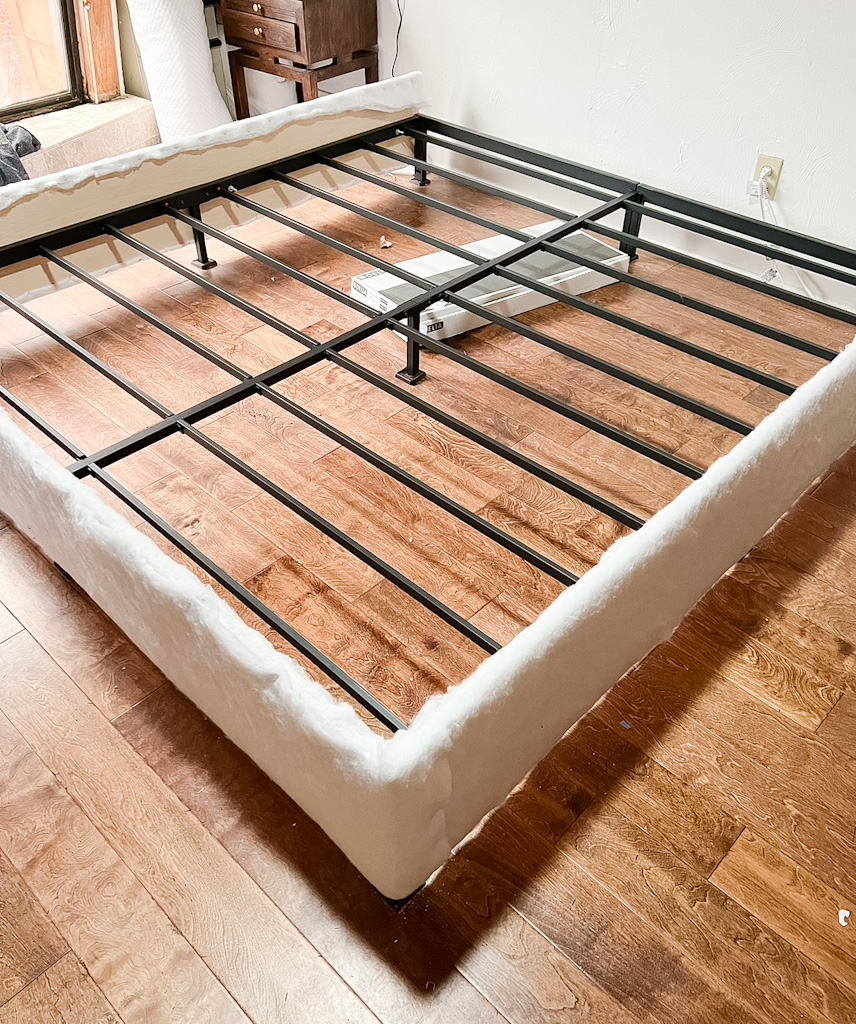
If you want your metal bed frame to look more like an upholstered bed, add a layer of padding before fitting the fabric. The padding creates a softer surface and helps hide the hard shape of the metal. It is especially useful for visible side rails and headboard sections.
Use thin upholstery foam or batting that is suitable for furniture projects. The right thickness depends on the space around the rail. Thick padding can make a fitted cover too bulky or interfere with the mattress, so check the clearance before attaching anything.
Source: storage.googleapis.com
How To Add Padding
Measure the area you want to soften and cut the padding to size. Test the material against the frame before attaching it. Keep the padding away from moving joints, bolt openings, and parts that must remain visible for inspection.
Use a compatible attachment method that is approved for the frame finish and padding material. Do not assume ordinary glue will bond safely to every metal coating or foam type. Follow the adhesive manufacturer’s directions, including ventilation and drying time, if adhesive is appropriate.
Use even layers
Avoid thick lumps that make the finished fabric look uneven.
Cover exposed edges
Shape the padding so it softens the intended contact area without covering important joints.
Check the fit
Make sure the added thickness does not affect mattress placement or frame movement.
Wrap The Padding With Fabric
Place the upholstery fabric over the padding and pull it gently around the rail. Secure the hidden edges with suitable fasteners. If you are making a separate padded panel, attach the fabric to that panel rather than trying to staple it directly to the metal.
Smooth the surface as you work. If a wrinkle appears, release the nearest attachment and adjust the fabric instead of pulling harder. A balanced fit will usually look better and last longer than an overly tight wrap.
Method 3: Hide The Metal Frame With A Bed Skirt
A bed skirt is one of the easiest ways to hide the lower part of a metal bed frame. It hangs from the mattress or box spring area toward the floor, covering the legs and side rails. This option is useful when you like the bed itself but dislike seeing the metal underneath.
Traditional bed skirts usually sit between the mattress and box spring. Wraparound versions attach around the sides of a compatible box spring or base. The best option depends on your bed construction and whether the frame has a box spring.
Source: storage.googleapis.com
How To Install A Traditional Bed Skirt
Remove the mattress carefully and place the bed skirt platform over the box spring or other compatible support surface. Arrange the fabric so the drop hangs evenly on the sides and at the foot of the bed. Replace the mattress without trapping or bunching the fabric.
Measure the distance from the supporting surface to the floor before buying a skirt. If the drop is too short, the metal legs may remain visible. If it is too long, the fabric may drag and collect dust or catch under the bed.
Choose the correct size
Match the skirt to the bed size and measure the required drop length.
Smooth the fabric
Arrange the skirt evenly before replacing the mattress.
Check the floor clearance
Keep the lower edge from bunching under the legs or interfering with cleaning.
How To Use A Wraparound Bed Skirt
A wraparound skirt can be easier to install because many designs do not require lifting the entire mattress. Follow the product instructions and stretch the elasticized section around the compatible base. Adjust the fabric until the sides and foot look even.
Do not stretch the skirt over exposed sharp brackets or damaged metal. Check that it stays in place when you move around the bed. If it slips, use a properly designed attachment rather than tying it around a support bar.
Method 4: Use A Removable Fabric Slipcover
A removable slipcover is a good choice if you want to change the look of your metal bed frame without making a permanent alteration. It can be made from a large piece of fabric, a sewn sleeve, or separate fitted covers for the rails.
This method is useful for renters, guest rooms, and people who enjoy changing their bedroom style. You can remove the cover for washing or replace it when you want a new color.
Source: storage.googleapis.com
Make A Simple Rail Sleeve
Measure the rail’s length and the distance around its exposed surface. Add extra material for a seam and a little room to fit the sleeve over the rail. Cut the fabric and sew the long edges together, leaving the ends open where needed.
Turn the sleeve right-side out and slide it over the intended rail. Add discreet fabric ties or compatible hook-and-loop closures to prevent it from moving. Make sure the sleeve does not cover connectors or interfere with the frame’s support system.
Make A No-Sew Removable Cover
If you do not sew, fold the fabric around the rail and secure the hidden edge with suitable removable fasteners. Use a clean, finished fabric edge so it does not fray. Fabric clips may help you test the fit before choosing the final attachment.
Avoid relying on loose safety pins or sharp objects in places where they could open, fall out, or contact the mattress. Check the cover after moving the bed and remove it if the fasteners become loose.
Method 5: Cover A Metal Bed Frame With Wood Panels
Wood panels can give a plain metal bed frame a more solid furniture-like appearance. They are useful when you want a wooden look but do not want to replace the metal support structure. You can use finished panels along the visible sides or create a separate decorative surround.
This approach requires more planning than a fabric wrap. The panels must be supported securely and must not change the way the bed carries weight. Do not drill into a structural rail or alter a frame unless the manufacturer permits that modification and you understand the attachment requirements.
Source: Pinterest
Choose Suitable Decorative Panels
Select panels that are appropriate for furniture use and can be finished safely. Plywood or other suitable wood products may work for a decorative surround. Sand rough edges and apply an appropriate finish before placing the panels near bedding.
Measure the visible side sections and foot area. Keep the panels clear of the floor, mattress, and any parts that move or need access. A removable surround can make cleaning and future repairs easier.
Attach The Panels Carefully
Use an attachment system designed for the specific frame and panel arrangement. Existing manufacturer-approved mounting points are preferable to making new holes. If the design needs structural drilling, custom brackets, or changes to the bed’s support, seek help from a qualified furniture professional.
Once installed, check for movement, sharp corners, and exposed hardware. The panels should serve as a decorative cover, not as an extra support or replacement for the original metal rails.
Method 6: Hide Exposed Metal Bed Frame Legs
Sometimes the side rails are already hidden by bedding, but the metal legs remain visible. You do not need to cover the entire bed in this case. Small fabric wraps, decorative leg covers, or purpose-made bed boots can help create a cleaner appearance.
Choose a cover that fits the leg without sliding down. It should not change the way the leg rests on the floor or make the bed unstable. Avoid thick padding beneath a support foot because it may affect the frame’s contact with the floor.
Source: storage.googleapis.com
Use Decorative Fabric Leg Wraps
Cut small pieces of fabric large enough to wrap around each visible leg. Fold the edges inward for a neat finish and secure the material on the hidden side. Make sure the wrap does not reach the floor or become trapped beneath the support foot.
Check the wraps from every side of the bed. If they look bulky or move when the frame shifts, use a better-fitting cover.
Try Purpose-Made Bed Leg Covers
Some furniture accessories are designed to cover bed legs or wheels. Check the product dimensions and confirm that the design fits your frame. A cover that is too narrow may not fit, while one that is too loose can fall off.
Keep wheels, locking parts, and floor-contact surfaces working as intended. Do not use a decorative boot to conceal a bent or damaged support leg.
Which Metal Bed Frame Covering Method Should You Choose?
The right method depends on your budget, available tools, frame design, and the amount of metal you want to hide. A bed skirt is usually the simplest choice for lower rails and legs. Fabric panels are better when you want a more custom appearance, while wood panels create a more substantial decorative finish.
Think about cleaning and future access too. A removable cover is easier to wash and inspect than a permanent enclosure. If you store items under the bed, choose a design that leaves enough room to reach them.
Source: storage.googleapis.com
For a quick update
Choose a traditional bed skirt or wraparound skirt.
For a soft appearance
Use fabric with a suitable layer of padding.
For a renter-friendly project
Choose removable sleeves or fabric panels.
For a wooden furniture look
Consider decorative wood panels with suitable mounting.
For exposed legs only
Use fitted decorative leg covers.
Quick Comparison Of Covering Options
Use the following table to compare the main options before buying supplies. The difficulty descriptions are general planning estimates, not guaranteed installation times. Actual work depends on the frame shape and your experience.
Common Mistakes To Avoid When Covering A Metal Bed Frame
A good-looking cover should also be practical. Small mistakes during installation can lead to loose fabric, poor fit, blocked hardware, or damage to the frame. Check the following points before finishing your project.
Source: theblackurbantimes.com
Cutting fabric too small
Fabric needs extra material for wrapping, hems, and corners. Measure the full area before cutting.
Using unsuitable glue
Some adhesives may not bond to a metal finish or may damage foam and fabric. Check compatibility and follow the product instructions.
Stapling directly into metal
Ordinary upholstery staples are designed for materials such as wood, not standard metal tubing. Use a suitable fastening system.
Covering bolts and joints
Keep important hardware accessible so you can inspect and tighten it when needed.
Adding too much padding
Thick padding can make the mattress fit poorly or interfere with the frame’s normal operation.
Ignoring sharp edges
Repair or replace damaged parts before covering them. Fabric alone is not a safe repair.
Letting fabric drag on the floor
Excess fabric collects dust and may get caught during cleaning or movement.
Making the cover too tight
Excess tension can pull fasteners loose and cause fabric to tear.
Do Not Hide A Structural Problem
A metal bed frame carries the weight of the mattress and its occupants through its rails, joints, legs, and support bars. Covering a bent rail or cracked connection can make the problem harder to notice. Inspect the frame before and after the project.
If a support is damaged, stop using the bed until the problem is properly addressed. Follow the manufacturer’s repair guidance or replace the defective component. A decorative cover should never take the place of a sound bed frame.
How To Maintain A Covered Metal Bed Frame
Regular care helps your new cover stay neat and prevents dust from collecting around the frame. The cleaning method depends on the fabric, padding, and fasteners you use. Always check the fabric care label before washing or applying a cleaning product.
Vacuum fabric surfaces with a suitable upholstery attachment. For small stains, follow the material’s care instructions and test a cleaner on a hidden area first. Remove washable covers when needed and let them dry fully before putting them back.
Check the frame itself from time to time. Look for loose fasteners, worn fabric, rust, and movement around the joints. A removable design makes these checks much easier.
Source: storage.googleapis.com
Vacuum regularly
Remove dust, hair, and small particles from fabric and the space around the rails.
Wash removable covers
Follow the care label and allow the material to dry completely.
Check fasteners
Replace worn hook-and-loop strips, loose ties, or damaged attachments.
Inspect the frame
Keep bolts, joints, support bars, and legs in good condition.
Keep the floor clear
Make sure the cover does not block cleaning or under-bed storage.
Research Notes And Useful Questions Not Fully Covered Elsewhere
A review of available covering guides found repeated advice about fabric, bed skirts, padding, and decorative panels. Some guides explain how to wrap a rail but give less attention to the limits of fastening fabric to metal. Others focus on appearance without discussing access to structural hardware.
The practical improvement in this guide is to separate decorative covering from structural repair. It also explains why removable attachments, floor clearance, mattress fit, and regular inspection matter. These details help readers choose a method that works beyond the first day.
Source: Pinterest
OBSERVED QUESTION: Can fabric be stapled directly to metal?
Coverage in reviewed guides varies. The useful distinction is that ordinary upholstery staples need a suitable surface and should not be assumed to work on metal tubing. Use a compatible attachment or a separate upholstered panel.
INFERRED NEXT NEED: How much fabric should I buy?
Readers need measurements for the rail, wrap depth, and fastening allowance. Measure every section and make a test pattern before purchasing the final amount.
INFERRED NEXT NEED: Can I still inspect the frame?
A removable cover offers easier access to bolts and support parts. This is especially useful for frames that need periodic tightening.
INFERRED NEXT NEED: Will a cover affect under-bed storage?
A floor-length skirt can hide storage and may make access harder. Choose a shorter or removable design if you use the space beneath the bed.
Frequently Asked Questions
Q
What is the easiest way to cover a metal bed frame?
A bed skirt is usually the easiest option when you only want to hide the lower rails and legs. It requires little equipment and can often be installed without changing the frame. If you want to cover the visible side rails, a removable fabric wrap is another simple option.
Q
Can I cover a metal bed frame without sewing?
Yes. You can use a wraparound bed skirt, removable fabric panels, or a fabric sleeve secured with suitable hook-and-loop fasteners. Fold the fabric edges neatly and make sure the fasteners cannot come loose or expose sharp parts. Avoid loose pins and other sharp attachments near the mattress.
Q
Can I use a regular bed sheet to cover a metal bed frame?
You can use a bed sheet as a temporary decorative cover if it is large enough and can be secured safely. However, thin sheets may wrinkle, slip, or tear around metal corners. A medium-weight fabric or fitted cover is usually better for a longer-lasting result.
Q
Can I glue fabric directly onto a metal bed frame?
Some adhesives are made for bonding fabric to metal, but compatibility depends on the metal finish, adhesive, and fabric. Check the manufacturer’s instructions before using one. Test a small hidden area first and make sure the adhesive is fully dry before replacing the bedding.
Q
How do I cover sharp metal edges on a bed frame?
First, inspect the edge to find out whether it is a normal design feature or damage. Use a suitable edge guard or protective padding for an intact but exposed edge. If the metal is bent, cracked, or broken, stop using the affected frame and arrange a proper repair or replacement instead of hiding the damage.
Q
Can I use upholstery foam on a metal bed frame?
Yes, suitable upholstery foam can be used as padding on selected exposed areas. Choose a thickness that does not interfere with the mattress, joints, or support parts. Secure it with an attachment method compatible with both the foam and the frame.
Q
How can I hide metal bed frame legs without using a bed skirt?
You can use fitted decorative leg covers, purpose-made bed boots, or small fabric wraps. Choose covers that fit securely and do not interfere with the support feet or wheels. If you only want to hide a few visible legs, there is no need to cover the entire bed.
Q
How do I cover a metal bed frame in a rental apartment?
Use removable options such as a bed skirt, fabric sleeves, or fitted wraps. Avoid drilling holes, permanent glue, or other changes that may damage the frame or violate your rental agreement. Store the original parts so you can restore the bed to its earlier condition when needed.
Q
Will covering a metal bed frame make it quieter?
Fabric may reduce minor contact noise when two surfaces rub against each other, but it will not fix a loose or unstable bed frame. Check the bolts, joints, feet, and support bars first. Follow the manufacturer’s instructions to correct any noise caused by loose parts.
Q
Can I cover the entire metal bed frame with fabric?
You can cover most visible sections with a fitted fabric system, but some areas should remain accessible. Keep support connections, bolts, moving parts, and inspection points uncovered or easy to open. The cover should also leave enough room for cleaning and normal mattress placement.
✦ Wrapping Up
Conclusion
Covering a metal bed frame is a practical way to make your bedroom feel warmer and more complete. You can use fabric, foam padding, a removable slipcover, a bed skirt, or decorative wood panels. Each method offers a different balance of cost, effort, appearance, and ease of cleaning.
If you want a fast update, start with a bed skirt or removable fabric wrap. For a softer, upholstered appearance, use suitable padding and upholstery fabric. If you prefer a wooden look, consider decorative panels that attach safely without changing the frame’s structural design.
Take your measurements, inspect the metal, and choose materials that fit your bed. Keep important hardware accessible and check the finished cover for loose edges or fasteners. A careful project can give an old metal bed frame a fresh look while keeping its original support system in place.
💡 Key Takeaway
Start by measuring the visible rails and legs of your metal bed frame. If you want the simplest makeover, choose a fitted bed skirt or removable fabric wrap. If you want a custom upholstered look, prepare thin padding and suitable fabric, then secure each section without blocking structural parts.