Bed bugs trapped inside a properly sealed mattress encasement can survive for several months without food. Some adults may survive up to 18 months under favorable conditions. Keep a bed bug-proof cover sealed for at least 18 months when using it as a starvation treatment.
Bed bugs are a common household pest in the United States. They can hide in mattress seams, bed frames, box springs, and other small spaces near sleeping areas. Finding them in your bed can be stressful, especially when you are unsure whether they are still alive inside your mattress.
A bed bug mattress cover can help contain an infestation. Unlike an ordinary mattress protector, a proper encasement surrounds the entire mattress and closes with a secure zipper. It traps bed bugs inside and blocks others from entering the mattress.
However, trapping bed bugs does not kill them right away. These insects can survive for months without a blood meal. The U.S. Environmental Protection Agency reports that bed bugs can live several months to a year without feeding, while University of Minnesota Extension describes survival of up to 18 months in certain circumstances.
The length of survival depends on factors such as temperature, humidity, life stage, and the insect’s last blood meal. A sealed mattress cover also needs to remain intact. Even a small tear or an open zipper can allow insects to escape.
Understanding these details helps you use a mattress encasement correctly. You can protect your mattress, reduce hiding places, and avoid removing the cover before trapped bed bugs have died.
How Long Can Bed Bugs Live Inside a Mattress Cover?
Bed bugs trapped inside a sealed mattress encasement can survive for several months without food. In favorable conditions, some adult bed bugs can survive for up to 18 months. This means you should not expect them to die within a few days or weeks after putting on a cover.
Bed bugs feed on blood. They usually come out of hiding when a suitable host is available. When a mattress encasement traps them inside and prevents them from reaching a person, they gradually use their stored energy and eventually die.
Their survival time is not the same in every situation. Temperature, humidity, age, and the time since their last meal can affect how long they remain alive. Cooler conditions may slow their metabolism and allow them to survive longer.
The safest practical approach is to keep a bed bug-proof encasement sealed for at least 18 months when relying on it to starve insects trapped inside. This longer period accounts for the possibility that some adults may survive much longer than expected.
Source: www.planetnatural.com
Typical survival
Bed bugs may survive several months without a blood meal, depending on their age and surroundings.
Long survival
Some adult bed bugs can survive for up to 18 months under favorable conditions.
Recommended isolation
Keep the encasement sealed for at least 18 months when using it as a starvation treatment.
Immediate protection
A suitable encasement can help prevent trapped insects from reaching the sleeper while the treatment period continues.
Why Do Bed Bugs Survive So Long Without Food?
Bed bugs have a strong ability to survive when food is unavailable. Their bodies can use stored energy while they wait for another chance to feed. This ability helps them remain hidden in furniture and other places for long periods.
A bed bug does not need to eat every day. Under normal conditions, it may feed every several days when a host is available. Without a host, its activity and development can slow down.
Cooler temperatures can reduce metabolic activity. This may allow an unfed bed bug to conserve energy and survive longer than one kept in a warmer environment.
Stored energy
A recent blood meal can provide energy that helps an insect survive while it waits for another meal.
Slow metabolism
Cooler surroundings can slow activity and increase the time some bed bugs survive without feeding.
Life stage
Adults and older nymphs can survive longer without food than some younger nymphs.
Does Every Bed Bug Die After 18 Months?
No. Eighteen months is a practical minimum for a starvation-based encasement method, not a guarantee that every possible bed bug will die at an exact moment. Survival varies with the conditions inside and around the mattress.
The cover must also be properly sealed. If an insect escapes, it may find another hiding place or reach a person. In that case, leaving the mattress covered for longer will not solve the entire infestation.
Follow the encasement manufacturer’s instructions and seek advice from a licensed pest professional if bed bugs remain active elsewhere in the room.
No exact death date
Individual bed bugs do not all die after the same number of days or months.
Check the seal
Inspect the zipper, seams, and fabric regularly for damage.
What Happens to Bed Bugs Trapped Inside a Mattress Encasement?
A proper mattress encasement creates a sealed barrier around the mattress. Bed bugs already inside cannot easily leave, while new insects cannot enter through the protected mattress surface. Without access to a blood meal, the trapped insects eventually die.
The process is gradual. Adult bed bugs may remain alive for months after the cover is installed. They do not immediately die from a lack of food, and some may remain inactive for long periods.
The encasement also reduces the number of places where bed bugs can hide. This makes it easier to inspect the mattress surface and identify signs of activity outside the cover.
A successful encasement treatment depends on proper installation. The zipper must close completely, and the material must resist punctures and tears. A loose cover or a damaged seam can allow insects to escape.
Source: exyocyvve.blob.core.windows.net
Insects become trapped
Bed bugs inside the mattress remain enclosed when the zipper and seams are secure.
Feeding becomes impossible
The insects cannot reach a sleeping person through a properly designed, intact encasement.
Starvation takes time
The insects gradually die after their stored energy is used.
The mattress becomes easier to inspect
The smooth outer surface makes it easier to spot new insects and signs of activity.
Can Bed Bugs Escape Through a Mattress Cover?
Bed bugs should not escape through a properly designed bed bug-proof encasement that is correctly installed and undamaged. However, an ordinary mattress protector may leave large areas of the mattress exposed.
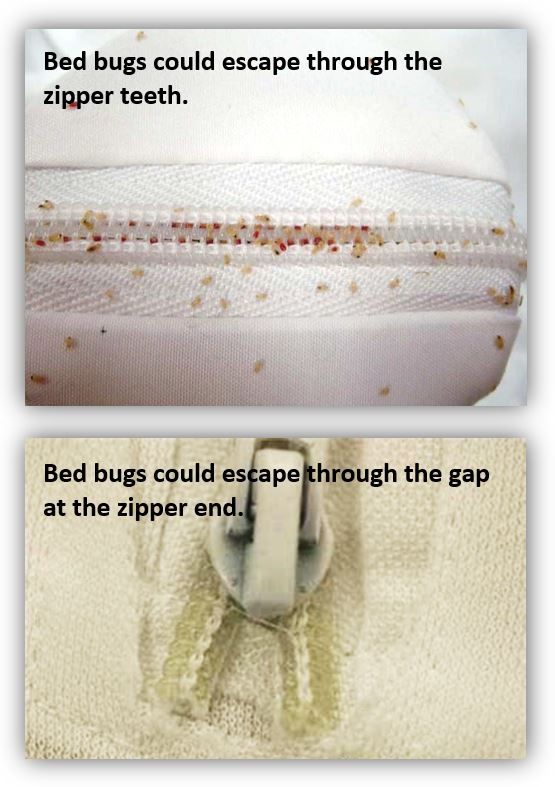
The zipper is one of the most important parts. Some bed bug encasements use special zipper designs and protective closures to reduce the chance of insects escaping through small gaps.
Fabric damage is another concern. A small hole caused by a sharp object, rough handling, or repeated movement may create an escape route. Check the entire cover rather than looking only at the zipper.
Secure zipper
The zipper should close fully and have a protective closure designed to prevent bed bug escape.
Strong fabric
Choose material designed to resist tears and punctures during normal use.
Regular inspection
Check the cover for holes, loose seams, and damaged zipper areas.
Do Bed Bugs Lay Eggs Inside a Mattress Cover?
Female bed bugs can lay eggs before they become trapped inside an encasement. Eggs already present in the mattress may remain enclosed with the adult insects and nymphs.
A properly sealed cover prevents the trapped population from moving freely into the room. It also prevents insects from reaching a host, which stops normal feeding and development.
Do not open the cover to check for eggs. Opening it can release surviving insects. Keep the enclosure sealed for the recommended period instead.
Existing eggs
Eggs that were already inside the mattress can remain trapped with the insects.
No routine opening
Do not unzip the cover to inspect the mattress during the isolation period.
How Long Should You Keep a Bed Bug Mattress Cover On?
Keep a bed bug-proof mattress encasement on for at least 18 months if you are using it to trap and starve bed bugs inside an infested mattress. This period is based on the long survival ability of adult bed bugs and guidance from University of Minnesota Extension.
Some public guidance gives a shorter period. The EPA recommends keeping suitable mattress encasements in place for at least one year in its general bed bug control advice. However, university guidance describes adults surviving much longer under certain conditions.
Using the longer 18-month period provides a more cautious approach when the purpose is to starve insects trapped inside the mattress. Do not remove the cover early just because you have stopped seeing insects or receiving bites.
Remember that the cover is only one part of bed bug control. You must also inspect and treat the bed frame, box spring, headboard, and nearby hiding places. Otherwise, insects outside the cover may continue to feed and reproduce.
Source: storage.googleapis.com
First month
Keep the cover fully closed and inspect its exterior for damage. Do not expect all trapped insects to die during this period.
Months two through six
Continue using the bed normally if the encasement is intact. Monitor the bed and nearby areas for signs of live insects.
Months seven through twelve
Keep the mattress sealed. Some bed bugs may still be alive, so do not assume that the mattress is clear.
Months thirteen through eighteen
Continue the isolation period and follow the manufacturer’s maintenance instructions.
After eighteen months
Check the condition of the cover and the results of the wider pest control program. Seek professional confirmation before deciding whether to remove it.
Why Is Eighteen Months a Safer Waiting Period?
Bed bug survival varies widely. Some insects die after a shorter period without feeding, while others can remain alive for much longer. A short waiting period may leave surviving insects inside the mattress.
University of Minnesota Extension guidance describes bed bugs living up to 18 months and recommends leaving encasements in place for a minimum of that period when they are being used as a treatment method.
The longer period is especially useful when you cannot know how recently the insects fed or how many remain inside the mattress. It avoids relying on a quick estimate of their starvation time.
Long survival
Some adults can withstand long periods without a blood meal.
Uncertain feeding history
You usually cannot know when each trapped insect last fed.
Lower risk of early removal
Keeping the cover sealed longer reduces the chance of releasing a surviving insect.
Can You Remove the Cover After One Year?
A year may be enough in some circumstances, and the EPA has recommended leaving bed bug encasements on for a year. However, other university guidance recommends 18 months because some bed bugs can survive longer.
If you are relying on starvation to kill insects inside an infested mattress, the longer period is the more cautious choice. Removing the cover after one year may expose you to surviving insects if the conditions have allowed them to remain alive.
There is little benefit in opening a sealed mattress early. If the cover remains in good condition, continue the isolation period and use professional pest control to address the rest of the room.
Follow product instructions
Check the manufacturer’s recommended use and maintenance period.
Consider the treatment method
A mattress that has received a confirmed effective treatment may have different management needs from one relying only on starvation.
What Factors Affect How Long Bed Bugs Live Inside a Mattress Cover?
Several conditions affect how long bed bugs can survive inside a sealed mattress cover. Temperature and life stage are especially important, but the insect’s last blood meal and the conditions around the mattress also matter.
This is why two bed bugs trapped in the same mattress may not die at exactly the same time. One may have recently fed, while another may have gone without food for a longer period.
Understanding these factors helps explain why a short isolation period is unreliable. It also shows why the recommended treatment period should not be based on a single insect’s expected survival.
Source: sleepline.com
Temperature
Cooler conditions can slow bed bug metabolism and may extend survival without food.
Humidity
Moisture conditions can influence water loss and survival. The exact effect depends on the surrounding environment.
Age and life stage
Adults and older nymphs can survive longer without feeding than some young nymphs.
Last blood meal
An insect that recently fed may have more stored resources than one that has already gone without food for a long time.
Access to another host
A damaged or poorly fitted cover may allow a bed bug to escape and reach a person or animal host.
Does Room Temperature Affect Bed Bug Survival?
Yes. Temperature can change the speed of bed bug activity and metabolism. Warmer conditions generally increase metabolic activity, while cooler conditions can slow it down.
This does not mean you should try to heat or cool your bedroom to kill bed bugs. Ordinary household temperature changes do not provide a reliable treatment because the insects may hide in places where the temperature is different.
Professional heat treatment uses controlled equipment and monitoring to make sure the required temperature reaches the hiding places. A household heater or air conditioner cannot replace this process.
Cool conditions
May allow bed bugs to conserve energy and survive longer without feeding.
Warm conditions
Can increase activity and metabolic demand, but normal room warmth does not guarantee death.
Temperature treatment
Requires a controlled process that reaches the insects and their hiding places.
Does the Age of a Bed Bug Matter?
Yes. Bed bugs pass through five immature stages before becoming adults. Young nymphs need blood meals to develop through their growth stages.
Adult bed bugs can survive much longer without feeding than some young nymphs. This means that a mattress containing insects at different stages may have different survival times.
You cannot identify the age of every insect inside a sealed mattress. For this reason, the isolation period should account for the possibility of long-lived adults.
Young nymphs
Often have lower starvation tolerance, especially during early development.
Older nymphs
May survive longer than the youngest stages.
Adults
Can survive for many months without food under favorable conditions.
How to Use a Mattress Encasement to Trap Bed Bugs
A bed bug-proof encasement works best when you install it carefully and combine it with a wider pest control plan. The goal is to seal the mattress completely, prevent insects from escaping, and reduce the number of hiding places in the room.
Before buying a cover, measure the mattress. Check its length, width, depth, and any extra padding. A cover that is too small may stretch or tear, while an oversized cover may fit poorly.
Choose a product specifically designed and tested for bed bug containment. A standard dust mite cover or waterproof mattress protector may not have the zipper and seam design needed for this purpose.
Source: dryerenthusiast.com
Preparation
Inspect the mattress and choose a suitable bed bug-proof encasement that fits its size.
Installation
Enclose the entire mattress and close the zipper completely.
Maintenance
Inspect the outer surface and zipper regularly without opening the cover.
Monitoring
Check the bed frame, floor, headboard, and nearby furniture for signs of remaining activity.
Step 1: Inspect the Mattress and Bed
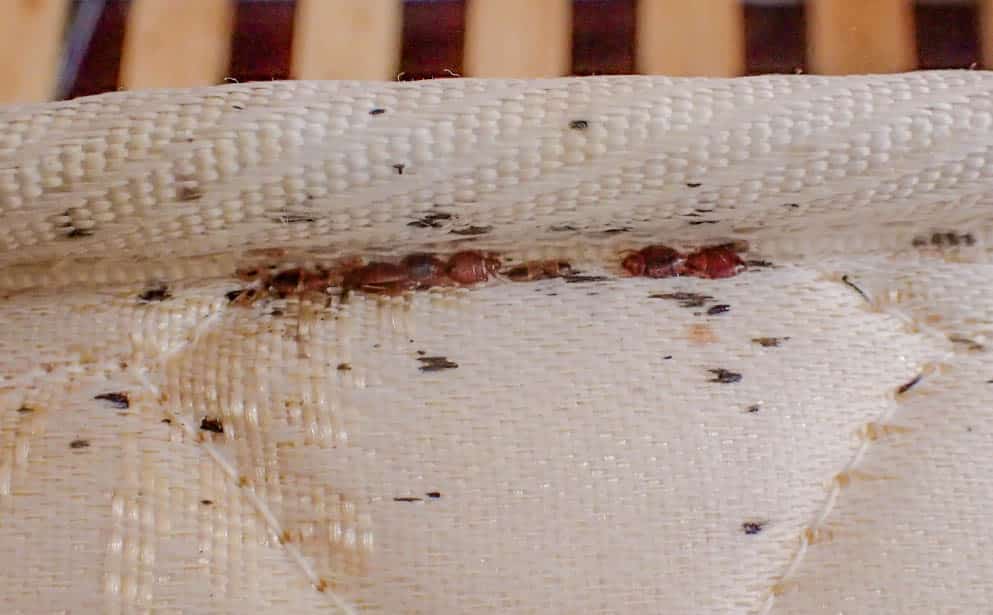
Start by checking the mattress seams, corners, labels, and underside. Look for live insects, shed skins, tiny white eggs, and dark spots that may be bed bug droppings.
Also inspect the box spring, headboard, bed frame, and nearby furniture. Bed bugs do not live only inside mattresses, so treating the mattress without checking these areas can leave part of the infestation untouched.
If you find insects, collect a sample in a sealed clear bag or use a clear piece of tape for identification. A pest professional or qualified extension service may help confirm the insect.
Check seams
Look closely at stitching, folds, corners, and fabric labels.
Look for evidence
Check for live insects, shed skins, eggs, and dark fecal marks.
Inspect nearby furniture
Check the bed frame, headboard, box spring, and furniture near the bed.
Step 2: Choose a Bed Bug-Proof Encasement
Select a complete mattress encasement that is specifically intended for bed bug control. It should surround the entire mattress rather than cover only the top or sides.
Pay close attention to the zipper and seam construction. A protective zipper closure can help prevent insects from escaping through the opening.
Check the manufacturer’s size chart and care instructions. The cover should fit without excessive stretching or loose sections that could create problems during use.
Full enclosure
The product must cover every side of the mattress.
Secure closure
Look for a zipper design intended to prevent bed bug escape.
Durable material
Choose fabric that can withstand normal use without tearing easily.
Correct size
Match the cover to the mattress dimensions and depth.
Step 3: Install the Cover Carefully
Follow the product instructions during installation. Ask another person to help if the mattress is large or difficult to move, so you do not damage the fabric.
Place the mattress inside the encasement and close the zipper fully. Check the entire zipper track and secure any protective closure supplied with the product.
Avoid using sharp tools near the fabric. Do not pull the material too tightly around corners, as excessive pressure may damage the seams.
Enclose every side
Make sure no part of the mattress remains exposed.
Close the zipper
Move the zipper to its final position and secure its protective lock or flap.
Check the material
Look for accidental holes or damage before placing bedding on the mattress.
Step 4: Keep the Encasement Sealed
Once installed, keep the mattress cover closed for at least 18 months when using it to starve trapped bed bugs. Do not unzip it to inspect the mattress or remove it for routine cleaning.
Use sheets and washable bedding over the encasement. Follow the care instructions for the outer cover and avoid cleaning methods that could weaken its fabric or seams.
Inspect the zipper and outer surface regularly. If you notice a tear or hole, contact the manufacturer or a pest professional for advice on safe repair or replacement.
Do not open it
Opening the cover may release bed bugs that are still alive.
Check for damage
Inspect the fabric, seams, and zipper during routine bedroom cleaning.
Keep a record
Write down the installation date so you can track the full isolation period.
Can a Mattress Cover Alone Get Rid of Bed Bugs?
No. A mattress encasement can trap bed bugs inside the mattress, but it cannot eliminate insects hiding elsewhere in the bedroom. Bed bugs can live in many small spaces close to where people sleep.
Common hiding places include bed frames, headboards, box springs, bedside tables, upholstered chairs, baseboards, and cracks in walls. They may also hide in the folds of curtains and other items near the bed.
This is why an encasement should be part of an integrated pest management plan. The plan may include inspection, vacuuming, appropriate heat treatment, monitoring devices, and professional pest control.
Do not assume that buying a new mattress will solve the problem. Bed bugs may already be living in the bed frame and surrounding furniture. A new mattress placed in an infested room can become infested again.
Source: detroitchinatown.org
Bed frame
Check joints, screw holes, corners, and cracks in the frame.
Headboard
Inspect the back, edges, mounting points, and gaps near the wall.
Box spring
Check seams, fabric folds, and the underside.
Nearby furniture
Inspect nightstands, sofas, chairs, and other upholstered items.
Room edges
Check baseboards, carpet edges, wall cracks, and nearby floor spaces.
Should You Cover the Box Spring Too?
Yes, if you have an infested box spring or want to protect it from future bed bug activity. A box spring has many seams, folds, and internal spaces where insects can hide.
A separate bed bug-proof box spring encasement can seal these hiding places. Make sure it fits the exact size and shape of the box spring.
Treating the mattress while leaving an infested box spring exposed can allow bed bugs to remain near the sleeping area. Both items should be included in the inspection and treatment plan.
Separate protection
Use a suitable encasement for each mattress and box spring.
Inspect the frame
An encasement does not replace inspection of the supporting bed structure.
Can Bed Bugs Live in the Bed Frame?
Yes. Bed bugs can hide in wooden and metal bed frames, especially around joints, screw holes, cracks, and narrow gaps. These locations provide shelter during the day.
A mattress cover does not block insects hiding in the frame. They may climb the bed legs and reach the sleeper even when the mattress itself is fully enclosed.
Inspect the frame carefully and use suitable treatment methods. Bed leg interceptors can also help monitor and catch insects trying to climb toward the bed.
Wooden frames
Inspect cracks, joints, screw holes, and rough edges.
Metal frames
Check hollow sections, connection points, and small openings.
Interceptors
Place suitable monitoring traps under bed legs and inspect them regularly.
How to Tell Whether Bed Bugs Are Still Active
The best way to check for ongoing bed bug activity is to look for physical evidence. Bite marks alone cannot confirm that bed bugs are still present because skin reactions differ from person to person.
Look for live insects, shed skins, eggs, and dark fecal spots around the mattress encasement, bed frame, and nearby furniture. A flashlight can help you inspect dark seams and narrow spaces.
You should also monitor bed leg interceptors if they are installed. These devices can catch insects moving toward or away from the bed and provide useful evidence during treatment.
If you continue finding live bed bugs after installing an encasement, do not assume the insects escaped from inside the mattress. They may be hiding in another part of the bed or bedroom.
Source: theblackurbantimes.com
Live insects
Small, flat, reddish-brown insects may indicate an active infestation.
Dark spots
Small dark marks may be bed bug fecal stains, especially around hiding places.
Shed skins
Pale, empty insect skins may indicate that bed bugs have been developing nearby.
Eggs
Tiny, pale eggs may be attached to protected surfaces and cracks.
Are New Bites Proof That Bed Bugs Are Alive Inside the Cover?
No. New bites do not prove that insects are living inside the mattress encasement. Bed bugs may be hiding in the bed frame, headboard, box spring, or other furniture.
Some people develop itchy marks after a bite, while others show little or no visible reaction. A skin mark may also appear after a delay, so the time when you notice it does not always show when the bite occurred.
Inspect the bedroom for physical evidence rather than relying only on skin symptoms. If you find live insects, have them identified and arrange an appropriate treatment plan.
Check the mattress exterior
Look around the zipper, seams, and outer surface.
Inspect the bed structure
Check the headboard, frame, box spring, and nearby furniture.
Use monitoring devices
Inspect bed leg interceptors for insects.
Can You Sleep on a Mattress With an Encasement?
Yes. A properly fitted bed bug-proof encasement is designed to remain on the mattress during normal use. You can place clean sheets and bedding over it while the isolation period continues.
Check that the cover does not have sharp damage, broken seams, or a failed zipper. Follow the product instructions for comfort, washing, and maintenance.
Keeping the mattress covered does not mean the rest of the bedroom is free from bed bugs. Continue inspections and pest control until the wider infestation has been addressed.
Use clean bedding
Wash and dry sheets and blankets according to their fabric care labels.
Keep bedding off the floor
Prevent sheets and blankets from touching the floor or nearby furniture.
Maintain the cover
Check the zipper and fabric without opening the encasement.
Common Mistakes to Avoid When Using a Bed Bug Mattress Cover
A mattress encasement can be useful, but incorrect use may reduce its effectiveness. Most problems happen when people choose the wrong type of cover, open it too early, or ignore bed bugs hiding outside the mattress.
The best results come from treating the cover as one part of a complete control plan. Pay attention to installation, regular inspection, and the recommended isolation period.
Avoid quick fixes that can spread insects or expose you to unsafe chemicals. A careful approach is often more effective than replacing furniture or spraying products without a clear plan.
Using an ordinary protector
A standard fitted protector may leave the mattress sides and bottom exposed.
Removing the cover too early
Surviving bed bugs may escape if the encasement is opened before the isolation period ends.
Ignoring the bed frame
Insects outside the mattress can continue to feed and reproduce.
Ignoring fabric damage
Small holes and broken seams may allow trapped insects to escape.
Relying only on sprays
Improper pesticide use may create health risks and fail to reach hidden insects.
Do Not Use a Regular Mattress Protector as a Bed Bug Encasement
A regular mattress protector and a bed bug encasement have different purposes. A protector may guard against spills, dust, or ordinary wear, but it may not surround the entire mattress or provide a secure insect-proof zipper.
A bed bug encasement is designed to enclose all sides and prevent insects from entering or escaping. Its construction, seams, zipper, and closure are important parts of its function.
Read the product description carefully before buying. Look for a product specifically intended for bed bug containment rather than assuming that every zippered mattress cover provides the same protection.
Regular protector
Usually designed for moisture, dust, or general mattress protection.
Bed bug encasement
Designed to surround the entire mattress and contain bed bugs with secure seams and closures.
Do Not Spray Insecticide Inside the Mattress Cover
Do not open the encasement and spray chemicals inside the mattress. Many pesticides are not approved for direct mattress application, and using them incorrectly may expose people to harmful residues.
Always read the product label and use pesticides only for the locations and methods listed on that label. Never apply an outdoor insecticide or household chemical to a mattress unless the label specifically permits that use.
For a confirmed infestation, a licensed pest management professional can identify suitable treatment methods. Ask about nonchemical options and how the mattress encasement should be used during treatment.
Read the label
Use only products specifically labeled for the intended indoor application.
Avoid unsafe mixtures
Never mix pesticides or household chemicals to create a stronger treatment.
Seek professional help
A qualified pest professional can select methods that suit the infestation and sleeping area.
Do Not Throw Away an Infested Mattress Without a Plan
Throwing away a mattress does not automatically remove bed bugs from a home. Insects may remain in the bed frame, furniture, carpets, and other hiding places.
Moving an infested mattress through shared hallways or outside without wrapping it securely can spread insects to other areas. It may also expose neighbors or waste collection workers.
A suitable encasement can often help contain an infested mattress while the room receives treatment. Ask a pest professional whether the mattress can be safely retained.
Avoid unnecessary disposal
A mattress may be salvageable when it can be safely treated and contained.
Prevent spreading
If disposal is necessary, follow local rules and wrap the mattress securely before moving it.
When Should You Call a Professional Bed Bug Exterminator?
Contact a licensed pest management professional when you find multiple bed bugs, repeated signs of activity, or insects in several rooms. A mattress encasement cannot control insects that have spread into other hiding places.
Professional help is also useful when you cannot identify the insects or when repeated home treatments have failed. Bed bugs are difficult to eliminate because they hide in narrow spaces and may survive incomplete treatment.
A qualified professional can inspect the property, confirm the infestation, and recommend an integrated treatment plan. Depending on the situation, this may include targeted pesticides, steam, controlled heat, monitoring devices, and follow-up visits.
Ask the provider about preparation instructions, treatment limits, safety precautions, and follow-up inspections. Avoid any company that promises instant elimination without inspecting the property or explaining its treatment process.
Repeated sightings
You continue finding live bed bugs after installing a mattress encasement.
Multiple hiding places
You find signs of bed bugs in furniture, several rooms, or adjoining areas.
Uncertain identification
You cannot confidently tell whether the insects are bed bugs or another pest.
Failed home treatment
The infestation continues despite careful cleaning and appropriate control measures.
What Should You Ask a Pest Control Professional?
Before treatment begins, ask how the professional will inspect the mattress, bed frame, and nearby rooms. A good treatment plan should address the actual hiding places rather than focusing only on the visible insects.
Ask whether the mattress encasement should stay in place and how long it should remain sealed. The answer may depend on the treatment method, the product, and whether insects are known to be trapped inside.
Also ask about follow-up visits. One treatment may not eliminate every bed bug, especially when eggs or insects remain in untreated areas.
Inspection method
Ask which areas will be inspected and how the provider will confirm bed bug activity.
Treatment plan
Ask which methods will be used and why they suit your infestation.
Safety instructions
Request clear directions about people, pets, bedding, and treated surfaces.
Follow-up schedule
Ask when the next inspection will occur and how success will be checked.
Frequently Asked Questions
Q
Can bed bugs live for two years inside a mattress cover?
Some sources report exceptionally long bed bug survival periods, but two years should not be treated as the normal lifespan of a trapped insect. The EPA reports survival of several months to a year without feeding, while university guidance describes some adults surviving up to 18 months under favorable conditions.
If you are using a mattress encasement to starve bed bugs, keep it sealed for at least 18 months. If the infestation continues elsewhere in the home, the encasement alone will not solve the problem.
Q
Will bed bugs die if they are sealed inside a mattress cover?
Yes. Bed bugs trapped inside a properly sealed bed bug-proof encasement will eventually die because they cannot reach a blood meal. However, death may take several months, and some adults may survive up to 18 months under favorable conditions.
The cover must remain intact, with its zipper completely closed. Do not open it early to check whether the insects are dead.
Q
Can bed bugs bite through a mattress encasement?
Bed bugs cannot normally bite through the intact fabric of a properly designed mattress encasement. The cover creates a physical barrier between insects trapped inside and the person sleeping on the bed.
However, bed bugs hiding outside the encasement may still reach exposed skin. Check the bed frame, headboard, box spring, and nearby furniture if bites or other signs continue.
Q
Can bed bugs escape through the zipper of a mattress cover?
A properly designed bed bug encasement has a zipper and closure system intended to prevent insects from escaping. A damaged zipper, incomplete closure, or poorly designed cover may create an opening.
Check the zipper and protective flap after installation. Inspect them regularly and avoid opening the encasement during the isolation period.
Q
Should I wash a mattress cover after finding bed bugs?
Do not remove and wash an encasement that is being used to trap bed bugs inside an infested mattress. Opening it may release surviving insects into the room.
Wash only removable bedding and covers that are safe to launder according to their care labels. Use a hot dryer setting suitable for the fabric, following reliable bed bug treatment instructions. Keep the main mattress encasement sealed.
Q
Can bed bugs live on top of a mattress encasement?
Yes. A mattress encasement does not stop bed bugs from crawling across its outside surface. Insects hiding in the bed frame, headboard, or nearby furniture may climb onto the cover.
Inspect the outer surface and surrounding furniture. Use suitable bed leg interceptors and keep bedding from touching the floor to help monitor and reduce insect movement.
Q
Does a waterproof mattress protector kill bed bugs?
No. A waterproof mattress protector is not automatically a bed bug treatment. Many standard protectors cover only part of the mattress or lack the secure zipper and seam design needed to contain insects.
Choose a full bed bug-proof encasement if you need to trap bed bugs inside a mattress. Check the product specifications rather than relying on the waterproof label.
Q
Can I sleep on my bed while bed bugs are trapped inside the cover?
Yes. A suitable, intact mattress encasement is designed to remain on the mattress during normal use. You can use clean sheets and bedding over it while the insects remain trapped.
However, continue monitoring the bed and treating other hiding places. If you keep finding live bed bugs, arrange a professional inspection rather than assuming the mattress cover has failed.
Q
How often should I inspect a bed bug mattress cover?
Inspect the outside of the encasement regularly, such as during weekly bedroom cleaning. Pay special attention to the zipper, seams, corners, and areas that rub against the bed frame.
Do not unzip the cover during the starvation period. If you find a hole or damaged closure, seek advice about safe repair or replacement.
Q
Can bed bugs live inside a new mattress cover?
A new mattress cover does not create bed bugs, but insects can become trapped inside it if the mattress was already infested when the cover was installed. Bed bugs can also hide on the outside if they are present elsewhere in the room.
Inspect the mattress and surrounding furniture before installation. Choose a suitable encasement and make sure it closes completely.
✦ Wrapping Up
Conclusion
Bed bugs can live inside a mattress cover for several months without food. Some adults may survive for up to 18 months under favorable conditions, so trapping them does not mean they will die immediately.
A properly designed bed bug-proof mattress encasement can help contain insects and prevent them from reaching the sleeper. If you are using it as a starvation treatment, keep it fully sealed for at least 18 months and inspect it regularly for holes, damaged seams, and zipper problems.
Remember that a mattress cover cannot eliminate bed bugs hiding in other parts of your bedroom. Inspect the bed frame, box spring, headboard, and nearby furniture. Combine the encasement with appropriate monitoring and professional pest control when needed.
Patience is important when dealing with bed bugs. Avoid opening the cover too early or relying on bite marks alone to judge whether treatment has worked. A careful, complete approach gives you a better chance of protecting your mattress and ending the infestation.
💡 Key Takeaway
If you suspect bed bugs in your mattress, inspect the bed, install a properly fitted bed bug-proof encasement, record the installation date, and keep it sealed for at least 18 months when using starvation as the treatment method. Monitor the rest of the bedroom and contact a licensed pest professional if live insects or other signs of activity continue.