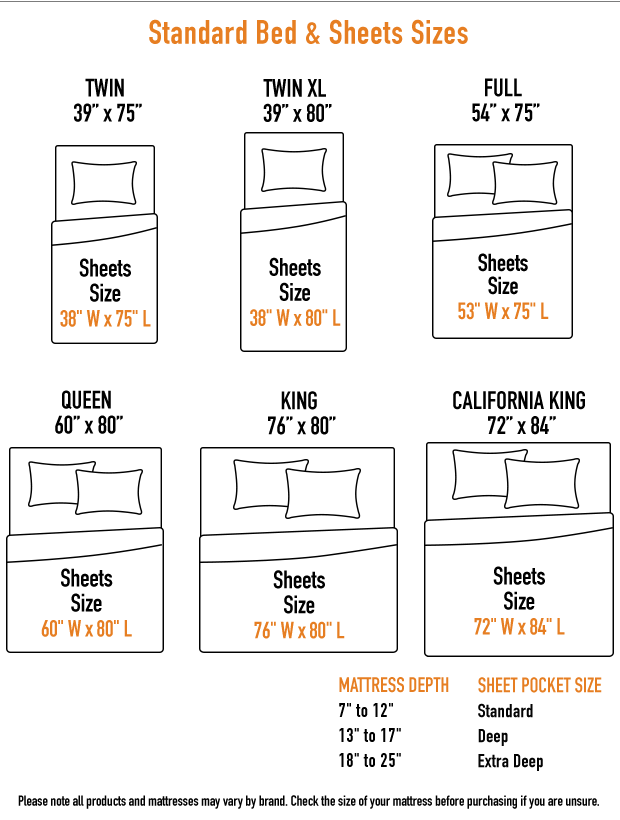
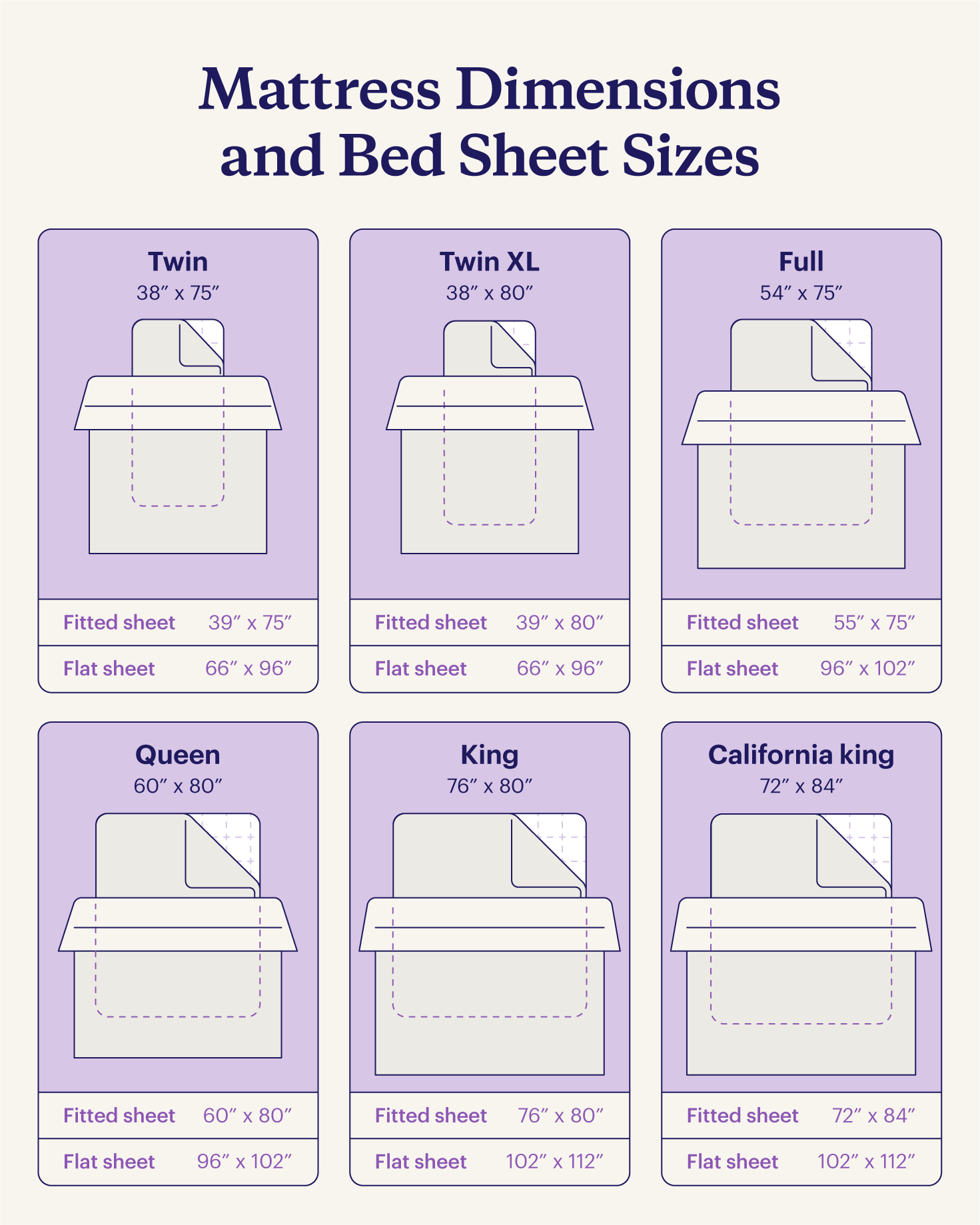
standard twin bed sheets are made for a mattress measuring 38 inches wide by 75 inches long. Fitted sheets must also match the mattress depth, while flat sheets are larger to provide enough fabric for tucking.
If you are shopping for bedding in the United States, knowing the size of your mattress is the first step toward buying the right sheets. A standard twin mattress is common in American children’s bedrooms, guest rooms, college dorms, and smaller living spaces. Although the mattress itself has a simple size, sheet measurements can vary by brand and style.
A standard twin mattress measures 38 inches wide and 75 inches long. Its fitted sheet needs to match those dimensions and have enough pocket depth to cover the mattress. A flat sheet is larger because it must cover the sleeping surface and leave extra fabric along the sides and foot of the bed.
Twin and Twin XL sheets are not interchangeable in every situation. Both sizes are usually 38 inches wide, but a Twin XL mattress is 80 inches long. That extra 5 inches can make a regular twin fitted sheet too short. Before buying a sheet set, check the mattress label, measure its depth, and compare those numbers with the package details.
This guide explains standard twin sheet measurements, fitted and flat sheet differences, mattress depth, and common sizing mistakes. It also covers how to choose sheets for dorm beds, children’s beds, and mattresses with toppers.
Standard twin bed sheets are designed for a mattress that measures 38 inches wide and 75 inches long. These are the common dimensions used for twin mattresses in the United States. The mattress size gives you a starting point, but the actual sheet dimensions depend on whether you are buying a fitted sheet or a flat sheet.
A fitted sheet wraps around the top and sides of the mattress. It needs enough fabric to cover the sleeping surface, reach underneath the edges, and hold in place. A flat sheet rests over the mattress and sleeper, so it needs extra width and length.
Manufacturers do not all use the same finished sheet measurements. Some fitted sheets have deeper pockets, while some flat sheets offer more side coverage. This is why checking the product’s size chart is more useful than relying on a general twin label.
Source: designingidea.com
Standard twin mattress
38 inches wide by 75 inches long.
Fitted twin sheet
Designed to fit a 38-by-75-inch mattress. Check the listed pocket depth before buying.
Flat twin sheet
Often around 66 by 96 inches, although exact measurements vary by manufacturer.
Twin mattress size in feet
Approximately 3 feet 2 inches wide by 6 feet 3 inches long.
Why Are Twin Sheet Measurements Different From Mattress Measurements?
A sheet needs to do more than cover the top of a mattress. A fitted sheet must stretch over the corners and extend down the sides. It also needs extra material underneath the mattress to keep the elastic edge in place.
A flat sheet needs even more fabric. It must cover the sleeper, reach down both sides, and provide enough material to tuck beneath the mattress if desired. Think of the mattress as the base and the sheet as a cover that needs room to wrap around it.
For this reason, a flat sheet measuring 66 by 96 inches is not too large for a 38-by-75-inch twin bed. The additional fabric is part of its intended design.
Fitted sheets
Match the mattress width, length, and depth.
Flat sheets
Include extra fabric for coverage, movement, and tucking.
Twin Bed Sheet Size Chart in Inches
A size chart makes it easier to compare mattress measurements with sheet measurements. The following table gives common US twin bedding dimensions and useful buying ranges. These are general reference measurements, not universal manufacturing standards.
The mattress dimensions are the most important numbers to remember. Fitted sheet dimensions and pocket depth can vary between brands, so use the exact product specifications when you place an order.
For flat sheets, the measurements are typical examples. Some brands make their twin flat sheets wider or longer to provide more coverage.
Source: purple.com
Twin mattress
38 x 75 inches.
Twin fitted sheet
Made for a 38 x 75-inch mattress. Pocket depth commonly ranges from about 7 to 16 inches, depending on the design.
Twin flat sheet
A common reference size is approximately 66 x 96 inches.
Twin XL mattress
38 x 80 inches.
Standard Twin Bedding Measurements
The table below separates mattress measurements from sheet measurements. This distinction matters because a fitted sheet and a flat sheet perform different jobs.
If a package lists only the mattress size it fits, look for a separate pocket-depth measurement. If it lists the finished sheet dimensions, compare them with your mattress and the manufacturer’s fit instructions.
Mattress width
38 inches for a standard US twin.
Mattress length
75 inches for a standard US twin.
Flat sheet width
Approximately 66 inches in a common sizing example.
Flat sheet length
Approximately 96 inches in a common sizing example.
What Size Is a Twin Fitted Sheet?
A twin fitted sheet is designed to fit a mattress that measures 38 inches wide and 75 inches long. However, those two measurements are not enough to guarantee a proper fit. You also need to know how thick the mattress is.
Fitted sheets have elastic edges or corners that help hold them around the mattress. Their pockets must be deep enough to cover the mattress sides and reach underneath the edges. If the pockets are too shallow, the corners may pull loose during the night.
For example, a 10-inch-thick twin mattress needs a fitted sheet with a pocket that can accommodate at least that thickness. A sheet with a slightly deeper pocket may offer more room, but the manufacturer’s stated fit range is the best guide.
A fitted sheet that is much too large can also cause problems. Loose fabric may wrinkle or bunch beneath the sleeper. The goal is not to buy the deepest sheet available. It is to find one that matches the mattress and its total depth.
Source: commahome.com
Check the width and length
Confirm that the fitted sheet is made for a standard 38-by-75-inch twin mattress.
Check the pocket depth
Compare the sheet’s depth range with the thickness of your mattress.
Check the elastic
Look for elastic around the full edge or reinforced corners that help keep the sheet in place.
Check the care label
Follow the washing and drying instructions to reduce the risk of unwanted shrinkage.
How to Measure Your Mattress for a Fitted Twin Sheet
Measuring your mattress takes only a few minutes. Remove the old bedding so you can reach the mattress edges. Use a flexible tape measure and record the width, length, and depth.
Measure from one side edge to the other for width. Measure from the head to the foot for length. For depth, measure from the bottom edge to the top sleeping surface without pressing down on the mattress.
If you use a mattress protector or topper, measure the complete setup you want the fitted sheet to cover. This helps prevent a sheet that fits the bare mattress but slips off once the extra layers are added.
Step 1: Measure the width
Measure across the mattress from left to right. A standard twin should be about 38 inches.
Step 2: Measure the length
Measure from the head to the foot. A standard twin should be about 75 inches.
Step 3: Measure the depth
Measure the full vertical thickness, including any topper or protector that will remain under the sheet.
Step 4: Compare the numbers
Check the fitted sheet’s mattress size and pocket-depth range before purchasing.
What Does Pocket Depth Mean?
Pocket depth describes how thick a mattress a fitted sheet is designed to cover. It is not the same as the width or length of the sheet. A deep-pocket sheet has extra material along the sides to cover a thicker mattress.
Some standard fitted sheets are made for thinner mattresses, while deep-pocket and extra-deep-pocket versions are intended for thicker beds. The labels are not perfectly consistent across manufacturers, so always check the actual inch range.
If your mattress is 12 inches thick and a fitted sheet is listed for mattresses up to 10 inches, it may not stay in place. A product with a stated fit range that includes 12 inches is a better match.
Standard pocket
Generally intended for mattresses with a more modest thickness.
Deep pocket
Provides extra side material for thicker mattresses.
Extra-deep pocket
Designed for especially thick mattresses or layered bedding, depending on the stated fit range.
What Size Is a Twin Flat Sheet?
A twin flat sheet is commonly around 66 inches wide and 96 inches long. These measurements provide more fabric than the mattress itself needs because a flat sheet must cover the sleeper and extend over the mattress edges.
Unlike a fitted sheet, a flat sheet does not have elastic corners. You place it over the bed and adjust the fabric by hand. You can tuck the extra material beneath the mattress or leave it hanging over the sides.
The extra width helps cover the sides of the bed, while the extra length gives you room to cover the upper part of the mattress and tuck the foot. This also allows some movement without exposing the bedding underneath.
Flat sheet sizes vary by brand. If you prefer a neat, tightly tucked bed, look for a sheet with enough length and width for your mattress height and preferred tuck style.
Source: static.recode.net
Common width
Approximately 66 inches.
Common length
Approximately 96 inches.
Main purpose
Provides a layer between the sleeper and the blanket or comforter.
Fit consideration
Taller mattresses may need a larger flat sheet for comfortable side coverage and tucking.
Can You Use a Larger Flat Sheet on a Twin Bed?
Yes. A larger flat sheet can work on a twin mattress if you do not mind having extra fabric. Some people use a full-size flat sheet on a twin bed because it provides more material for tucking and side coverage.
The trade-off is that the extra fabric may hang close to the floor or create more material to arrange. This can make the bed look less neat unless you tuck it carefully.
A larger flat sheet does not solve a fitted-sheet sizing problem. Fitted sheets need to match the mattress dimensions and depth much more closely.
More coverage
A larger flat sheet can provide extra fabric on both sides.
More fabric to manage
Oversized sheets may need extra tucking and adjustment.
Twin vs. Twin XL Sheets: What Is the Difference?
The main difference between standard twin and Twin XL bedding is mattress length. Both mattress sizes are generally 38 inches wide, but a standard twin is 75 inches long and a Twin XL is 80 inches long.
That extra 5 inches may seem small, but it makes a real difference when fitting a fitted sheet. A standard twin fitted sheet may pull too tightly over a Twin XL mattress or fail to reach the corners properly.
Twin XL mattresses are common in US college dorms, especially in rooms with longer beds. Students who bring bedding from home should check their dorm’s mattress dimensions before buying a sheet set.
A flat sheet may sometimes work across both sizes because it has extra fabric. However, the fit depends on the finished measurements and the desired amount of coverage. For fitted sheets, buying the correct Twin XL size is the safer choice.
Source: designingidea.com
Standard twin
38 inches wide by 75 inches long.
Twin XL
38 inches wide by 80 inches long.
Width difference
Both sizes generally have the same width.
Length difference
Twin XL is 5 inches longer.
Can Regular Twin Sheets Fit a Twin XL Mattress?
A regular twin fitted sheet is usually too short for a Twin XL mattress. Even if you can stretch it over the bed, the corners may pull loose because the mattress is longer than the sheet is designed to cover.
A regular twin flat sheet may still provide enough coverage in some cases. Flat sheets have extra fabric, so the additional mattress length does not always prevent a usable fit. Check the finished sheet dimensions before using one.
If you are buying a complete set, choose a Twin XL set for a Twin XL mattress. This avoids mixing sizes and gives you a better chance of getting the right fit for both the fitted and flat sheets.
Fitted sheet
Choose Twin XL for a 38-by-80-inch mattress.
Flat sheet
Compare its actual dimensions with the coverage you need.
Pillowcase
Check the set contents because pillowcase sizes are not determined by mattress length.
How to Choose the Right Twin Bed Sheet Size
Choosing the right twin sheet starts with measuring the bed, not guessing from its appearance. Two mattresses can both be sold as twin beds but need different fitted-sheet pocket depths because their thicknesses are not the same.
After measuring, decide whether you need a fitted sheet, a flat sheet, or a complete set. Check the package for the mattress size, pocket depth, and included pieces. If the information is unclear, look for the manufacturer’s detailed size chart.
Material can also affect how a sheet feels and fits. Cotton, polyester, microfiber, and blended fabrics may respond differently to washing and use. Follow the care label, especially if the manufacturer warns about shrinkage.
Source: dxobxtbrb.blob.core.windows.net
Know your mattress size
Confirm that the bed is a standard twin rather than Twin XL or another size.
Measure the mattress depth
Include any topper or protective layer that the fitted sheet must cover.
Read the product dimensions
Look beyond the twin label and check the stated measurements.
Check the set contents
Confirm whether the package includes a fitted sheet, flat sheet, and pillowcase.
Review washing instructions
Use the care directions to reduce shrinkage and preserve the fit.
Which Sheet Material Should You Choose?
The material affects comfort, feel, care, and sometimes long-term fit. It does not change the mattress size you need to cover, but it can influence how the sheet behaves after washing.
Cotton is a common bedding choice. It comes in several weaves, including percale and sateen. Percale often has a crisp feel, while sateen usually feels smoother and has a slight sheen.
Polyester and microfiber sheets are often easy to care for and may resist wrinkles. However, some people find certain synthetic fabrics less breathable or warmer than their preferred cotton bedding.
Cotton-polyester blends combine fibers and may offer a balance of care and feel. There is no single material that works best for every sleeper. Consider comfort, care needs, climate, and the manufacturer’s sizing information.
Cotton
A common natural-fiber option available in several weaves and finishes.
Percale
A plain-weave cotton fabric often associated with a crisp, light feel.
Sateen
A cotton weave with a smoother surface and a soft sheen.
Microfiber
A fine synthetic fabric that is often lightweight and easy to wash.
Cotton-polyester blend
Combines natural and synthetic fibers, with the final feel depending on the blend.
How Mattress Toppers Affect Twin Sheet Size
A mattress topper adds height to your bed. This can turn a fitted sheet that once fit well into one that is too shallow. The issue is especially common when adding a thick foam topper to an older mattress.
For example, imagine a twin mattress that is 10 inches thick. If you add a 3-inch topper, the total depth becomes approximately 13 inches. Your fitted sheet must accommodate that combined thickness, along with any other layer it needs to cover.
Measure the complete setup after placing the topper on the bed. Then compare the total depth with the fitted sheet’s stated pocket range. Do not assume that a sheet labeled deep pocket will automatically fit every thick mattress.
Measure all layers
Include the mattress and topper when calculating the depth.
Check the protector
Include a mattress protector if it adds noticeable thickness.
Allow for a secure fit
Choose a fitted sheet whose stated depth range includes your complete bedding setup.
Twin Sheets for Children’s Beds, Guest Rooms, and College Dorms
Standard twin sheets serve several purposes in American homes. They are often used in children’s bedrooms, guest rooms, bunk beds, and smaller apartments. The mattress dimensions remain the same regardless of who sleeps in the bed, but the type of mattress can change the sheet requirements.
For a child’s bed, check whether the mattress is a standard twin and measure its thickness. Bunk bed mattresses can be thinner than many regular mattresses, so an oversized fitted sheet may feel loose. A properly fitted sheet is especially important on a bunk because loose bedding can create an uncomfortable sleeping surface.
Guest beds may have mattress pads or protectors that increase the total depth. Measure those layers before buying replacement sheets. This small check can prevent repeated adjustments during guest visits.
College dorm beds need extra attention because many use Twin XL mattresses. A student who buys ordinary twin bedding may find that the fitted sheet does not reach all four corners. Check the college housing information or ask the housing office for the exact bed dimensions before shopping.
Source: in.pinterest.com
Children’s bedrooms
Check mattress dimensions and depth, especially when the bed uses a thin mattress.
Bunk beds
Look for fitted sheets that match the bunk mattress thickness and fit range.
Guest rooms
Measure mattress protectors and pads that remain on the bed.
College dorms
Confirm whether the dorm uses standard twin or Twin XL mattresses.
Are Twin and Bunk Bed Sheets the Same Size?
Many bunk beds use standard twin mattresses, so ordinary twin fitted sheets can fit them if the mattress dimensions and depth match. However, some bunk beds use special or thinner mattresses, so the twin label alone is not enough.
Measure the mattress before buying. A sheet that is too deep may leave loose fabric, while one that is too shallow may not stay around the corners.
For bunk beds, follow the bed and mattress manufacturer’s bedding and safety instructions. Avoid loose bedding that does not fit the mattress properly.
Check the mattress
Confirm its width, length, and thickness.
Check the bed instructions
Follow any specific bedding recommendations from the manufacturer.
Common Mistakes When Buying Twin Bed Sheets
The most common sheet-buying mistake is assuming that every twin mattress has the same thickness. Standard twin mattresses share common width and length measurements, but their depths can differ quite a bit.
Another mistake is confusing twin and Twin XL bedding. These sizes have the same general width, but the longer Twin XL mattress needs a longer fitted sheet. A sheet that stretches over the mattress at first may still pull loose during normal use.
Buyers sometimes focus only on the number printed on the package. A twin label is useful, but it does not tell you whether the sheet fits a thick mattress, a topper, or a mattress protector. Reading the detailed measurements can prevent this problem.
Source: purple.com
Mistake 1: Ignoring mattress depth
A fitted sheet may have the correct width and length but still be too shallow for the mattress.
Mistake 2: Buying twin sheets for Twin XL
A standard twin fitted sheet is generally too short for an 80-inch-long mattress.
Mistake 3: Forgetting the topper
A topper increases the total depth and may require a deeper fitted sheet.
Mistake 4: Assuming every brand uses identical measurements
Finished sheet dimensions and pocket-depth ranges can differ between manufacturers.
Mistake 5: Ignoring shrinkage
Incorrect washing or high drying heat may affect the fit of some fabrics.
What to Do When a Twin Fitted Sheet Keeps Coming Off
If a fitted sheet repeatedly slips off, start by checking its size. Compare the mattress width and length with the sheet’s stated fit. Then check whether the mattress is thicker than the sheet’s pocket-depth limit.
Next, look at the corners. Some sheets have elastic only near the corners, while others have elastic around the full edge. A worn or stretched elastic band may also reduce the sheet’s ability to stay in place.
If the measurements are correct but the sheet still moves, check whether the mattress protector or topper has changed the fit. Replacing an old sheet with a properly sized one is often more useful than repeatedly pulling the corners back into place.
Check the size label
Make sure the fitted sheet is made for your mattress length and width.
Check the pocket depth
Make sure it covers the complete mattress and bedding layers.
Inspect the elastic
Replace sheets with worn or damaged elastic when they no longer hold properly.
Check for shrinkage
Review the care label and consider whether the sheet has become smaller after washing.
Frequently Asked Questions
Q
Are all twin bed sheets the same size?
No. Twin sheets are designed for standard twin mattresses, but their finished dimensions can vary by brand. Fitted sheets also have different pocket depths. Check the mattress size, sheet measurements, and pocket-depth range before buying.
Q
Will a 39 x 75-inch fitted sheet fit a twin mattress?
It may fit, depending on the manufacturer’s design and stated mattress compatibility. A standard US twin mattress is about 38 x 75 inches, but some sheet brands list slightly different finished measurements to allow for construction and fit. Check the product’s recommended mattress size rather than judging by one number alone.
Q
Can I use full-size sheets on a twin bed?
A full-size flat sheet can often be used on a twin bed because it has extra fabric. You may need to tuck the sides more carefully. A full-size fitted sheet is usually too large for a standard twin mattress and may bunch or slip, so a correctly sized twin fitted sheet is preferable.
Q
What size sheets do I need for a 38 x 75-inch mattress?
You generally need standard twin sheets. Choose a fitted sheet designed for a 38 x 75-inch mattress and check its pocket depth. A common twin flat sheet reference measurement is approximately 66 x 96 inches, although brands may use different dimensions.
Q
What size sheets fit a 38 x 80-inch mattress?
A mattress measuring 38 x 80 inches is generally a Twin XL. You should buy Twin XL fitted sheets because standard twin fitted sheets are designed for a shorter mattress. Check the mattress depth as well.
Q
How deep should a twin fitted sheet be?
The fitted sheet’s pocket-depth range should include the full thickness of your mattress and any topper or protector that it needs to cover. For example, a 12-inch mattress with a 3-inch topper has a combined depth of about 15 inches. Look for a sheet whose stated fit range accommodates that measurement.
Q
Can I use twin XL flat sheets on a regular twin bed?
Yes, in many cases. A Twin XL flat sheet is longer than a regular twin flat sheet, so it may provide extra fabric for tucking. It can work if you are comfortable with the additional material. This does not mean a Twin XL fitted sheet will fit a regular twin mattress equally well.
Q
Do twin bed sheets fit a mattress topper?
They can, provided the fitted sheet has enough pocket depth to cover the mattress and topper together. Measure the complete setup before purchasing. If the total depth is greater than the sheet’s stated fit range, the corners may pull loose.
✦ Wrapping Up
Conclusion
Standard twin bed sheets are made for a mattress measuring 38 inches wide by 75 inches long. A common twin flat sheet measures about 66 by 96 inches, while a fitted sheet must match the mattress dimensions and have enough pocket depth to cover its thickness.
The most important distinction is between standard twin and Twin XL. Both mattresses are generally 38 inches wide, but Twin XL is 80 inches long instead of 75 inches. This difference makes the correct fitted sheet size important, especially for college dorm beds.
Before buying new bedding, measure the mattress width, length, and depth. Include any topper or protector that will remain under the fitted sheet. Then compare your measurements with the manufacturer’s size chart rather than relying only on the twin label.
💡 Key Takeaway
For a standard twin mattress, start with a 38 x 75-inch fitted sheet and a flat sheet around 66 x 96 inches. Measure mattress depth, include any topper, and check the manufacturer’s pocket-depth range. If your mattress measures 38 x 80 inches, shop for Twin XL bedding instead.