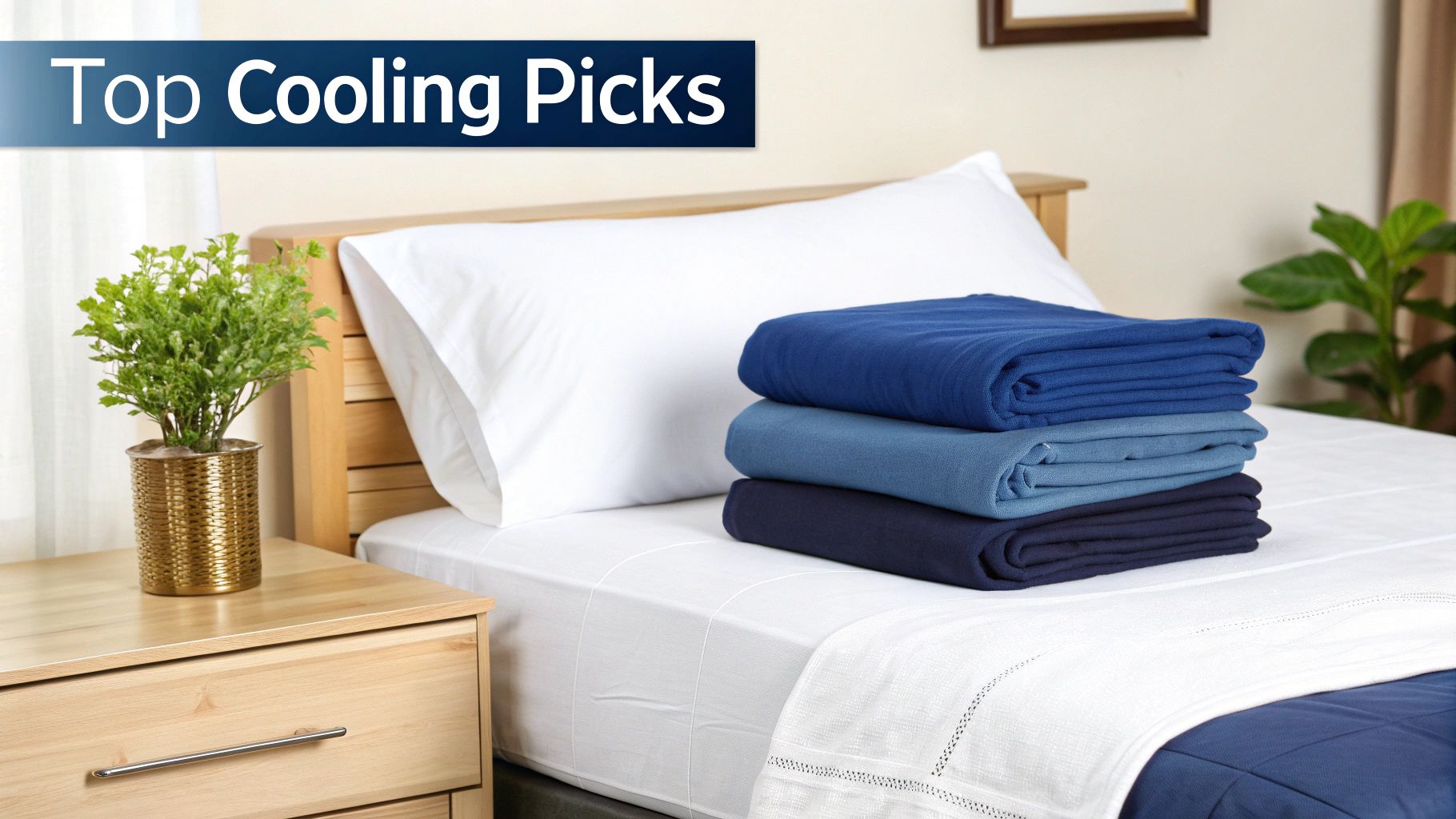
Cotton percale, linen, Tencel lyocell, and bamboo-derived rayon sheets are popular cooling options because they can offer good airflow, absorb moisture, and feel comfortable in warm weather.
If you live in the United States, summer nights can make a comfortable bed feel like a warm blanket even when you are using a light comforter. Homes in Florida, Texas, Arizona, and other warm states may stay hot well into the evening. Even air-conditioned bedrooms can feel uncomfortable when bedding holds too much heat.
The right bed sheets can help. Cotton percale is a practical starting point for most hot sleepers because its crisp, plain weave allows air to move through the fabric. Linen is another strong option, especially if you live in a humid area or tend to sweat at night. Tencel lyocell and bamboo-derived rayon offer smooth surfaces and useful moisture-management properties.
However, not every sheet labeled cooling will keep you comfortable. The fiber, weave, fabric weight, finish, and other layers on your bed all matter. A lightweight cotton sheet can feel cooler than a thick, tightly woven sheet made from the same fiber.
This guide explains what bed sheets are cooling, how different materials compare, what to look for on product labels, and how to choose sheets for your bedroom. It also explains common marketing claims so you can spend your money on useful features rather than promises.
Cooling bed sheets are lightweight, breathable sheets designed to help reduce heat buildup and manage moisture during sleep. They do not work like an air conditioner. Instead, they help your body release heat and allow moisture to move away from the skin.
The best cooling sheets usually combine good air permeability with a comfortable surface and suitable moisture absorption. Air permeability means how easily air can pass through a fabric. Moisture management describes how a material absorbs, spreads, or releases moisture.
These features matter because your body naturally releases heat and moisture while you sleep. When bedding holds warm, damp air close to your skin, you may wake up feeling sticky or overheated.
There is no single fabric that feels coolest to every person. Someone who lives in a dry Arizona home may prefer crisp cotton percale. Someone who sleeps in a humid Florida bedroom may prefer linen or a smooth cellulose-based fabric.
Research on bedding and sleep supports the importance of thermal comfort, but direct comparisons remain limited. A 2024 systematic review examined nine eligible studies and found that bedding fibers may affect sleep outcomes, while also identifying major differences in study methods and conditions. This means material choice matters, but broad claims that one fiber is always the coolest are not established.
Source: m.media-amazon.com
Breathability
Breathable fabric allows air to move through the sheet and helps reduce the feeling of trapped warmth.
Moisture management
A fabric that absorbs or moves moisture can help you feel less damp when you sweat at night.
Lightweight construction
A lighter sheet generally adds less insulation than a thick, heavy fabric.
Comfortable texture
The surface should feel pleasant against your skin. A fabric can have useful technical properties but still feel uncomfortable to you.
Cooling Sheets Versus Cold-to-the-Touch Sheets
A sheet that feels cold when you first touch it does not always stay cool throughout the night. Some fabrics draw heat away from the skin quickly at first, creating a cool sensation. After you lie on them for a while, their surface temperature may become closer to your body temperature.
Long-term comfort depends more on airflow, moisture movement, fabric weight, and the full bedding setup than on the first touch. Look beyond phrases such as instant cooling or icy feel when comparing sheets.
The Best Cooling Bed Sheet Materials
Cotton percale, linen, Tencel lyocell, and bamboo-derived rayon are among the main materials worth comparing when shopping for cooling bed sheets. Each has a different feel, care routine, and approach to temperature comfort.
The best choice depends on whether you mainly feel hot, sweat heavily, prefer a crisp surface, or want smooth sheets that drape closely over your body.
Source: m.media-amazon.com
Cotton percale
Best for people who want crisp, breathable, everyday sheets that work in many climates.
Linen
Best for sleepers who like a textured, airy fabric and need comfortable bedding in warm conditions.
Tencel lyocell
Best for people who prefer a smooth, soft surface with useful moisture-management properties.
Bamboo-derived rayon or viscose
Best for sleepers who like silky sheets and want a lightweight alternative to traditional cotton.
1. Cotton Percale Sheets
Cotton percale is one of the most practical choices for people who sleep hot. Percale is a plain weave in which the yarns pass over and under one another in a simple pattern. This creates a crisp, matte fabric that often feels light and airy.
Cotton also absorbs moisture, which can help when you perspire during sleep. A lightweight cotton percale sheet can feel comfortable during hot American summers, particularly when paired with a light blanket.
Another benefit is ease of care. Most cotton percale sheets can be machine-washed, although you should always follow the instructions on the care label. Cotton may wrinkle more than some synthetic fabrics, and it can shrink if washed or dried at unsuitable temperatures.
Percale can feel slightly crisp or stiff when new. It often becomes softer with repeated washing. If you dislike the feel of freshly ironed cotton or prefer a silky surface, another material may suit you better.
Main advantage
A crisp, breathable feel that works well for warm nights.
Possible drawback
It can wrinkle and may feel less silky than sateen or lyocell.
2. Linen Sheets
Linen is made from fibers of the flax plant. It is known for its natural texture, moisture absorption, and relaxed appearance. Its construction can create an airy fabric that many hot sleepers find comfortable.
Linen is worth considering if you sweat at night or live in a humid part of the United States. It can absorb moisture and allow it to move through the fabric. This may help reduce the sticky feeling that some people experience with heavier sheets.
Linen also has a distinctive texture. It is less smooth than cotton sateen or lyocell, and some people enjoy its slightly rough, natural feel. Quality linen often becomes softer with use and washing.
The main disadvantages are price, wrinkles, and texture. Linen sets can cost more than basic cotton sheets. Some lower-quality versions may feel rough at first, so the fabric’s finish and construction deserve attention.
Main advantage
An airy, absorbent fabric with a relaxed texture.
Possible drawback
It wrinkles easily and may feel coarse before it softens.
3. Tencel Lyocell Sheets
Tencel is a brand name used for certain textile fibers, including lyocell. Lyocell is a manufactured cellulose fiber made from plant-based raw material. The finished fabric often feels smooth, soft, and fluid.
Many sleepers like lyocell because it combines a silky surface with useful moisture-management properties. It can absorb and release moisture in ways that help the fabric feel comfortable when the bedroom is warm.
Lyocell sheets may be a good option if you dislike the crisp feel of percale or the texture of linen. Their smooth surface also creates a different sleeping experience from traditional cotton.
However, not all lyocell sheets are identical. Fabric weight, yarn quality, weave, and finishing methods can change the result. Some products also blend lyocell with other fibers, so check the full fiber label before buying.
Main advantage
A smooth, soft texture with good potential for moisture management.
Possible drawback
Some sets cost more, and care instructions may be more specific than those for basic cotton.
4. Bamboo-Derived Rayon or Viscose Sheets
Bamboo sheets are widely marketed as cooling bedding. However, the name can be confusing because many products sold as bamboo sheets are actually rayon or viscose made from bamboo as the plant source.
These fabrics can feel smooth, soft, and lightweight. Their moisture-management properties may make them comfortable for people who prefer a silky surface and do not like the crisp texture of cotton percale.
There is an important labeling issue for shoppers in the United States. The Federal Trade Commission explains that a textile made from rayon using bamboo as its plant source should be identified as rayon or viscose made from bamboo, rather than simply being described as natural bamboo fiber.
Do not assume that bamboo-derived rayon automatically has antibacterial properties or that it is always more environmentally friendly. The FTC has warned that processing bamboo into rayon removes the original plant characteristics. Look at the actual fiber content and the manufacturer’s supporting information.
Main advantage
A smooth, silky feel that many sleepers find comfortable in warm weather.
Possible drawback
Marketing terms can be confusing, and quality, processing, and care needs vary.
5. Lightweight Cotton and Other Natural Fabrics
Not every cooling sheet needs a special fabric name. Lightweight cotton sheets can be comfortable in warm weather even when they are not marketed as cooling products.
Cotton lawn and other lightweight cotton constructions may offer a thinner feel than heavy bedding. Their actual performance depends on yarn size, weave, density, and finishing.
Silk is another smooth natural fiber that can feel comfortable against the skin. However, it is often more expensive and needs more careful maintenance. It is not automatically cooler than cotton percale or linen.
For most shoppers, the sensible approach is to compare the fabric’s actual construction rather than relying on claims about a natural or luxury material.
Main advantage
Several natural fabrics offer different combinations of softness, airflow, and moisture absorption.
Possible drawback
Natural fiber content alone does not guarantee a cool or lightweight finished sheet.
Which Sheet Weave Stays Coolest?
The weave is one of the most important details when choosing cooling sheets. It determines how yarns cross each other and affects the fabric’s texture, weight, drape, and airflow.
Two common cotton sheet weaves are percale and sateen. Both can be made from cotton, but they feel quite different. Percale is usually the better starting point if your main goal is a crisp, breathable sleeping surface.
A fabric made from the same fiber can feel warmer or cooler depending on how tightly it is woven and how much material is used. This is why reading only the word cotton on a package is not enough.
Source: m.media-amazon.com
Percale weave
A simple plain weave with a crisp, matte finish. It is commonly preferred by hot sleepers.
Sateen weave
A weave that exposes more yarn on the surface, creating a smooth, shiny feel. It may feel warmer because of its denser construction and drape.
Linen construction
Often has a textured, relaxed feel. The final airflow depends on yarn and fabric density.
Cotton Percale Versus Cotton Sateen
Cotton percale is generally crisp and breathable. Cotton sateen is smoother, heavier in feel, and often has a gentle shine.
If you wake up feeling hot, percale is usually the more sensible first choice. If you prefer a silky surface and do not tend to overheat, sateen may still be comfortable.
Neither weave is automatically high quality. Poor yarns, unsuitable finishing, and excessive fabric weight can affect both. Compare the finished sheet rather than judging it by its weave name alone.
Cooling Sheets Comparison: Which Material Should You Choose?
The table below compares common sheet materials by feel, useful features, and possible drawbacks. These are general material characteristics, not laboratory rankings of every product sold under each name.
A specific sheet can perform differently from another sheet made from the same fiber. Weight, weave, yarn quality, finishing, and fabric blends can change its comfort.
Source: m.media-amazon.com
Cooling Bed Sheet Material Comparison
Use this comparison to narrow your choices based on the way you sleep and the surface you prefer.
Cotton percale
Feel: Crisp and matte. Cooling features: Good airflow when lightweight. Best for: Everyday hot sleepers. Drawback: Wrinkles and a less silky texture.
Linen
Feel: Textured and relaxed. Cooling features: Moisture absorption and an airy construction. Best for: Warm and humid conditions. Drawback: Wrinkles and a higher initial cost.
Tencel lyocell
Feel: Smooth and silky. Cooling features: Useful moisture management. Best for: People who prefer a soft, fluid surface. Drawback: Care and price vary by product.
Bamboo-derived rayon
Feel: Soft and smooth. Cooling features: Moisture management and a lightweight feel in some constructions. Best for: People who like silky sheets. Drawback: Fiber labels and marketing claims need careful checking.
Cotton sateen
Feel: Smooth and slightly shiny. Cooling features: Depends on fabric weight and density. Best for: People who prefer a soft, smooth surface. Drawback: May feel warmer than lightweight percale.
Polyester microfiber
Feel: Soft and often brushed. Cooling features: Depends on construction, but many versions have limited moisture absorption. Best for: Budget shoppers who prefer easy-care bedding. Drawback: Can feel warm or damp for some hot sleepers.
The Best Choice for Different Sleeping Habits
Your sleeping habits can help you choose between materials more easily than a long list of fabric claims.
If you feel hot but rarely sweat
Start with lightweight cotton percale. Its crisp feel and breathable construction make it a practical option.
If you sweat heavily
Compare linen and lyocell. Consider how each fabric feels when damp and how easily you can wash and dry it.
If you dislike rough textures
Look at lyocell or a smooth, lightweight cotton sheet rather than choosing linen solely for its cooling reputation.
If you want affordable everyday sheets
A basic lightweight cotton percale set may offer useful comfort without the cost of specialty bedding.
If you live in a humid climate
Prioritize breathable construction and moisture management. Also consider room ventilation and how quickly your bedding dries.
Does Thread Count Matter for Cooling Sheets?
Thread count matters less than many shoppers think when choosing cooling sheets. It measures the number of threads in one square inch of fabric, counting lengthwise and crosswise threads.
A higher number does not automatically mean better airflow, greater comfort, or better quality. Very high thread counts can come with denser fabric construction, which may feel warmer to some sleepers.
A lightweight cotton percale sheet with a moderate thread count can be more comfortable in summer than a heavy, high-thread-count sateen sheet. The fiber quality and weave still matter.
Thread-count comparisons can also become confusing when manufacturers use multi-ply yarns or different counting methods. A large number on a package should not be your main reason for choosing a sheet.
Source: m.media-amazon.com
Check the actual fabric
Look for cotton percale, linen, lyocell, or another clearly identified material rather than buying based on a number alone.
Consider fabric weight
Lightweight construction can be more useful for hot sleepers than an unusually high thread count.
Read the complete label
Check fiber percentages, care instructions, and whether the fabric contains synthetic blends.
What Thread Count Should Cooling Sheets Have?
There is no universal thread-count range that guarantees cooling performance. Many cotton percale sheets use moderate thread counts, but the quality of the cotton yarn and the construction matter more than a single number.
For linen and many lyocell products, thread count may not be presented or compared in the same way as traditional cotton sheets. Focus on the fabric description, weight, construction, and return policy instead.
How to Choose Cooling Sheets for Your Bedroom
Choosing the right cooling sheets starts with identifying why you feel uncomfortable at night. A person who feels warm because of heavy bedding may need a different solution from someone who sweats in a humid bedroom.
Before buying, consider your climate, sleeping habits, mattress type, preferred texture, and laundry routine. These details can help you avoid paying more for features you do not need.
Source: m.media-amazon.com
Step 1: Identify Your Main Sleep Problem
Think about what happens during a typical night. Do you feel warm as soon as you get into bed, wake up with damp sheets, or become uncomfortable only after several hours?
If you feel warm without sweating, airflow and lightweight construction may be your priorities. If you wake up damp, moisture management and faster bedding changes may matter more.
Heat without sweat
Try lightweight percale or linen and reduce heavy layers.
Night sweating
Compare linen and lyocell, and keep a spare sheet set available.
Sticky or damp feeling
Avoid assuming that a silky fabric will solve the problem. Check moisture management and room humidity.
Step 2: Check the Fiber and Weave
Read the package or online product details carefully. Look for the exact fiber name and weave rather than broad phrases such as luxury cooling fabric.
For cotton, check whether the product uses percale or sateen. For bamboo-branded bedding, look for the actual fiber disclosure, such as rayon or viscose made from bamboo.
Good starting point
Lightweight cotton percale for a crisp, airy surface.
Smooth alternative
Lyocell or rayon sheets when you prefer a silky feel.
Textured alternative
Linen when you like a relaxed fabric and easy airflow.
Step 3: Measure Your Mattress
Cooling performance is not the only factor that matters. A fitted sheet must fit your mattress correctly, including any mattress topper or protective layer.
Measure the mattress depth before ordering. Check the pocket depth listed by the manufacturer and make sure the sheet is designed for your mattress size.
Standard mattress
Choose the correct Twin, Full, Queen, King, or California King size.
Thick mattress
Look for deep-pocket fitted sheets that match the combined mattress and topper depth.
Adjustable bed
Check whether the fitted sheet has suitable elastic and enough depth to stay in place.
Step 4: Review Washing and Drying Needs
Your sheets should fit your regular laundry routine. Cotton is often easy to wash, while linen and lyocell may have more specific temperature and drying instructions.
Follow the care label instead of assuming that all cooling sheets can be washed and dried in the same way. Excessive heat can damage some fibers, weaken elastic, or contribute to shrinkage.
Check water temperature
Use the temperature recommended on the care label.
Avoid excess detergent
Use a suitable amount so residue does not build up in the fabric.
Dry thoroughly
Make sure sheets are fully dry before storing or placing them on the bed.
Step 5: Consider Your Budget and Return Policy
A higher price does not guarantee a cooler sleeping experience. Compare similar materials and constructions before deciding whether a premium set offers useful benefits.
Check the return policy, especially when buying sheets online. Fabric feel is personal, and a sheet that looks attractive in a photograph may not suit your skin or sleeping habits.
Compare complete sets
Check the number of pillowcases, flat sheets, and fitted sheets included.
Review product details
Confirm the fiber content, dimensions, pocket depth, and care instructions.
Check return terms
Find out whether opened or washed bedding can be returned.
What Bed Sheets Should Hot Sleepers Avoid?
Hot sleepers may want to avoid heavy, dense, or poorly ventilated sheets that hold warmth close to the body. However, no fabric should be ruled out without considering its construction and the person’s comfort.
Some materials are more likely to feel warm because of their weight, surface finish, or limited moisture absorption. If you regularly wake up hot, start by changing the heaviest or least breathable part of your bedding.
Source: m.media-amazon.com
Heavy polyester microfiber
Some brushed microfiber sheets can feel warm and may not manage sweat as comfortably as more absorbent options.
Thick flannel
Flannel is designed to provide warmth and is usually better suited to colder weather.
Heavy cotton sateen
Dense sateen can feel warmer than lightweight percale, especially when the sleeper prefers a crisp surface.
Thick synthetic blends
Some blends may have less moisture absorption and can feel uncomfortable in warm, humid conditions.
Are Polyester Sheets Bad for Hot Sleepers?
Polyester sheets are not automatically bad, but they may not be the first choice for someone who sweats heavily. Polyester is a synthetic fiber with low moisture absorption compared with cotton and several other common bedding fibers.
Some polyester fabrics are designed to move moisture across the surface, while others are brushed or tightly constructed. Their performance can vary, so check the fabric weight and construction before deciding.
If your current polyester sheets feel sticky or warm, try a lightweight cotton percale or linen set and compare your comfort over several nights.
Are Flannel Sheets Cooling?
Flannel sheets are generally made to feel warm and cozy. Their brushed surface creates a soft layer that can hold more warmth than a lightweight summer sheet.
They are useful during cold American winters, especially in homes where the bedroom temperature drops at night. For hot summer conditions, percale or lightweight linen is usually a more suitable starting point.
How to Make Your Existing Bed Sheets Feel Cooler
You do not always need a new sheet set to make your bed feel cooler. Changing the other layers and improving bedroom airflow can make a meaningful difference to your comfort.
Your mattress, mattress protector, comforter, pillows, and room conditions all affect how warm your bed feels. A breathable sheet may not solve the problem if the layers underneath it hold too much heat.
Source: m.media-amazon.com
Remove unnecessary layers
Use a lighter blanket or comforter during warm months.
Check your mattress protector
Some waterproof protectors use materials that limit airflow. Check the product construction and consider a more breathable option.
Improve room ventilation
Use a fan or suitable air conditioning to help maintain a comfortable bedroom environment.
Wash sheets regularly
Remove sweat, body oils, and detergent residue by following the care label.
Keep spare sheets
A clean, dry set can make changing bedding easier when you sweat heavily.
Choose a Lighter Comforter
A thick comforter can add more insulation than your sheets. Even breathable cotton bedding may feel warm when it is covered by a heavy down or synthetic comforter.
During summer, consider a lightweight blanket or a thin comforter with a breathable cover. You can add warmer layers again when the weather changes.
Check Your Mattress and Mattress Protector
The mattress is in direct contact with your body for much of the night. Some foam mattresses retain more heat around the body than other constructions, and a thick protector can change the way the surface feels.
If you continue to overheat after changing your sheets, check the mattress and protector. A breathable sheet cannot fully correct heat buildup caused by the layers underneath it.
Keep the Bedroom Comfortable
Room temperature and humidity affect how easily your body releases heat. A warm, humid bedroom can make even lightweight sheets feel uncomfortable.
Use air conditioning or a fan when suitable, close curtains during strong daytime sunlight, and allow warm air to leave the room when outdoor conditions permit. Bedding is only one part of a comfortable sleep environment.
Common Cooling Sheet Shopping Mistakes
Many people buy cooling sheets based on attractive packaging, large thread-count numbers, or claims about special technology. These details can distract from the actual fabric construction.
A better approach is to check the material, weave, weight, fit, and care needs together. The following mistakes are worth avoiding.
Source: m.media-amazon.com
Choosing sheets by thread count alone
A high thread count does not prove that a sheet is breathable. Compare the fiber and weave as well.
Assuming all bamboo sheets are the same
Many bamboo-branded products are rayon or viscose. Read the fiber disclosure instead of relying on the marketing name.
Buying the softest sheet available
Very smooth or heavy sheets may not suit someone who prefers airflow and a crisp sleeping surface.
Ignoring the mattress protector
A protector that limits airflow may contribute to heat buildup even when the top sheet is breathable.
Buying the wrong pocket depth
A fitted sheet that slips off or pulls tightly around the mattress can reduce comfort.
Believing every cooling claim
Look for clear fiber details and meaningful product information. A cooling label by itself does not establish performance.
Are Cooling Sheets a Medical Treatment for Night Sweats?
No. Cooling sheets can help make bedding more comfortable, but they do not treat the medical causes of night sweats.
If you regularly wake up with soaked bedding, experience unexplained sweating, or notice other concerning symptoms, speak with a qualified healthcare professional. Room temperature, medication, hormonal changes, infections, and other health conditions can contribute to night sweating.
Do not assume that changing your sheets will solve persistent or severe symptoms. Bedding changes are a comfort measure, not a substitute for medical assessment.
Research Notes and Important Questions Cooling Sheet Guides Should Address
A useful cooling sheet guide should explain more than which fabrics feel cool. It should help readers understand the difference between initial coolness, airflow, moisture management, and long-term comfort.
The reviewed material included consumer buying guides, bedding information from retailers, sleep-related editorial resources, and published research. These sources generally discuss cotton percale, linen, lyocell, and rayon-based sheets, but their recommendations are not all based on the same testing methods.
A 2024 systematic review of nine studies found that fiber choice can affect sleep-related outcomes, including findings related to linen bedding under warm conditions. However, the authors also highlighted the difficulty of comparing studies because their materials, participants, and conditions differed.
For that reason, this guide avoids claiming that one material is scientifically proven to be the coolest in every bedroom. Instead, it separates general fabric properties from individual comfort and explains the factors that can change the result.
Source: m.media-amazon.com
Observed question: Do cooling sheets work throughout the night?
Reader stage: Before purchase. Reviewed cooling-sheet guides discuss cooling materials and first-touch sensations. The useful distinction is that an initially cool surface does not guarantee lasting temperature comfort. Priority: High.
Inferred next need: Which sheet is better for sweating?
Reader stage: Choosing a material. General guides compare fabrics, but moisture absorption and room humidity deserve separate attention. Comparing linen and lyocell can help readers who wake up damp. Priority: High.
Inferred next need: Can bamboo sheets really be called bamboo?
Reader stage: Checking a product label. General shopping articles may use bamboo as a broad category. FTC guidance clarifies the difference between actual bamboo fiber and rayon or viscose made from bamboo. Priority: High.
Inferred next need: Why do I still feel hot with cooling sheets?
Reader stage: After purchase. Material comparisons alone may not address mattress protectors, comforters, and bedroom humidity. This guide includes a practical troubleshooting sequence. Priority: High.
Inferred next need: How do I choose sheets that are easy to maintain?
Reader stage: Before purchase and after use. Material descriptions may not fully explain care needs. Washing, drying, shrinkage, and storage are useful parts of the buying decision. Priority: Medium.
Evidence Limits and Editorial Approach
The material comparisons in this article describe common textile properties and reported bedding characteristics. They are not results from a new laboratory experiment or a hands-on test of the pictured products.
The reviewed competitor material commonly recommends percale, linen, lyocell, and bamboo-derived fabrics. Some pages give broad rankings without enough attention to differences in fabric weight, processing, or the limits of direct sleep research.
The practical improvement here is to connect each material with a particular sleeping need, explain FTC fiber-labeling guidance, and include the rest of the bedding system. These details help readers make a more informed choice without treating marketing claims as scientific proof.
Frequently Asked Questions
Q
What is the coolest material for bed sheets?
Lightweight cotton percale and linen are two strong options for hot sleepers. Cotton percale offers a crisp, breathable feel, while linen has an airy texture and can absorb moisture. Tencel lyocell and bamboo-derived rayon are useful alternatives for people who prefer smooth sheets.
The coolest choice depends on fabric construction, bedroom conditions, and personal comfort. No single material is guaranteed to feel coolest for everyone.
Q
Are cotton or bamboo sheets cooler?
Both can be comfortable in warm conditions, but they feel different. Lightweight cotton percale is known for its crisp texture and airflow, while bamboo-derived rayon sheets often have a smooth, silky surface and can manage moisture well.
Choose cotton percale if you prefer a crisp feel. Consider rayon or viscose made from bamboo if you prefer a smoother surface. Check the fiber label because many products marketed as bamboo are manufactured rayon or viscose.
Q
Are linen sheets cooler than cotton sheets?
Linen can be a comfortable choice for hot sleepers because it absorbs moisture and often has an airy construction. Cotton percale can also feel cool because of its crisp, lightweight weave.
Linen is usually more textured and wrinkles more easily. Cotton percale is often easier to find and may be more affordable. Your preferred texture and the finished fabric weight should guide the decision.
Q
What thread count is best for cooling sheets?
There is no universal thread count that guarantees cooling. A moderate-thread-count cotton percale sheet can feel more breathable than a heavier, densely woven sheet with a higher number.
Focus on fiber content, weave, fabric weight, and construction. For linen and lyocell, other product details may be more useful than a traditional cotton thread-count comparison.
Q
Do cooling sheets help with night sweats?
Breathable sheets can improve comfort when you sweat at night. Linen, lightweight cotton, and lyocell are worth comparing because they offer different moisture-management properties.
However, persistent or severe night sweats can have medical causes. If you regularly soak your bedding or experience unexplained sweating, consult a healthcare professional rather than relying only on new sheets.
Q
Are Tencel sheets good for hot sleepers?
Tencel lyocell sheets can suit hot sleepers who like a smooth, soft surface. Lyocell is a cellulose-based manufactured fiber with useful moisture-management properties.
Check the actual fiber percentage, fabric weight, and care instructions. Different manufacturers can produce different textures and fabric constructions.
Q
Are microfiber sheets good for summer?
Some microfiber sheets can be lightweight, but many are made from polyester and may feel warm or less comfortable when you sweat heavily. Their performance depends on the fabric’s weight, construction, and finish.
If you often overheat, compare microfiber with lightweight cotton percale or linen before making a purchase.
Q
Do cooling sheets really stay cold all night?
No sheet can be expected to remain cold throughout the night simply because it is advertised as cooling. A fabric may feel cool when you first touch it, but its temperature changes as it comes into contact with your body.
Long-term comfort depends on airflow, moisture management, fabric weight, mattress construction, and room conditions. Look for breathable bedding rather than expecting a sheet to act like a cooling machine.
Q
Can I use cooling sheets in winter?
Yes. Breathable cotton, linen, and lyocell sheets can be used throughout the year. You can adjust the comforter and blankets to provide more warmth during colder months.
This approach can be useful if you prefer a breathable sheet against your skin but still want a warm layer over your body.
Q
How often should I wash cooling bed sheets?
Wash your sheets regularly, with a more frequent schedule if you sweat heavily, have allergies, or share your bed with pets. Follow the manufacturer’s care instructions to protect the fabric and elastic.
Make sure the sheets dry fully before putting them back on the bed or storing them. Clean, dry bedding is more comfortable and helps prevent unwanted odors.
✦ Wrapping Up
Conclusion
The best cooling bed sheets are usually made from lightweight, breathable materials that help manage heat and moisture. Cotton percale, linen, Tencel lyocell, and bamboo-derived rayon are all worth considering, but each offers a different sleeping experience.
For most hot sleepers, cotton percale is a sensible starting point. It is crisp, practical, and often breathable. Linen is worth considering if you prefer a textured fabric and need comfortable bedding in warm or humid conditions. Lyocell and rayon sheets are alternatives for people who like a smooth, silky feel.
Do not choose sheets by thread count or cooling claims alone. Check the fiber content, weave, fabric weight, mattress fit, and washing instructions. Also remember that your comforter, mattress protector, mattress, and bedroom temperature can affect how warm your bed feels.
A comfortable bed does not need the most expensive sheets. It needs the right combination of fabric, construction, and bedding layers for your sleeping habits.
💡 Key Takeaway
Start with lightweight cotton percale if you want crisp, breathable everyday sheets. Compare linen if you sleep hot and sweat often, or Tencel lyocell if you prefer a silky surface. Before buying, check the exact fiber content, weave, fabric weight, mattress pocket depth, and care instructions.