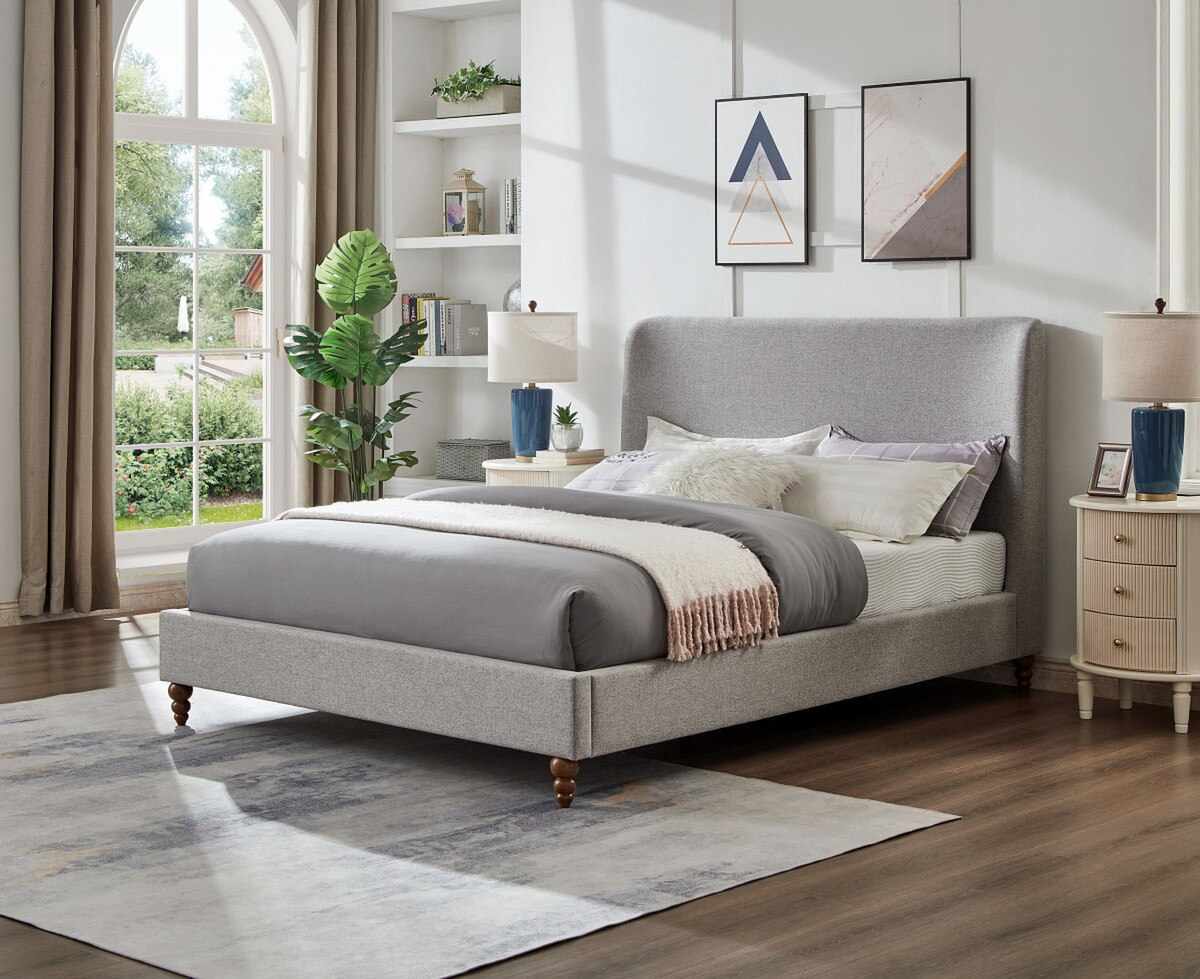
An upholstered bed frame is a bed frame covered with soft padding and fabric, leather, or a similar material. It often has a padded headboard and may also have covered side rails and a footboard.
In American homes, a bed frame is more than a place to hold a mattress. It can affect bedroom comfort, storage, floor space, and the overall look of the room. An upholstered bed frame adds a soft, finished surface to this important piece of furniture. Instead of showing bare wood or metal, its main outer parts have a padded covering.
You may see upholstered beds in apartments, family homes, guest rooms, and large primary bedrooms across the United States. Some have simple fabric panels, while others feature button tufting, wingback sides, or tall padded headboards. Their designs range from simple and modern to classic and formal.
However, upholstery is only the outer finish. It does not tell you whether the bed uses wooden slats, a solid platform, a box spring, or a storage base. These details matter when you choose a frame for your mattress. Understanding the materials, support system, cleaning needs, and room size can help you decide whether this style suits your home.
An upholstered bed frame is a bed frame with a soft outer covering placed over a padded structure. The covering is usually fabric, velvet, linen, leather, or faux leather. Beneath that covering, the frame has a support structure made from materials such as wood, plywood, particleboard, or metal.
The padding often consists of foam or fiber filling. It gives the headboard and other covered parts a softer feel than bare wood or metal. The upholstery is then attached to the frame to create a smooth or decorative finish.
Most upholstered bed frames have a padded headboard. Some also have upholstered side rails and footboards. Others have a fabric-covered base with a separate mattress support system.
The main point is simple: upholstered describes the finish of the bed, not the way it supports the mattress. Two upholstered beds can look similar but have very different internal structures.
Source: storage.googleapis.com
Soft outer covering
Fabric, leather, or faux leather covers the visible parts of the bed frame.
Padding underneath
Foam or fiber filling adds softness and gives the headboard its cushioned feel.
Strong inner frame
Wood, plywood, metal, or a combination of materials provides the main structure.
Mattress support
Slats, a platform, or another support base holds the mattress. Its design depends on the individual bed.
Which Parts of a Bed Can Be Upholstered?
The headboard is the most common upholstered part. It sits behind the pillows and may have a flat panel, curved shape, winged sides, or decorative stitching.
The side rails connect the headboard and footboard. On a fully upholstered bed, these rails also have padding and fabric. The footboard may have the same covering, although some designs leave it open or use a lower padded panel.
Some beds have upholstery around the entire base. Others only cover the headboard. Check product photos and specifications to see which parts are actually padded.
Headboard
Provides a soft surface for sitting up and creates a visual focal point.
Side rails
Cover the long sides of the bed and give the frame a more finished appearance.
Footboard
Adds a padded finish at the foot of the bed when included.
Base
May have fabric around the lower structure, including storage or platform sections.
What Materials Are Used in Upholstered Bed Frames?
Upholstered bed frames use several materials because each part has a different job. The inner structure provides strength, the padding adds softness, and the outer fabric creates the final appearance.
The quality of these materials can affect comfort, cleaning, wear, and long-term use. A frame with attractive fabric may still have weak internal supports. For this reason, look beyond the color and texture when comparing beds.
Source: storage.googleapis.com
Wood and plywood
These materials are commonly used for the headboard, side rails, and supporting structure. Their strength depends on thickness, design, joints, and construction.
Metal
Steel or other metal parts may support the frame, connect its sections, or form its internal structure.
Foam padding
Polyurethane foam is often used to create a cushioned surface. Its thickness and density can affect how the headboard feels and how well it keeps its shape.
Fiber filling
Polyester fiber or similar filling can soften the surface and help create rounded or padded shapes.
Fabric covering
Polyester, cotton blends, linen, velvet, and other textiles are used to cover the padded structure.
Fabric Upholstery
Fabric is one of the most common choices for upholstered beds. It comes in many colors, patterns, and textures. This gives homeowners plenty of ways to match a bed with existing furniture and bedroom decor.
Polyester is common because it can offer good resistance to everyday wear and is available in many finishes. Cotton blends have a natural feel, while linen-style fabrics create a relaxed look. However, cleaning needs depend on the exact fabric and its treatment.
Fabric can collect dust, pet hair, and body oils. Light colors may also show marks more easily. Check the care label before using water or cleaning products.
Polyester
Often used for its range of textures, colors, and practical everyday use.
Cotton blends
Offer a soft textile appearance, although care and durability depend on the blend.
Linen
Has a natural, relaxed texture but may wrinkle and need careful stain treatment.
Velvet
Creates a rich surface with a soft feel, but its pile may need gentle brushing and careful cleaning.
Leather and Faux Leather
Some upholstered bed frames use genuine leather or faux leather. Genuine leather is made from animal hide, while faux leather uses a manufactured material designed to look like leather.
These surfaces often have a smooth finish and can be easier to wipe than many woven fabrics. However, they are not maintenance-free. Faux leather can crack, peel, or wear over time, depending on its quality and use.
Genuine leather has its own care needs. Some types may dry out or change appearance without suitable care. Always follow the cleaning instructions for the exact covering.
Genuine leather
Has a natural surface and may develop changes in color and texture with age.
Faux leather
Offers a leather-like appearance without using genuine animal hide, but its surface can wear or peel.
Why the Inner Frame Matters
The fabric is what you see, but the inner structure does much of the important work. A well-made upholstered bed should have secure joints, suitable center support, stable legs, and a mattress base designed for its intended load.
For example, a frame with thick padding may look substantial but still have weak joints or poorly supported slats. Ask about the materials used inside the frame and whether the manufacturer provides a weight limit and assembly instructions.
Frame joints
Check that the headboard, side rails, and support sections connect securely.
Center support
Look for the required center rail and support legs, especially on larger bed sizes.
Slats
Check their spacing, material, strength, and compatibility with your mattress.
What Are the Benefits of an Upholstered Bed Frame?
An upholstered bed frame offers a combination of soft surfaces, design options, and practical comfort. Its main benefit is the padded finish, especially around the headboard. However, the value of these features depends on how you use your bedroom.
For someone who likes reading in bed, a cushioned headboard can be more comfortable than a hard wooden or metal surface. For someone who wants a simple, low-maintenance frame, the extra fabric may create more work than it is worth.
Source: storage.googleapis.com
Comfortable headboard
Padding gives your back and shoulders a softer surface when you sit up in bed.
Wide design choice
Different fabrics, colors, shapes, and stitching styles can suit many bedroom designs.
Soft appearance
Upholstery can make a bedroom feel warmer and less industrial than a room with exposed metal furniture.
Less direct contact with hard edges
Padded rails and headboards can provide a softer surface around parts of the bed.
Decorative flexibility
Neutral upholstery can work with different bedding colors and decor changes.
Better Comfort for Sitting Up in Bed
A padded headboard can make everyday bedroom activities more comfortable. You may enjoy sitting up to read a book, use a tablet, watch television, or talk with a family member.
The padding works like a cushion behind your back. It does not replace a proper pillow or backrest, but it can make contact with the headboard more pleasant.
Headboard height and padding thickness matter. A short headboard may not support your upper back, while a thin decorative panel may feel firmer than expected.
Reading
A padded surface can make it more comfortable to lean back while reading.
Watching television
A cushioned headboard can provide a softer surface behind your pillows.
Relaxing
A soft finish can make the bed feel more welcoming during quiet time.
More Choices for Bedroom Design
Upholstered beds are available in many shapes and finishes. A simple gray fabric frame can suit a modern apartment, while a button-tufted design can work in a more traditional bedroom.
The fabric also affects how the room feels. Velvet may add visual depth, linen-style fabric can create a relaxed look, and smooth faux leather can give the bed a cleaner appearance.
You can also use bedding to change the overall style. White sheets create a calm look, while darker comforters can add contrast.
Modern bedrooms
Choose clean lines, simple panels, and neutral colors.
Traditional bedrooms
Consider button tufting, curved shapes, or decorative headboards.
Minimalist bedrooms
Look for plain fabric, low profiles, and simple legs.
What Are the Disadvantages of Upholstered Bed Frames?
Upholstered bed frames also have drawbacks. Their fabric surfaces may need more attention than bare wood or metal, and certain stains can be difficult to remove. Their long-term condition depends on the covering, construction, cleaning routine, and daily use.
These issues do not make upholstered beds a poor choice. They simply mean you should understand the care involved before buying one.
Source: decofond.com
More cleaning
Fabric can collect dust, lint, pet hair, and other debris.
Stain concerns
Food, drinks, makeup, and body oils can leave marks on some coverings.
Possible fabric damage
Pets, sharp objects, friction, and rough cleaning can damage the upholstery.
Potential fading
Prolonged direct sunlight may change the appearance of some fabrics.
Repair challenges
Torn fabric, damaged padding, or peeling faux leather may need specialist repair or replacement.
Dust, Pet Hair, and Allergens
Fabric surfaces can trap dust and pet hair between their fibers. This can make cleaning more involved than wiping a smooth wooden or metal frame.
People with dust allergies may prefer a smooth, easy-to-clean finish. However, an upholstered bed is not automatically unsafe or unsuitable for someone with allergies. The room’s overall dust level, bedding, carpets, pets, and cleaning habits also matter.
Regular vacuuming with a suitable upholstery attachment can help remove loose debris. A washable removable cover, when available, may also make care easier.
Vacuum regularly
Use an upholstery attachment if the manufacturer permits it.
Clean the surrounding area
Keep floors, rugs, bedding, and nearby furniture free of excess dust.
Check removable covers
Confirm whether the covers can be removed and washed safely.
Stains and Wear
Light-colored upholstery may show stains more clearly than dark fabric. Headboards can also develop marks where hair, skin, or clothing touches the surface over time.
Repeated rubbing can flatten some fabrics or damage their texture. Sharp pet claws and rough objects may also pull threads or tear the covering.
If you have young children or pets, consider a tightly woven, durable covering with clear cleaning instructions. A removable or replaceable cover can be useful if the manufacturer offers one.
Choose suitable colors
Consider how easily the color may show dirt, stains, and everyday marks.
Protect the surface
Keep sharp objects, rough accessories, and pet claws away from the fabric.
Treat spills quickly
Follow the approved stain-removal method rather than scrubbing the surface.
What Are the Different Types of Upholstered Bed Frames?
Upholstered bed frames come in several designs. Some focus on comfort, others focus on appearance, and some combine upholstery with storage or a particular mattress support system.
The style you choose should match your room, mattress, and daily needs. A large decorative headboard may look attractive in a spacious bedroom but take up too much visual and physical space in a small apartment.
Source: teppermans.com
Tufted Upholstered Bed Frames
Tufted beds have buttons or stitching that pull the padding into a pattern. This creates small dips and raised sections across the headboard or other padded areas.
Button tufting is common in traditional, classic, and decorative bedroom designs. Deep tufting can create a textured appearance, although its folds may need extra attention during cleaning.
Visual detail
Creates a decorative surface with depth and texture.
Cleaning
Dust may collect around buttons and recessed sections.
Wingback Upholstered Bed Frames
Wingback beds have raised sections that extend forward from the sides of the headboard. These wings create a framed appearance around the pillows.
This design often suits traditional or hotel-inspired bedrooms. Before choosing one, measure the full width, including the wings, because the frame may be wider than the mattress.
Distinct shape
The side wings give the bed a more enclosed and decorative appearance.
Space requirement
The extended sides may need extra room near nightstands and walls.
Platform Upholstered Bed Frames
A platform upholstered bed combines a padded outer finish with a platform-style mattress base. The platform may use wooden slats or a solid support surface, depending on the model.
Some platform beds are designed to support a mattress without a separate box spring. However, you should always check the manufacturer’s mattress requirements before buying.
Integrated support
The frame includes a designed mattress support system.
Lower profile
Many platform models have a simple shape that works well in modern bedrooms.
Storage Upholstered Bed Frames
Storage upholstered beds combine a padded finish with space-saving features. Some have drawers under the side rails, while others use a lift-up platform that reveals a storage compartment beneath the mattress.
These designs can help people organize extra bedding, seasonal clothing, and other household items. However, the storage mechanism adds moving parts and may increase the frame’s weight.
Check the lifting instructions, weight limits, clearance, and mattress compatibility before choosing a storage model.
Drawer storage
Provides access to stored items through drawers beneath the bed.
Lift-up storage
Uses a lifting mattress platform to access a larger storage space.
Maintenance
Requires checks of drawer hardware, hinges, lifting parts, and support components.
Low-Profile and Tall Upholstered Beds
Low-profile upholstered beds sit closer to the floor and often have a simple, modern appearance. Tall designs have higher headboards and may include thicker bases or decorative panels.
The right height depends on your room, mattress thickness, ceiling height, and how easily you want to get in and out of bed. Measure the complete assembled height rather than judging from a product photo.
Low-profile style
Can make a room feel visually open and uncluttered.
Tall headboard style
Creates a stronger visual feature and may offer more back support.
Upholstered Bed Frame vs. Wooden and Metal Bed Frames
The main difference between upholstered, wooden, and metal bed frames is their visible finish and care requirements. Upholstered beds have padded coverings, wooden beds show natural or finished wood surfaces, and metal beds use exposed metal parts.
No single type is best for every bedroom. The right choice depends on comfort, appearance, cleaning, construction, and the amount of maintenance you want to handle.
Source: storage.googleapis.com
Upholstered bed
Offers a padded surface and many fabric or leather-style finishes. It generally needs more attention to dust and stains.
Wooden bed
Provides a solid, natural appearance. Cleaning is often simple, although the finish may need protection from moisture and sunlight.
Metal bed
Usually has an exposed frame and smooth surfaces that are easy to wipe. The design may feel firmer around the headboard and rails.
Comparison of the Three Bed Frame Types
The following table compares common features. Actual quality, durability, price, and care needs vary by manufacturer and model.
Comfort
Upholstered frames often provide the softest headboard surface. Wood and metal frames usually need separate pillows or cushions for similar comfort.
Cleaning
Metal and finished wood are often easier to wipe. Upholstery may need vacuuming and fabric-specific stain care.
Design
Upholstered beds offer many textile choices. Wood emphasizes grain and finish, while metal often creates a more open or industrial look.
Repair
The repair method depends on the damage. Upholstery may need fabric repair, while wood or metal damage requires different parts and skills.
Which Type Should You Choose?
Choose an upholstered bed if you value a soft headboard and want a wide choice of colors and textures. It can be a practical option for people who spend time sitting up in bed.
Choose wood if you prefer a natural furniture finish and want to avoid a large fabric surface. Choose metal if you want a simple frame with smooth surfaces and a more open design.
Your budget should include more than the purchase price. Consider cleaning supplies, possible repairs, storage needs, and the cost of replacing worn parts.
Best for a soft headboard
An upholstered frame is often the most direct option.
Best for a natural wood look
A wooden bed may suit your preferred bedroom style.
Best for a simple exposed frame
A metal bed may be easier to wipe and maintain.
How to Choose the Right Upholstered Bed Frame
The right upholstered bed frame should fit your mattress, room, comfort needs, and cleaning habits. Do not choose one based only on its color or headboard design.
Start by measuring the room. Then check the mattress size, internal construction, fabric type, support system, and product instructions. This simple process can help prevent costly mistakes.
Source: teppermans.com
Step 1: Measure Your Bedroom
Measure the available floor space before looking at bed designs. Include the length and width of the assembled frame, not just the mattress dimensions.
Remember to leave space for walking, opening drawers, reaching nightstands, and making the bed. A wingback headboard or wide side rails may need more room than a basic frame.
Also check the headboard height against the wall, windows, ceiling, and any wall-mounted fixtures.
Room dimensions
Measure the full length and width of the area where the bed will sit.
Doorways and stairs
Check whether the headboard and frame pieces can pass through the entrance and reach the bedroom.
Furniture clearance
Leave enough room for walking and using nearby furniture.
Step 2: Select the Correct Bed Size
In the United States, common mattress sizes include twin, twin XL, full, queen, king, and California king. Your bed frame must match the exact mattress size it is designed to support.
A queen mattress is commonly 60 inches wide and 80 inches long. A standard king is commonly 76 inches wide and 80 inches long. A California king is commonly 72 inches wide and 84 inches long.
These are mattress measurements, not complete frame measurements. The headboard, side rails, and footboard can add extra width or length.
Twin
Commonly measures 38 by 75 inches and suits many single sleepers and smaller rooms.
Twin XL
Commonly measures 38 by 80 inches and provides extra length.
Full
Commonly measures 54 by 75 inches and offers more width than a twin.
Queen
Commonly measures 60 by 80 inches and is a popular size for couples and guest rooms.
King
Commonly measures 76 by 80 inches and offers more sleeping width.
California king
Commonly measures 72 by 84 inches and provides extra mattress length.
Step 3: Check the Upholstery Material
Think about how the fabric will perform in your daily routine. A household with children or pets may need a durable, easy-to-clean covering. A guest bedroom may allow more flexibility because the bed receives less daily use.
Look at the fabric composition, cleaning code, texture, and color. Ask whether the material has a protective treatment and whether that treatment requires special care.
Do not assume that every polyester, linen, or velvet fabric has the same durability. Construction and fabric specifications matter more than the material name alone.
For busy households
Look for durable fabric with clear cleaning instructions.
For homes with pets
Consider tightly woven materials that are less likely to catch loose claws.
For a formal bedroom
Velvet or decorative woven fabrics may suit the room if you can maintain them.
For easier wiping
Consider a suitable leather or faux leather covering and check its care requirements.
Step 4: Inspect the Mattress Support System
The support system is one of the most important parts of any bed frame. Check whether the model uses wooden slats, metal slats, a solid platform, or a separate foundation.
If the frame uses slats, look at their spacing and the manufacturer’s stated mattress requirements. Some foam mattresses need closer slat spacing than other mattress types.
Also check whether a center support rail and additional support legs are included. Larger beds often need extra support to reduce movement and help distribute weight.
Slat spacing
Confirm that the gaps meet your mattress manufacturer’s requirements.
Weight capacity
Check the stated maximum load and what the figure includes.
Center rail
Look for suitable center support on larger frames.
Box spring requirements
Confirm whether the bed needs a separate foundation or supports the mattress directly.
Step 5: Review Assembly and Warranty Details
Some upholstered beds arrive in several sections and require home assembly. Check the number of pieces, required tools, assembly time, and whether two people are recommended for lifting or fitting the headboard.
Read the warranty terms carefully. Check what is covered for the frame, joints, upholstery, padding, and storage mechanism. These parts may have different coverage periods or exclusions.
Also ask whether replacement fabric, hardware, or individual frame sections are available. This can matter if one part becomes damaged later.
Assembly instructions
Make sure the instructions are clear and include all required hardware.
Warranty coverage
Check the exact parts, conditions, and exclusions.
Replacement parts
Ask whether damaged components can be repaired or replaced.
How to Clean and Maintain an Upholstered Bed Frame
Regular, gentle cleaning helps keep an upholstered bed frame looking neat. The safest method depends on the fabric, finish, and manufacturer’s care instructions.
A simple routine can prevent loose dust from building up and reduce the chance of stains becoming harder to remove. However, using the wrong cleaner can damage the covering, so check the care label first.
Source: storage.googleapis.com
Step 1: Remove Loose Dust and Hair
Start by checking the manufacturer’s instructions for vacuuming. If vacuuming is allowed, use a suitable upholstery attachment and gentle suction.
Pay attention to seams, tufting, corners, and the areas around the headboard. These places may collect dust and loose hair.
For delicate fabrics, use a soft brush or cloth if the manufacturer recommends it. Avoid rough tools that could pull threads or damage the surface.
Vacuum gently
Use a suitable attachment and avoid excessive pressure.
Clean detailed areas
Remove debris from seams, buttons, corners, and fabric folds.
Avoid harsh brushing
Use a tool appropriate for the fabric texture.
Step 2: Treat Spills Quickly
If a drink or other liquid spills on the bed, check the fabric care instructions before applying a cleaner. For fabrics that permit blotting, gently press a clean, absorbent cloth against the spill.
Do not rub aggressively. Rubbing can push the liquid deeper into the fabric or spread the stain across a larger area.
Test any approved cleaning product on a hidden area first. This helps you check for color changes or other damage before treating a visible section.
Act promptly
Address spills before they have more time to settle into the covering.
Blot gently
Use a clean cloth when the fabric care instructions permit this method.
Test first
Try approved products on an inconspicuous area before wider use.
Step 3: Follow the Fabric Cleaning Code
Some upholstery uses cleaning codes to show which cleaning methods are suitable. A W code generally permits water-based cleaning products, while an S code indicates solvent-based cleaning. A WS or W/S code may permit either method, subject to the care instructions.
An X code generally means vacuuming or brushing only, without water or solvent cleaners. These codes can vary by product and manufacturer, so check the exact label rather than assuming that all upholstered beds follow the same rules.
Never apply a household cleaner, bleach, or strong chemical simply because it works on another piece of furniture.
W
Water-based cleaning may be permitted.
S
A suitable solvent-based cleaning method may be required.
WS or W/S
Both water-based and solvent-based methods may be permitted.
X
Use vacuuming or brushing only, as directed by the care label.
Step 4: Protect the Bed From Daily Damage
Keep the bed away from prolonged direct sunlight when possible. Strong sunlight can fade some upholstery fabrics over time.
Avoid placing sharp objects against the headboard or side rails. If you have pets, keep their claws trimmed and discourage scratching against the fabric.
For leather or faux leather, follow the manufacturer’s specific care guidance. Do not use fabric cleaners or leather conditioners unless they are suitable for that exact surface.
Reduce sun exposure
Use suitable window coverings or adjust the bed’s position if direct sunlight is a concern.
Prevent scratches
Keep sharp objects and rough materials away from the upholstery.
Check the frame
Inspect the legs, joints, bolts, and support slats periodically.
Common Mistakes to Avoid When Buying an Upholstered Bed
A good-looking bed can still be the wrong choice if its dimensions, support system, or cleaning needs do not suit your home. Many buying problems happen because shoppers focus on appearance and overlook the details that affect daily use.
Before ordering, review the complete specifications and compare them with your mattress and bedroom.
Source: manuals.plus
Buying without measuring
Do not assume the frame has the same dimensions as the mattress. Measure the complete frame and available room space.
Ignoring mattress compatibility
A frame may have slats or a platform that does not meet your mattress support requirements.
Choosing fabric only by appearance
A beautiful fabric may require more cleaning or be less suitable for pets and children.
Overlooking the weight limit
Check the manufacturer’s maximum load and the way it defines supported weight.
Assuming every padded headboard is comfortable
Padding thickness, height, firmness, and shape affect how the headboard feels.
Using the wrong cleaning product
Always follow the fabric-specific care instructions to avoid discoloration or surface damage.
Ignoring delivery access
Check package dimensions and whether the parts can pass through your home’s doors, hallways, and stairs.
How to Check a Bed Before Finalizing Your Purchase
If you can inspect a bed in a furniture store, press the headboard gently to understand its padding. Check the fabric for loose threads, uneven seams, and visible damage.
Look at the frame joints and ask how the slats connect to the side rails. If the bed has storage, test the drawers or lifting system according to the store’s instructions.
For an online purchase, review the full specifications, customer assembly information, return policy, and warranty. Product photos alone cannot confirm internal construction or long-term durability.
Inspect the upholstery
Look for consistent stitching, even padding, and a well-finished surface.
Check the structure
Review the frame material, joints, support legs, and slat design.
Read the return policy
Understand the conditions and possible costs of returning a large furniture item.
Are Upholstered Bed Frames Worth It?
An upholstered bed frame can be worth buying if you want a padded headboard, a softer bedroom appearance, and more choices in fabric and design. It can also suit people who spend time reading or relaxing in bed.
However, it may not be the best fit if you prefer very simple cleaning, have limited space, or do not want to deal with fabric maintenance. A wooden or metal frame may better match those needs.
Think about the total value rather than the appearance alone. A well-built frame with suitable mattress support and manageable care needs is more useful than a decorative model with weak construction.
Source: decofond.com
Who May Benefit Most From an Upholstered Bed?
People who enjoy sitting up in bed may appreciate a padded headboard. Homeowners who want a warmer bedroom design may also like the range of fabric textures and colors.
An upholstered frame can also suit a guest bedroom where comfort and appearance are important. A storage model may help in a small room, provided there is enough clearance for its drawers or lifting mechanism.
Readers and television viewers
May enjoy the softer headboard when sitting up.
Bedroom design enthusiasts
Can use different upholstery styles to match their preferred decor.
People needing extra storage
May benefit from a frame with built-in drawers or lift-up storage.
Who May Prefer Another Bed Frame Type?
People who want the lowest possible maintenance may prefer a smooth wood or metal frame. These materials are often simpler to wipe down than textured fabric.
A household with pets that scratch furniture may also prefer a different finish. If you still want upholstery, compare fabric durability and ask whether replacement covers are available.
The goal is not to choose the most popular style. It is to find a frame that works with your actual room, habits, and mattress.
Low-maintenance households
May prefer exposed wood or metal surfaces.
People with limited floor space
May prefer a simpler frame with a smaller overall footprint.
Households with frequent spills
May prefer a smooth, easy-to-wipe finish.
Frequently Asked Questions
Q
Is an upholstered bed frame the same as a fabric bed frame?
The terms are closely related, but they do not always describe exactly the same construction. An upholstered bed frame usually has padding beneath its outer covering. A fabric-covered frame may have a textile finish without much cushioning.
The easiest way to tell is to check the headboard and product specifications. Look for information about foam, fiber filling, and padded construction.
Q
Does an upholstered bed frame need a box spring?
Not always. Some upholstered bed frames have slatted or solid platform bases designed to support a mattress directly. Others require a separate foundation or box spring.
Check the manufacturer’s instructions and your mattress warranty requirements before buying. The presence of upholstery does not determine whether a box spring is needed.
Q
Are upholstered bed frames durable?
An upholstered bed frame can last for many years when it has a strong internal structure, suitable materials, secure joints, and proper care. Durability depends on the quality of the frame and upholstery rather than the padded appearance alone.
Check the frame materials, support system, weight limit, warranty, and availability of replacement parts. Also consider how much daily wear the fabric will receive.
Q
Do upholstered beds collect dust?
Yes. Fabric upholstery can collect dust, lint, and pet hair, especially around seams, tufting, and textured surfaces. This is one reason upholstered beds need regular cleaning.
Use an appropriate vacuum attachment or soft brush when permitted by the care instructions. Keep bedding and the surrounding bedroom clean to reduce dust buildup.
Q
Can you put any mattress on an upholstered bed frame?
No. The mattress must be compatible with the frame’s size and support system. Different mattresses may have specific requirements for slat spacing, foundation type, and center support.
Measure the mattress and compare its manufacturer’s requirements with the bed frame specifications. This is especially important for foam and hybrid mattresses.
Q
Are upholstered beds suitable for small bedrooms?
They can work in small bedrooms if you choose a suitable design. A simple, low-profile upholstered frame may take up less visual space than a large wingback or heavily padded model.
Measure the full frame, including its headboard and side rails. Also leave enough space for walking, opening drawers, and using nearby furniture.
Q
How often should you clean an upholstered bed frame?
The cleaning schedule depends on the fabric, household conditions, and manufacturer instructions. A light dusting or suitable vacuuming routine can help prevent dirt from building up.
Treat spills promptly using an approved method. Homes with pets or higher dust levels may need more frequent attention than guest rooms with occasional use.
Q
Can an upholstered bed frame be repaired?
Yes, some upholstered bed frames can be repaired. Loose fabric, small tears, damaged seams, and certain padding problems may be repairable by a suitable furniture repair specialist.
More serious damage to the inner frame, joints, or support system needs proper structural repair. If a support rail or slat is broken, stop using the bed until the damaged part is repaired or replaced.
Q
Is an upholstered bed frame suitable for children?
It can be suitable for a child’s bedroom when the frame is stable, correctly assembled, and appropriate for the child’s mattress and age. A padded headboard can provide a softer surface than exposed hard materials.
Check the product’s safety information, weight limit, stability, and assembly instructions. Keep the bed away from hazards such as unstable furniture and unsafe cords.
Q
Can an upholstered bed frame be used with an adjustable base?
Some upholstered beds are compatible with adjustable bases, but many are not designed for them. Compatibility depends on the frame’s construction, available space, support design, and the adjustable base manufacturer’s requirements.
Check both products before buying. Do not assume that an upholstered platform frame can accommodate a separate adjustable foundation.
✦ Wrapping Up
Conclusion
An upholstered bed frame is a bed with a padded structure covered in fabric, leather, or faux leather. It offers a soft headboard, many design choices, and a comfortable finish that can make a bedroom feel warmer and more inviting.
Its main advantages are comfort and appearance. Its main drawbacks are the extra cleaning needs and the possibility of stains, fading, or fabric damage. The quality of the internal frame and mattress support also matters just as much as the outer covering.
Before buying one, measure your room, confirm the mattress size, inspect the support system, and check the upholstery care instructions. Compare the warranty and construction details rather than relying only on product photos.
💡 Key Takeaway
Before choosing an upholstered bed frame, check five things: the complete frame dimensions, fabric type, padding quality, mattress support system, and cleaning requirements. Choose a model that fits your room and daily routine, not just your bedroom style.