You can reuse, sell, donate, recycle, or safely dispose of an old bed frame. You can also turn its parts into garden beds, benches, shelves, and other useful home projects.
If you are replacing a bed frame in an American home, do not rush to put the old one on the curb. A frame that no longer fits your bedroom may still have useful parts, solid wood, or recyclable metal. The best choice depends on its condition, material, size, and the time you want to spend on it.
There are several practical ways to give an old bed frame a second life. You can sell a complete frame, donate one that is still in good shape, or use its headboard and rails for a simple DIY project. Even a broken frame may contain metal or wood that a local recycling program can handle.
Before choosing a project, inspect the frame for cracks, rust, loose joints, sharp edges, and signs of pests. A sturdy frame can support another use, but damaged parts should not become furniture that people rely on for support. This guide explains how to choose the right option, prepare the materials, and avoid common disposal mistakes.
1. Inspect Your Old Bed Frame Before Deciding What To Do
The first step is to find out whether the bed frame is still useful. A frame can look old and worn without being unsafe. On the other hand, a fresh coat of paint will not fix a cracked support rail or a weak joint.
Remove the mattress, box spring, bedding, and loose accessories. Take the frame apart if needed, then inspect each part in good light. Look closely at areas that carry weight, such as the center support, side rails, legs, and joints.
Also identify the main material. A wooden frame, a steel frame, and an upholstered frame need different care. Some newer frames combine wood, metal, foam, fabric, and plastic, so you may need to separate parts before recycling.
Source: i.pinimg.com
Check the structure
Look for split wood, bent metal, missing bolts, weak joints, and damaged center supports. Do not use a badly damaged frame for seating or another weight-bearing project.
Look for pests
Check seams, joints, screw holes, and fabric folds for signs of bed bugs. Do not donate or give away an infested frame.
Identify the material
Check whether the frame is made from solid wood, metal, engineered wood, or a mixture. This helps you choose a safe reuse or recycling method.
Collect the hardware
Keep sound screws, bolts, brackets, slats, and other fittings in a labeled bag. These pieces may help with repairs or future DIY work.
When Should You Stop Reusing an Old Bed Frame?
Stop using a frame if its main rails are cracked, its metal parts are badly bent, or its joints cannot hold together securely. A loose headboard may be repairable, but a damaged load-bearing rail is a different problem.
Avoid using rotten, moldy, or pest-infested wood for indoor projects. If the frame has a strong chemical smell or an unknown coating, do not sand it until you understand the possible risks.
Minor cosmetic damage
Small scratches, faded paint, and surface marks may be suitable for cleaning and refinishing.
Repairable hardware
Missing standard fasteners may be replaceable if the wood and metal around the holes remain sound.
Major structural damage
A broken main rail, unstable leg, or badly corroded support may make the frame unsuitable for reuse.
2. Turn an Old Bed Frame Into a Garden Bed
A wooden bed frame can become a decorative garden bed or a raised planting area. This is a useful choice when the frame has attractive side rails or a headboard that you want to keep. It can also give an unused piece of furniture a clear purpose outdoors.
First, decide whether you want to use the complete frame as a decorative border or build a new planting box from its sound wooden parts. A standard bed frame is not always deep or strong enough to hold wet soil, so do not assume that the original structure can carry the full weight.
For a stronger garden bed, build a separate box from suitable outdoor lumber and use the old headboard or footboard as a decorative feature. This keeps the planting area stable while preserving the look of the old furniture.
Choose untreated, suitable outdoor materials for any wood that will touch soil. Avoid using wood with unknown preservatives, peeling coatings, or a history of chemical contamination in vegetable gardens. A decorative frame can sit outside the planting area instead.
Source: diyjoy.com
Make a flower bed
Use a sound headboard and footboard as decorative ends around a separate planting box. Add flowers that suit your local climate and available sunlight.
Create a herb garden
Build a stable, food-safe planting box and use the old frame as a border. Keep the soil and growing area separate from questionable painted or treated wood.
Add a garden focal point
Use an attractive headboard as a backdrop for climbing plants, hanging pots, or a small outdoor display.
Reuse metal parts
Sound metal rails may work as a decorative garden trellis after sharp edges and rust have been addressed.
How To Make a Simple Bed Frame Garden Project
Start by cleaning the frame and removing loose paint, damaged fabric, and unnecessary hardware. Measure the area where you plan to install the garden feature.
Build or place a suitable planting box, then position the old frame around it or behind it. Secure the decorative parts so they cannot tip over in wind or during normal garden work.
Fill the box with soil suited to the plants you want to grow. Check drainage and make sure water can escape instead of collecting around the wood.
Tools and materials
You may need a measuring tape, drill, suitable screws, safety glasses, gloves, a stable planter box, and garden soil.
Signs of success
The structure stays upright, the planting box holds its shape, and water drains without causing the frame to shift.
3. Make a Bench From an Old Wooden Bed Frame
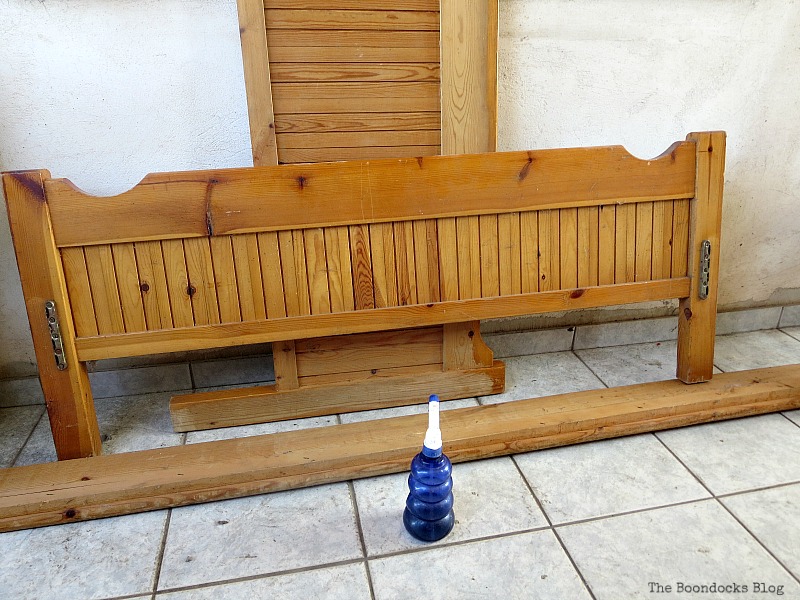
A wooden bed frame can provide useful parts for a new bench. The headboard may work as a backrest, while the footboard and side rails can supply decorative details or other pieces. This project is especially useful when you want to preserve the style of an older bed.
However, a bed frame is not automatically strong enough to become a bench. A bench must handle people sitting down, shifting their weight, and getting up. Inspect every joint and use a suitable design with proper support.
One common approach is to build a separate bench seat from sound lumber and attach the old headboard as the back. You can use other frame pieces for the arms or trim if their condition and dimensions allow.
Sand and finish the wood only after checking its age and coating. Older painted furniture may contain lead-based paint. If you suspect lead, do not dry-sand or use a heat gun. Follow current EPA lead-safe guidance or hire a qualified professional.
Source: theboondocksblog.com
Use the headboard as a backrest
An attractive headboard can provide the visual focus of a hallway, porch, or garden bench when securely attached to a suitable frame.
Use the side rails
Sound rails may become parts of a bench base or decorative trim after their size and strength are checked.
Reuse the footboard
A footboard may work as a decorative end or a pair of smaller design elements, depending on its shape.
Apply a suitable finish
Choose a finish made for the intended indoor or outdoor use. Follow the product label and allow the finish to cure as directed.
Is a DIY Bed Frame Bench Safe?
It can be safe when the design uses sound materials, secure joints, and enough support for the expected load. The original bed frame’s weight rating does not establish the safe capacity of a newly built bench.
Use appropriate fasteners and add structural support where the design requires it. If you are unsure how to build a stable seat, use a proven bench plan or ask a qualified carpenter to check the design.
Test the structure carefully
Check the joints and support before anyone sits on the bench. Do not rely on loose decorative pieces to carry weight.
Protect outdoor wood
Use an appropriate exterior finish and keep the bench away from standing water where possible.
4. Repurpose the Headboard as Wall Decor or a Shelf
If the complete bed frame is too damaged to reuse, the headboard may still have decorative value. A wooden or metal headboard can become a wall feature, coat rack, display panel, or shelf support.
This is often a simpler project than building a bench. You can keep the original finish, repaint the surface when safe, or use the shape as a backdrop for artwork and other decorative items.
Before mounting a headboard, check its weight and the strength of the wall. Use suitable wall anchors or attach it to wall studs with hardware designed for the load. A large headboard should never hang from weak drywall anchors alone.
If you add shelves, check that their brackets and fasteners can support the items you plan to display. Keep heavy objects off a shelf that was only designed for decoration.
Source: i.pinimg.com
Create a wall feature
Mount a clean, stable headboard behind a sofa, entryway table, or reading corner to create a focal point.
Build a coat rack
Attach suitable hooks to a sound board and secure the finished piece to wall studs or appropriate anchors.
Make a display shelf
Add properly supported shelves to a headboard for lightweight books, framed pictures, or small decorative objects.
Use it as a photo backdrop
A decorative headboard can provide a simple background for family photos, artwork, or a small home display.
How To Prepare a Headboard for Indoor Use
Remove dust, fabric, loose hardware, and dirt from the surface. Use a cleaning method that suits the material and existing finish.
Inspect old paint before sanding. If the finish may contain lead, use an appropriate lead-safe assessment and handling method instead of creating dust.
Measure the headboard and mark its mounting points. Check the wall construction before drilling, and use fasteners suited to the weight and installation method.
For wooden headboards
Check for loose joints, splits, and wood damage before applying a new finish.
For metal headboards
Check for corrosion, rough edges, and loose welds. Smooth or repair minor surface issues before decorative use.
5. Turn Bed Frame Parts Into Useful Home Storage
Old bed frames can provide useful materials for small storage projects. Headboards, footboards, wooden slats, and metal rails may become organizers, display racks, or simple storage supports.
The best project depends on the size and condition of each part. A wide headboard may work as a wall organizer, while individual wooden slats may be useful for small shelves or dividers. Do not assume that thin slats can support heavy objects.
Think about where the finished item will go before cutting anything. A project that works in a garage may not be suitable for a child’s bedroom or a damp bathroom. Select a finish and mounting method that fit the location.
Source: i.pinimg.com
Build a wall organizer
Use a sound headboard as a base for hooks, small baskets, and lightweight storage accessories.
Make a shoe rack
Suitable rails or slats can become parts of a simple shoe organizer. Make sure the finished design is stable and does not have sharp edges.
Create a garage tool rack
A sturdy metal rail or wooden board can support a basic tool organizer when it is correctly mounted and rated for the load.
Make small display shelves
Reuse short sections of suitable wood for lightweight shelves, decorative ledges, or picture displays.
Create storage dividers
Straight wooden pieces may help divide drawers, closets, or storage boxes after they are cut and finished properly.
Can Old Bed Slats Be Reused?
Yes, sound wooden slats can be reused for light DIY work. They may work as decorative strips, small organizers, or parts of a simple craft project.
Check each slat for cracks, splinters, moisture damage, and bends. Bed slats are made for a particular support arrangement, so their original use does not prove that they can safely carry a different load.
Good uses
Lightweight decorative panels, small dividers, and suitable craft projects.
Uses to avoid without proper design
Heavy wall shelves, large seating structures, and overhead supports that depend on unverified slat strength.
6. Sell Your Old Bed Frame Instead of Throwing It Away
Selling is a practical option when the bed frame is complete, clean, and in good condition. Someone moving into a new apartment, furnishing a guest room, or looking for an affordable bed may want it.
In the United States, common places to list used furniture include Facebook Marketplace, Craigslist, OfferUp, and local community groups. You can also ask a nearby secondhand furniture store whether it buys used frames.
Before listing the frame, confirm its exact size and include the headboard, footboard, rails, slats, center support, and hardware that come with it. Buyers need to know whether they are getting a complete frame or only a few parts.
Take clear photos from several angles. Show any scratches, dents, rust, loose joints, or missing pieces. Honest descriptions help avoid disputes and save time during pickup.
Source: i.pinimg.com
Clean the frame
Remove dust, dirt, and loose debris. Do not hide damage or cover serious defects with paint or decorative fabric.
Measure the size
State whether the frame fits a twin, full, queen, king, or another mattress size. Include actual measurements when possible.
Photograph every main part
Show the headboard, footboard, side rails, support system, and any included hardware.
Set a realistic price
Compare similar local listings and consider the frame’s age, material, condition, and completeness.
Plan safe pickup
Arrange a suitable pickup time and avoid sharing unnecessary personal information with strangers.
How Much Is an Old Bed Frame Worth?
There is no single resale value for an old bed frame. Its price depends on the brand, material, design, age, condition, and demand in your local area.
A solid wood frame with an attractive headboard may interest more buyers than a damaged frame with missing rails. A basic metal frame may have a lower resale price but can still appeal to someone looking for an inexpensive replacement.
Check completed or recently updated local listings when possible. If you need the frame removed quickly, a lower asking price or free pickup may attract more interest.
Complete and sturdy
A frame with all its parts, sound joints, and a clean finish is generally easier to sell.
Incomplete
List missing pieces clearly and price the frame as a parts or repair project.
Damaged
A frame with serious structural problems may have little resale value. Recycling may be a better choice.
7. Donate an Old Bed Frame to Someone Who Can Use It
Donation is a good option when the bed frame is safe, clean, and complete enough for another person to use. It may help a family, student, nonprofit organization, or someone furnishing a new home.
In the United States, you can contact local charities, furniture banks, community organizations, religious groups, and secondhand donation centers. Some Habitat for Humanity ReStores accept gently used furniture, although acceptance rules vary by location.
Do not assume every organization accepts every type of bed frame. Call or check its current donation policy before loading the furniture into a vehicle. Some centers may accept a complete wooden frame but refuse a damaged, upholstered, or incomplete one.
A good donation should not transfer a safety problem to another person. Clean the frame, check all parts, and disclose any repair history or missing hardware. Never donate furniture with a known bed bug infestation.
Source: theroundup.org
Habitat for Humanity ReStore
Ask your nearest ReStore whether it accepts the type and condition of bed frame you have. Habitat generally asks for furniture to be gently used or in like-new condition.
Local furniture banks
Some furniture banks provide household furnishings to people who need help setting up a home. Ask about frame sizes and condition rules.
Community organizations
Local charities, churches, and neighborhood groups may know households that need a suitable bed frame.
Donation pickup services
Some organizations offer pickup for accepted large items. Confirm the service area, condition rules, and pickup schedule first.
How To Prepare a Bed Frame for Donation
Take the frame apart carefully and keep all screws, bolts, brackets, and fittings together. Place small parts in a labeled bag and attach it securely to one of the main pieces.
Wipe down the frame and make sure it is dry. Remove personal items, old labels, and loose debris. Check the donation center’s instructions for wrapping or bundling the parts.
Ask for a donation receipt if the organization provides one. If you plan to claim a tax deduction in the United States, keep the required records and follow current IRS rules. The value is not automatically equal to the original purchase price.
Before donating
Confirm acceptance, condition standards, pickup availability, and whether all original parts are required.
At handoff
Provide an honest description of the frame and disclose any known defects.
8. Recycle an Old Metal Bed Frame
A metal bed frame may be suitable for scrap metal recycling when it is no longer useful. Steel and some other metals can be recovered and processed into new materials, but local recycling facilities decide which items they accept.
Start by identifying the main metal and separating it from wood, fabric, foam, plastic, and other materials when practical. A metal frame with attached upholstery or large nonmetal parts may need extra preparation.
Contact a scrap yard or local recycling center before transporting the frame. Ask whether it accepts household bed frames, whether the frame must be dismantled, and whether there are size or preparation rules.
Some municipal programs accept large metal furniture through special bulk recycling collections. Others require residents to arrange a drop-off. Never place a large metal frame in a curbside recycling bin unless your local program specifically allows it.
Source: i.pinimg.com
Separate metal parts
Remove detachable plastic caps, fabric, foam, and wood where practical and safe.
Check for sharp edges
Handle cut or damaged metal with care. Wear suitable gloves and protect exposed edges during transport.
Contact a scrap yard
Ask about accepted metal types, preparation rules, drop-off hours, and any payment or pickup arrangements.
Use municipal recycling services
Check whether your city or county offers a bulk metal collection or a household recycling drop-off program.
Can You Recycle a Wooden Bed Frame?
Sometimes, but wood recycling is more limited than metal recycling. Solid, untreated wood may be accepted by some local facilities or reused by woodworking groups.
Particleboard, medium-density fiberboard, laminated panels, and painted or coated wood may have different restrictions. Some facilities send these materials to disposal rather than recycling.
Ask the receiving facility what types of wood it accepts. Do not assume that all wood products can go into a yard-waste or wood-recycling program.
Solid wood
May be suitable for reuse, woodworking, or a local wood-recovery program if accepted.
Particleboard and MDF
Often require separate handling because of their engineered construction and coatings.
Painted or treated wood
Check local acceptance rules before reuse, burning, or recycling. Unknown coatings may require additional caution.
9. Give an Old Bed Frame a New Look With Paint or Refinishing
If the frame is still strong but looks outdated, refinishing may be all it needs. A fresh finish can change the appearance without requiring you to build something new.
Wooden frames may be cleaned, repaired, and refinished with a suitable stain or paint. Metal frames may be cleaned and coated with a product designed for the metal surface. The correct preparation depends on the existing finish and the product instructions.
Remove loose dirt and inspect the surface before starting. Use a suitable work area with good ventilation, wear the protective equipment required by the product label, and keep children and pets away while the work is underway.
Older furniture needs extra care. Some vintage finishes may contain lead, and old coatings should not be dry-sanded or burned when lead is suspected. A lead test or qualified assessment may be needed before disturbing the surface.
Source: i.pinimg.com
Paint a wooden frame
Prepare the surface using a method suited to its condition and coating. Apply compatible primer and paint according to the manufacturer’s instructions.
Refresh a metal frame
Remove loose rust and dirt using a suitable method, then use a coating designed for the metal and intended location.
Replace worn upholstery
A professional upholstery service may help restore an upholstered headboard if its underlying structure is sound and the fabric is suitable for replacement.
Replace damaged hardware
Use compatible fasteners and brackets when the surrounding material remains strong enough to hold them.
How To Choose a Finish for an Old Bed Frame
Choose a finish based on the material, location, and expected use. A product made for indoor wood may not provide the protection needed for outdoor furniture.
Read the product label for surface preparation, ventilation, drying time, and curing instructions. Drying and curing are not always the same, so do not use the frame until the finish is ready for its intended purpose.
Indoor wooden furniture
Choose a compatible interior paint, stain, or clear finish.
Outdoor furniture
Use an exterior-rated finish suitable for the wood and exposure conditions.
Metal furniture
Choose a coating intended for the metal type and follow its rust-preparation instructions.
10. Use an Old Bed Frame for Outdoor or Garage Projects
An old frame may be more useful in a garage or outdoor area than in a bedroom. Its rails and other parts can provide materials for simple storage, garden displays, or decorative projects.
Metal rails may work as supports for lightweight garden features, while suitable wooden pieces may become small storage dividers or workshop organizers. The important point is to match the project to the strength and condition of the material.
Avoid using a bed frame as a ladder, roof support, heavy-duty rack, or other structure where failure could cause serious injury. Furniture parts were not necessarily designed or tested for those jobs.
Keep outdoor projects away from areas where water collects. Protect suitable materials from weather, and inspect the finished project from time to time for rust, rot, loose joints, or other damage.
Garden trellis
A sound metal frame section may support lightweight climbing plants when securely installed and protected against sharp edges.
Garage organizer
Use suitable rails or boards for a simple organizer designed for lightweight tools and accessories.
Decorative outdoor display
A headboard can become a backdrop for hanging planters or outdoor decorations when securely fixed.
Workshop material
Straight, sound wood pieces can provide material for small craft and repair projects.
What Should You Avoid Building From an Old Bed Frame?
Do not use unverified furniture parts for structures that support people, vehicles, heavy equipment, or overhead loads. A frame that once held a mattress may not have the right design or strength for a different purpose.
Also avoid using unknown treated wood for food-growing areas, animal bedding, or firewood. If you cannot identify an old coating or preservative, choose a safer reuse option or ask an appropriate local waste authority about disposal.
Avoid heavy overhead storage
Do not hang heavy items from old rails or headboards without a suitable structural design.
Avoid burning coated wood
Painted, treated, or unknown wood should not be burned as a disposal method.
Avoid unstable seating
Do not turn damaged bed parts into benches or chairs without proper structural repair.
11. Dispose of an Old Bed Frame When Reuse Is Not Possible
If the frame is broken, unsafe, or unsuitable for donation, proper disposal is the next step. In the United States, local waste rules determine whether a bed frame belongs in bulk trash, a special recycling collection, or a drop-off facility.
Many cities treat bed frames as large or bulky household items. Some programs separate mostly metal or plastic furniture from wood furniture. For example, New York City’s Department of Sanitation directs residents to place mostly metal or plastic furniture with recycling and other nonrecyclable furniture with trash.
That example is not a nationwide rule. Your city or county may have different collection days, booking requirements, size limits, or fees. Check the official local waste department website before putting the frame outside.
If you dismantle the frame, bundle the parts so they are easy to handle. Remove or cover sharp screws and exposed metal edges. Keep the pieces out of streets and walkways, and follow local instructions about where and when to place bulky items.
Source: i.pinimg.com
Schedule bulk pickup
Ask your local waste department whether it collects bed frames and whether you need to book a collection.
Use a transfer station
Some communities allow residents to take large furniture to a local waste or recycling facility.
Contact a waste removal company
A private service may collect and transport large furniture when municipal collection is not suitable.
Separate recyclable materials
Where accepted, keep metal separate from wood, fabric, foam, and plastic to make material recovery easier.
How To Prepare an Old Bed Frame for Bulk Pickup
Remove the mattress, bedding, and all loose items. Take apart the frame only if doing so is safe and allowed by the collection service.
Place bolts, screws, and small fittings in a secure container rather than leaving them loose on the ground. Bundle long rails and slats according to the local collection rules.
Check the scheduled pickup date and placement instructions. Do not leave furniture outside days in advance if the local authority prohibits early placement.
Protect people handling the frame
Cover or remove exposed sharp parts and avoid leaving loose hardware where someone may step on it.
Keep access clear
Do not block sidewalks, driveways, roads, fire hydrants, or access points.
Check special rules
Ask about upholstered parts, pest contamination, and separate disposal requirements.
12. Choose the Best Option Based on the Frame Material
The material is one of the most useful factors when deciding what to do with an old bed frame. Metal may be suitable for scrap recovery, while solid wood may have more options for repair and creative reuse.
Engineered wood and upholstered frames need more careful sorting. Their mixed materials can make recycling harder, and some facilities do not accept them. Always confirm the rules with the organization that will receive the materials.
Use the following table as a starting point. It describes common options, not a guarantee that a particular local facility will accept the item.
Solid wood
Consider refinishing, furniture repair, woodworking, donation, or an accepted local wood-recycling service.
Metal
Consider selling, donating, scrap metal recycling, or an approved municipal bulk collection.
Particleboard and MDF
Reuse only when sound and suitable for the new purpose. Check local waste rules because recycling options may be limited.
Upholstered frames
Check fabric, foam, and structural condition. Donation and recycling acceptance may be more limited because of mixed materials.
Mixed-material frames
Separate detachable parts where safe and practical, then ask the receiving facility how to handle the remaining materials.
Quick Decision Table for an Old Bed Frame
This comparison can help you choose a practical next step without spending time on projects that do not fit the frame’s condition.
Complete, clean, and sturdy
Sell it or donate it after confirming the receiving organization’s rules.
Strong wood with an outdated finish
Clean, refinish, repair, or reuse it for a suitable furniture project.
Strong metal with no major damage
Sell it, donate it, or ask a scrap metal recycler about acceptance.
Broken but made from useful materials
Separate reusable parts and contact local recycling facilities.
Infested, moldy, or badly damaged
Do not donate or reuse it. Follow local disposal rules and any special pest-handling instructions.
A Simple Example of Choosing the Right Option
Imagine you have a queen-size wooden bed frame with a sound headboard, worn side rails, and a few missing bolts. The headboard may still be useful as wall decor, but the missing hardware and worn rails need inspection before the complete frame can be used again.
If the main joints and support parts are sound after repair, you could sell or donate the complete frame. If they are not, keep the suitable headboard for a decorative project and send the remaining materials to facilities that accept them.
This approach avoids treating the whole frame as either valuable or worthless. Each part can have a different next use.
First choice
Check whether a safe repair can restore the complete frame.
Second choice
Separate the useful headboard or other sound parts for reuse.
Final choice
Arrange suitable recycling or bulk disposal for the parts that cannot be reused.
13. Common Mistakes to Avoid When Reusing or Disposing of Old Bed Frames
An old bed frame can be useful, but a poor reuse or disposal decision can create more work or safety risks. Check the material and condition before choosing a project.
Do not assume that a frame is safe because it once supported a mattress. A new project may place force on different joints or parts. Inspect and repair the structure for its intended use.
Another common mistake is putting a large item into the wrong curbside collection. A metal frame may have different rules from a wooden one, even within the same city. Check the local waste authority’s current instructions.
Donating damaged furniture
Do not pass broken, unstable, moldy, or infested furniture to a charity or another household.
Ignoring old paint
Do not dry-sand an old painted frame when lead may be present. Get suitable guidance before disturbing the finish.
Burning old wood
Do not burn painted, coated, or treated wood as a way to get rid of it.
Using weak parts for heavy loads
Do not build heavy shelving, seating, or overhead storage without checking the strength and design.
Leaving loose hardware
Secure screws, bolts, and sharp fittings before transporting or placing the frame for collection.
Assuming every recycling center accepts furniture
Call ahead and ask about the exact material, size, and condition of the frame.
What If the Old Bed Frame Has Bed Bugs?
Do not sell, donate, or give away a bed frame that has a known bed bug infestation. Moving infested furniture can spread the insects to another home or building.
Contact a qualified pest control professional for guidance on the infestation and safe handling. Follow your local waste department’s instructions for marking, wrapping, and disposing of infested furniture.
Do not rely on paint, a quick wipe, or ordinary household cleaning to prove that a frame is free of bed bugs. If the infestation is uncertain, get suitable advice before offering the item to someone else.
Do not donate
Keep infested furniture out of donation and resale channels.
Avoid moving it unnecessarily
Limit movement that could spread insects to other rooms or shared areas.
Follow local disposal rules
Ask the waste authority whether the frame needs a special notice, wrapping, or collection method.
14. Research Notes and Useful Questions Not Fully Covered by General Reuse Guides
The most useful improvement to a basic list of DIY ideas is a clear decision process. A reader needs to know not only what an old bed frame could become, but also whether the frame is safe to reuse and how to handle it if reuse is not practical.
The reviewed public guidance supports several important distinctions. Habitat for Humanity explains that donated furniture should generally be gently used or like-new, while its local ReStores may have their own acceptance rules. New York City’s sanitation guidance separates mostly metal or plastic furniture from other large furniture for collection. The EPA also explains that household hazardous waste rules are handled at state and local levels.
The following gap map separates practical questions that follow from the main task from issues directly covered by the reviewed guidance. These are editorial research findings, not verified search-volume or ranking data.
Question: Can a broken headboard be reused?
Basis: Inferred next need. Coverage in reviewed disposal and donation guidance: Shallow. Reader benefit: Helps people reuse safe decorative parts without treating a damaged frame as a complete bed.
Question: Will a local charity accept an old bed frame?
Basis: Observed topic in official donation guidance. Coverage: Answered at a general level, but local acceptance remains location-specific. Reader benefit: Prevents unwanted or unsuitable donations.
Question: Does a metal frame go with curbside recycling?
Basis: Observed topic in municipal furniture guidance. Coverage: Answered for New York City, not nationally. Reader benefit: Encourages residents to check their own municipal collection rules.
Question: How should an infested bed frame be handled?
Basis: Inferred safety need, with a specific municipal example in NYC311. Coverage: Not fully covered by the general donation and recycling guidance. Reader benefit: Helps prevent the spread of bed bugs during disposal.
Question: Can old bed frame wood be used for a vegetable garden?
Basis: Inferred next need from garden reuse projects. Coverage: Missing from the reviewed general donation and bulk collection pages. Reader benefit: Encourages readers to check coatings and preservatives before placing old wood near edible plants.
Evidence and Research Limitations
This guide uses documented donation, municipal collection, and environmental guidance to explain practical choices. It does not report hands-on testing of bed frame conversions or claim that a particular DIY design has been structurally tested.
The municipal collection example is specific to New York City. It should not be treated as a rule for every US city or county. Local collection schedules and recycling acceptance can change.
The images supplied for this article are illustrative references for reuse and furniture ideas. They do not establish the structural safety of any particular project.
Donation evidence
Habitat for Humanity’s donation guidance provides general furniture condition criteria and directs donors to local ReStores for acceptance.
Disposal evidence
New York City’s sanitation guidance gives a specific example of bulk furniture separation and preparation.
Environmental evidence
The US EPA explains household hazardous waste handling and the role of state and local waste rules.
Unverified details
The exact resale value, recycling acceptance, pickup cost, and structural capacity of a reused frame depend on local conditions and the specific materials.
Frequently Asked Questions
Q
What is the best thing to do with an old bed frame?
The best option depends on its condition and material. Sell or donate a complete, clean, and sturdy frame. Reuse sound wood or metal for a suitable DIY project, and recycle or dispose of parts that are no longer useful.
If the frame has structural damage, mold, or a known pest problem, do not pass it to another household.
Q
Can I put an old bed frame in the trash?
In some US communities, you can dispose of an old bed frame through bulk trash collection. Other areas require a scheduled pickup, a drop-off at a transfer station, or separate handling for metal and wood.
Check your local waste department’s website before placing the frame outside. Standard household trash bins are generally not designed for a complete bed frame.
Q
Can I get money for an old bed frame?
Yes, if the frame is in usable condition and there is local demand. You can list it on Facebook Marketplace, Craigslist, OfferUp, or a neighborhood sales group.
Metal frames may also have scrap value, depending on the metal type and the policies of nearby scrap yards. A damaged frame may be worth more as recyclable material than as furniture.
Q
Can I donate a used bed frame to Goodwill or Habitat for Humanity?
Possibly, but acceptance policies vary. Contact the specific donation center before taking the frame there. Habitat ReStores generally look for gently used furniture, and individual locations may have additional restrictions.
Make sure the frame is clean, stable, and free of pests. Include its main parts and hardware when required.
Q
What can I make from an old wooden bed frame?
You can use suitable wooden parts for a decorative bench, headboard wall feature, garden display, small organizer, or lightweight shelf project.
Check the wood for rot, cracks, old coatings, and possible chemical treatment before cutting or refinishing it. Use a suitable design and proper support for any project that carries weight.
Q
Can an old metal bed frame be recycled?
Many metal bed frames can be recycled through scrap metal facilities or local bulk recycling programs. Acceptance depends on the type of metal, attached materials, and local facility rules.
Remove detachable nonmetal parts when practical, protect sharp edges, and call the recycler before transporting the frame.
Q
Can I turn an old bed frame into a garden bed?
Yes, a suitable frame can become a decorative garden border or part of a planting feature. A separate, sturdy planter box is often a better way to hold wet soil than relying on the original bed frame.
Avoid placing unknown treated or coated wood in direct contact with soil used for growing vegetables. Check the material and use a suitable planting container.
Q
Should I take apart an old bed frame before disposal?
Taking it apart can make transport and collection easier. It also allows you to separate metal, wood, fabric, and plastic parts when local recycling facilities accept them separately.
Use the right tools, protect yourself from sharp edges, and bundle the pieces according to your local bulk-waste rules.
Q
What should I do with an old bed frame that has bed bugs?
Do not sell, donate, or give away an infested frame. Contact a qualified pest control professional and follow local waste collection instructions for infested furniture.
Some municipalities require special labeling or handling so that other people do not take the item and spread the infestation.
Q
Can I use old bed frame parts for a new bed?
You may be able to reuse suitable parts, but first check the new bed’s dimensions, attachment points, support design, and hardware requirements. Parts from one frame are not automatically compatible with another.
Do not use cracked rails, weak joints, or bent support pieces. Follow the new bed manufacturer’s assembly and support instructions.
✦ Wrapping Up
Conclusion
An old bed frame does not have to become waste as soon as you replace your bed. Depending on its condition, you can sell it, donate it, turn its parts into useful furniture, create a garden feature, or recycle its materials.
Start with a careful inspection. A complete and sturdy frame may have another owner, while a sound headboard or a few useful rails may be enough for a simple DIY project. If the frame is damaged, infested, or unsuitable for reuse, choose a disposal method that follows your local rules.
The most practical approach is to reuse what is safe, donate only what another person can use, and recycle or dispose of the rest responsibly. A little planning can save useful materials, reduce unnecessary waste, and help you clear space in your home.
💡 Key Takeaway
Before throwing away your old bed frame, inspect its material and condition, separate any useful parts, contact a local donation center or recycler, and check your city’s bulk-waste rules. Choose the safest practical option for each part instead of automatically sending the entire frame to a landfill.